Social Media Rules for Realtors: What Works, What Backfires

Almost every article about social media for real estate agents reads like a platform tour. Use Facebook, use Instagram, use LinkedIn, post three times a week, mix your content, get a professional headshot, comply with Fair Housing. The problem with that style of advice is not that any of it is wrong. The problem is that it treats every post as if it is the end of the funnel. It is not. For an agent, social media is almost never the place where a deal is decided. It is the place where a buyer or seller first notices you exist, and the place where they cross-check you while they are deciding whether to make the call. Everything an agent should and should not be doing on social follows from that single fact, and most generic checklists miss it entirely.
I build real estate websites for developers, agents, and architects through a small studio called DignuzDesign, and I spend a fair amount of time looking at the analytics behind the posts that link to those sites. The pattern is consistent across clients. The Instagram reel does not sell the property. The carousel does not sign the seller. What the social post does, when it works, is move someone from a vague awareness of an agent into a decision to spend forty-five seconds on the agent's website. That forty-five seconds on the website is where the listing presentation actually starts. Once you internalise that, a lot of social media advice for realtors changes shape.
Social Is a Top-of-Funnel Asset, Not a Closer
The data backs the funnel framing pretty hard. The National Association of Realtors' 2025 Technology Survey found that 75 percent of agents now use social media as part of their business, and that social produced the highest share of quality leads of any single channel at 39 percent. That number is striking, but it cuts both ways. It tells you social is genuinely worth investing in, and it also tells you that almost four in five of the leads agents got did not come from social. Anyone telling you to put your entire marketing budget into Instagram is selling something.
The buyer side of the same data tells you why. NAR's Profile of Home Buyers and Sellers shows that 97 percent of buyers used the internet during their search, but only a small fraction list social media as the place where they actually found the agent they hired. Buyers find homes online and then back-check the agent attached to the listing. That back-check is increasingly happening on social, which is why a thin or absent social presence now costs you deals even when no one tells you it did. You lose the ones that never call.
The practical implication is straightforward. Stop measuring social by likes and start measuring it by how many people from each post landed on your website, and from there on your bio page or a specific listing. That is the only metric that maps to revenue, and it is the only one you should care about during the first six months of running a serious account. For a deeper view on which channels actually generate inquiries beyond social, the piece on estate agent digital marketing strategies covers the wider mix.
Pick Fewer Platforms, and Pick Them by Audience
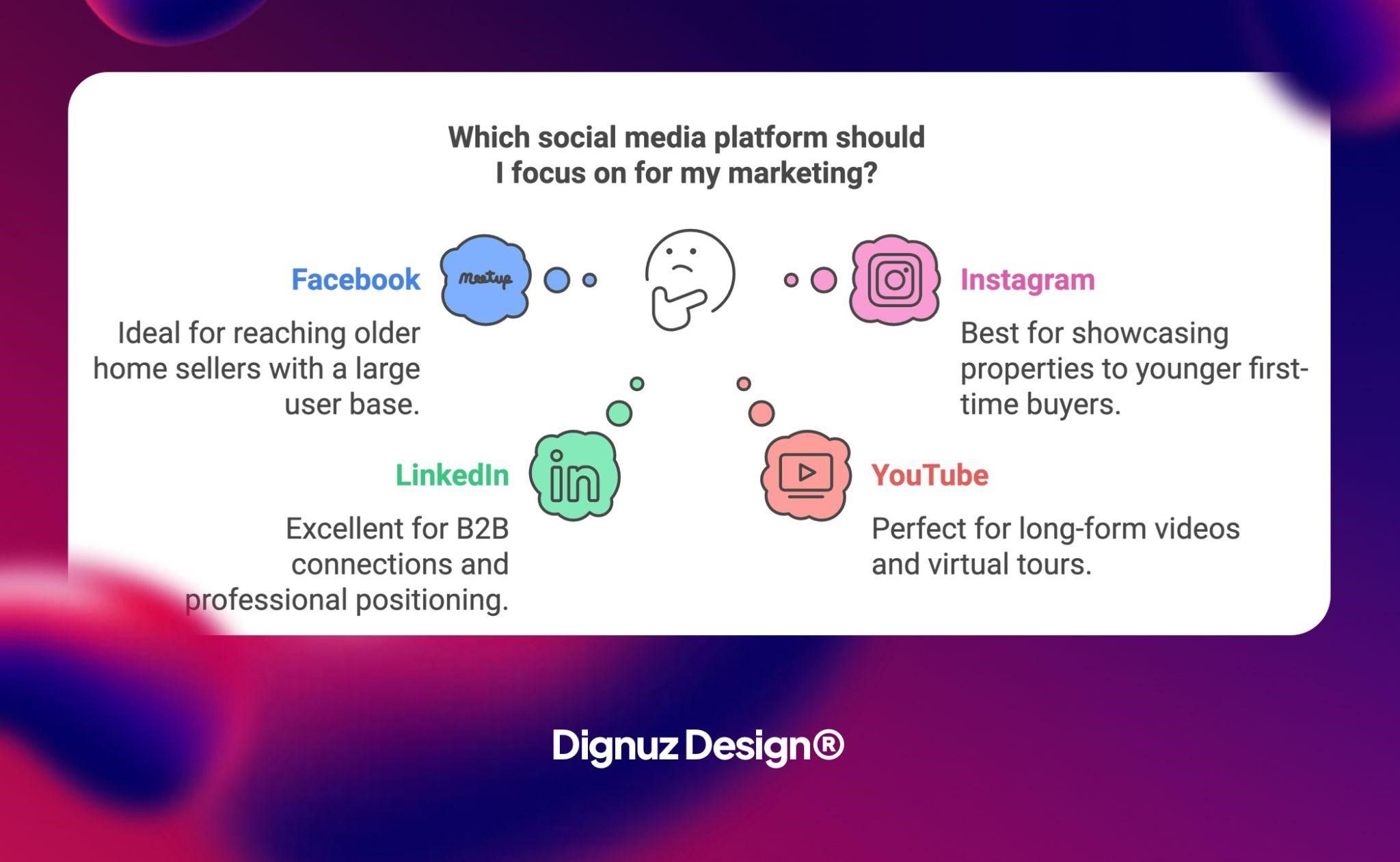
The standard advice to "concentrate on fewer platforms" is correct, but most articles never tell you how to choose. The decision should not be about where you are personally comfortable posting. It should be about where the people you actually want to work with already spend time. An agent selling first-time apartments to younger buyers has no business prioritising LinkedIn. An agent who sells commercial space or works with relocation departments at corporates is wasting their best lead source by posting to Instagram instead.
For most residential agents I work with, the productive stack is two platforms run seriously rather than four run badly. Instagram is the workhorse for property visuals and for the bio-page hop. Facebook still has reach in many local markets, particularly for older sellers and community-driven content, and there is a separate piece on real estate marketing on Facebook that goes into the local-group mechanics in detail. YouTube is its own category and rewards a very different kind of effort, which is why the dedicated guide to real estate marketing on YouTube treats it as a long-form channel rather than a social one. LinkedIn earns its place if you sell to investors, developers, or relocation buyers, and almost nowhere else.
The platform you absolutely do not need to be on is whichever one your competitor announced last week. Algorithm chasing has cost more agents more hours than any other single mistake I see, and it is the easiest one to stop making.
Profile Setup That Reads as Real in Three Seconds
A buyer or seller checking you out on Instagram or LinkedIn decides whether you are credible in about the time it takes to scroll past two posts. That is not a long window, and it is governed by a few specific things rather than the laundry list most articles offer. The photograph has to be of you, taken in the last two years, and shot in conditions that look like the market you sell into. An MLS-style headshot against a grey backdrop does not signal premium service even if you offer it. A handle that is clearly identifiable as you working in real estate, not a clever pun, helps people find you and helps people who already know your name confirm the account is real. The bio should describe what you actually do in one specific sentence, not a wall of emoji clichés. The link should go to the page on your website that does the most conversion work, which for almost every agent is the bio page rather than the home page.
The handle question is worth a moment on its own. The pattern of using your full name plus the word "realtor" or "estates" is fine but increasingly crowded. A location-anchored handle reads as more specific and ranks better when local buyers search you by area. If you work a single neighbourhood, putting it in the handle is one of the cheapest signals of specialisation you can make. The wider case for owning a narrow category before you try to compete on a city is in the piece on how to stand out as a realtor.
Content That Generates Inquiries vs Content That Just Gathers Likes
If you watch the analytics on agent accounts long enough, you start to notice that there are two completely separate kinds of posts that get traction, and they do different jobs. There is the post that gets saved, shared, and forwarded, which builds your audience and reputation over time. And there is the post that drives a click to the website, which is the only kind that generates a measurable inquiry in the short term. Agents who confuse these two tend to optimise for the first and complain that social does not generate business.
The reputation post is usually educational, market-specific, or aesthetic. A short reel walking through a neighbourhood at a specific price point, a clear explanation of how a recent rate move actually affects monthly cost on a typical local property, a tight summary of what the latest planning decision means for buyers in a specific street. These posts rarely produce a click. They produce slow trust, which converts to leads months later when someone in the audience finally decides to move. They are worth doing, but they are not the entire diet.
The inquiry post is the one most agents never get right. It has a clear hook tied to a specific property, a few strong images or a short clip, and a reason for the viewer to click through right now. The mistake almost everyone makes is to use the same generic call to action on every post, which trains the algorithm and the audience to ignore the link in the bio. The agents I see generate consistent leads from social treat the inquiry post as a different format with a different cadence. One every week or two, not every day, tied to a property where the listing page is genuinely strong enough to convert the click. If your listing pages are weak, fixing them returns more than any change to your posting schedule, and the deeper case for that is in our piece on why custom real estate websites outperform template solutions.
The reason the inquiry post matters more than agents think is that the visual quality of property content has risen faster than most realtor accounts have. A buyer scrolling Instagram in a serious housing market is now seeing developer-grade renders, drone footage, and interactive walkthroughs alongside the agent's iPhone snaps. The gap reads on the feed in milliseconds. Through Faraday3D, I do a lot of the rendering and visualisation work that goes into developer accounts, and the disparity with the typical agent post is now wide enough that buyers register the difference unconsciously. For interior listings, the basic photography fundamentals covered in real estate photography tips still do most of the heavy lifting. For exteriors and lifestyle context, the techniques in our real estate drone photography tips piece will do more for your social feed than any change to your captions.
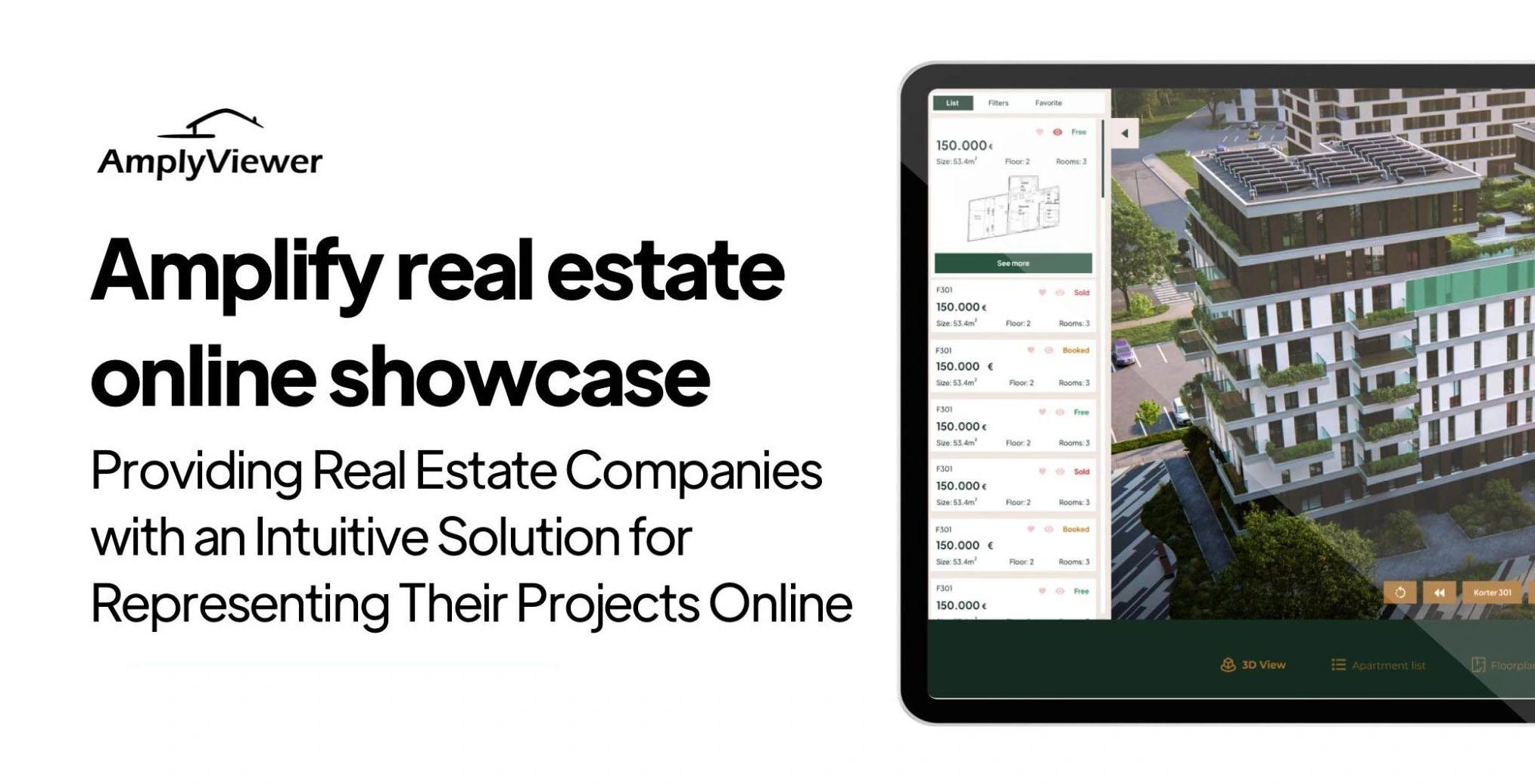
💻 Let us help you create a stunning online showcase for your projects that works seamlessly across all devices. Ready to amplify your real estate business? 👉 Explore AmplyViewer now
The Fair Housing Risk Most Agents Have Not Updated
This section exists because almost every social media article for realtors recycles the same 1990s Fair Housing advice (do not say "perfect for families", do not depict only one demographic, get model releases) and stops there. That advice is still correct, but it is no longer the part of the rule book that is changing.
HUD issued specific guidance in 2024 covering how the Fair Housing Act applies to digital and social platform advertising, including the targeting and delivery features baked into ad managers on Facebook, Instagram, and similar platforms. The official HUD guidance document is worth reading in full if you boost posts or run paid social, because it makes clear that liability can attach not only to what your ad says but also to who the platform actually delivers it to. Custom audience tools, lookalike audiences, and any targeting that systematically excludes protected classes can create a violation even when the creative itself reads as neutral. The guidance also covers the use of algorithmic ad delivery, which means that "I just let the platform optimise" is no longer a safe default position.
In practical terms, this changes the operational workflow for agents who run any form of paid distribution. You should be documenting how you set up audiences for housing-related ads, avoiding demographic, zip-code, or interest-based filters that can act as proxies for protected characteristics, and checking the platform's housing-specific ad category, which is now mandatory on the major networks. If you outsource your social to a marketing agency, your agency needs to be doing this. Many are not, and a lot of small brokerages are accumulating risk they cannot see. The wider context on how digital marketing intersects with real estate compliance gets covered in our piece on real estate marketing automation strategies, which is the place where audience-building work tends to go wrong if it is not designed with Fair Housing in mind.
Privacy, Consent, and Showing People Inside Homes
Agents post inside homes constantly, and most of them do it without a written record of consent from the seller. That is a problem long before it becomes a legal one. It is a relationship problem, because most sellers do not realise their personal items, art, or family photographs may end up on Instagram until they see themselves there. The fix is administratively boring and ethically important: a single clause in your listing agreement that authorises social use of agreed-upon visual material, with an opt-out, and a quick pre-shoot conversation about what is and is not in frame.
The same logic applies to client testimonials, transaction announcements, and "just sold" posts that include enough detail for the seller to be identifiable. None of this is dangerous if you ask, and almost all of it goes wrong when you do not. Treat consent as a written habit rather than a verbal one, and the entire category of avoidable social media problems goes quiet.
What to Actually Measure
The metrics every realtor social article tells you to track are mostly vanity metrics. Follower count tells you almost nothing. Engagement rate tells you a little. The two numbers that matter, and that almost no agent tracks consistently, are these. The first is how many people moved from a social post to your website in a given month, broken down by which posts produced the clicks. The second is how many of those website visitors took a meaningful action: filling out a contact form, booking a viewing, sending a message, or returning to the site more than once. Everything else is noise, or at best a leading indicator of those two.
If you are starting from zero, set up the basics first:
- Get a working analytics account on your website and confirm that traffic from each social platform is attributed correctly, otherwise every conclusion you draw about your posts will be wrong.
- Tag the links in your posts with a simple campaign parameter so you can tell which specific post produced which visit, rather than seeing a single bucket called "instagram referral".
- Track contact form submissions and viewing requests as conversions, not page views, because page views without conversions are just expensive lurking.
- Review the numbers monthly, not weekly. Social signal is too noisy on a seven-day window to be informative, and most agents who check daily end up reactively chasing whichever post happened to spike rather than running a coherent strategy.
None of this requires expensive software. A free analytics setup and ten minutes a month is enough to know more about your social performance than most of your competitors do about theirs. The wider playbook for what your website should be doing once those visitors arrive, including the bio and listing pages that actually convert, is in our piece on real estate website user experience.
Security and Account Hygiene That Is Worth the Time
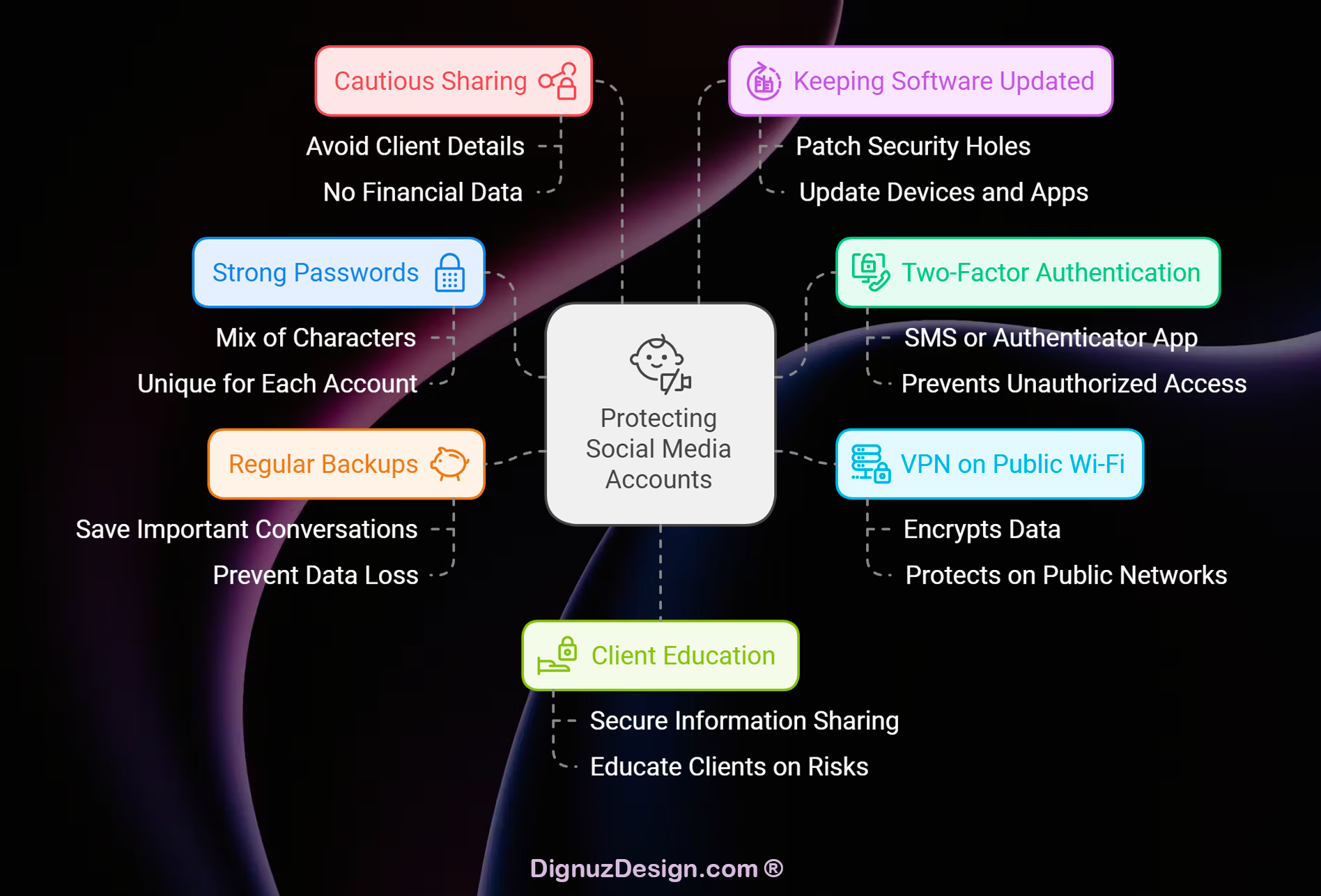
The standard advice on password hygiene, two-factor authentication, and VPN use is correct but rarely the actual failure mode. The real account hygiene problem at small brokerages is shared access. A single Instagram login is passed around between the agent, the marketing assistant, the freelance social manager, and whoever ran the account last year. When that person leaves, the password does not get changed. Six months later something embarrassing or compliance-relevant is posted, and no one can prove who did it.
The fix is to use the platform's native multi-user access features, which exist on Facebook, Instagram via Meta Business Suite, and LinkedIn Pages, and to remove access whenever a relationship ends rather than waiting for trouble. Two-factor authentication on the primary account email is the single most effective security move, because almost every account compromise I have seen against agents started with an email takeover rather than a platform attack. That part of the original article was right and is worth keeping in your habit.
Where Social Sits in a Real Marketing System
The reason a generic social media checklist almost never works for an agent is that social does not stand alone. It is one channel inside a system that includes your website, your listings, your photography pipeline, your CRM, your follow-up sequence, and your relationship with referral partners. Social punches above its weight when those other pieces are good and punches below it when they are not. Pouring posting effort into a feed that links to a weak bio page or a broken contact form is one of the most common ways agents waste twelve months of their own time.
For developer clients especially, social is increasingly an entry point into immersive content that closes the actual deal. A short reel of a unit floor plan can pull a serious buyer into an interactive walkthrough, which is part of the reason we built AmplyViewer the way we did. The whole point of the viewer is that a social click can land directly on a 3D experience of the property rather than a static gallery, which dramatically shortens the path from awareness to viewing request. For an individual agent, the equivalent move is to make sure your social feeds at least one strong destination per active listing, not a generic catalog page. The deeper case for why this funnel structure matters for property marketing in general is in real estate social media marketing, which covers the strategic layer above the tactical one in this piece.
It is also worth saying that nothing about a good social presence requires you to be on social constantly. Many of the best-performing agent accounts I have seen post once or twice a week, with high production quality, and route everything to a website that does the conversion. The cadence advice that tells you to post daily is built for influencers, not for professionals. If keeping up with the feed is taking time away from listings and clients, you are doing it wrong. As a separate matter, if reading industry research is part of how you stay current, I built AmplyDigest partly because no one in this industry has time to read sixty newsletters a week, and a single morning summary is more useful than another feed to scroll.
Frequently Asked Questions
How many times a week should a realtor post on social media?
Less than most articles tell you. Two to three high-quality posts a week on one platform will outperform daily low-quality posts on three platforms. The right cadence is the highest you can sustain without dropping production quality or reusing the same generic content. If you are posting daily and your bio page conversion is flat, you are posting too much.
Is it still worth being on Facebook for real estate, or has it died?
It depends on your market and your seller demographic. In many local markets, Facebook groups and community pages are still where older sellers and longer-tenured residents organise. If your typical seller is over forty, Facebook is almost certainly still pulling weight you cannot replicate on Instagram. If you sell mostly to first-time buyers in their late twenties, the case is much weaker, and your time is better spent on Instagram and YouTube.
What should a realtor never post on social media?
Beyond the obvious Fair Housing red flags, the items that most often cause real harm are unconsented interior photography of a client's home, sold-property posts that disclose financial details the seller did not authorise, and political or polarising commentary that turns half of a local audience against you for no business gain. The cost of these posts is paid privately in lost referrals you never hear about.
Can paid social ads on Facebook or Instagram get me in trouble under Fair Housing?
Yes, and this is the part of the rules that has changed most. HUD's 2024 guidance is explicit that ad targeting and delivery features can themselves create Fair Housing exposure independent of the ad creative. Use the platform's housing-specific ad category, avoid demographic or interest-based audience filters that can act as proxies for protected classes, and document how your audiences are built. If you outsource paid social, audit the agency's setup.
Should I use a personal account or a separate business account?
A separate business account, with personal content kept off it. The reasons are administrative rather than philosophical. Business accounts get analytics, multi-user access, the ability to run compliant housing ads, and a clean separation between your professional reputation and your private life. Mixing the two saves time in the short term and costs you in the long one.
How do I tell if my social media is actually working?
Look at one number: how many website visitors arrived from social in the last thirty days, and how many of them took a meaningful action on the site. Compare that to the previous thirty days. If the line is rising, your social is working. If you cannot measure that because your analytics are not set up, your real problem is not social, it is instrumentation, and the fix is a one-off afternoon of work that pays back for years.
Closing
The rules for realtor social media are simpler than the standard articles make them. Treat social as the top of a funnel, not the conversion point. Pick fewer platforms based on where your actual clients are, not where you are comfortable. Run profiles that read as a real working professional in three seconds. Distinguish between content that builds slow reputation and content that drives immediate clicks, and run both deliberately. Take Fair Housing seriously as a 2024-onwards digital risk, not just a 1990s language one. Treat consent as a written habit. Measure clicks to your website and conversions on it, not likes. Do those things and you will outpace almost every realtor account you compete with, including the ones posting six times a day. Skip them and no amount of posting will rescue the rest.