Real Estate Marketing on YouTube: What Builds Real Pipeline
Almost every guide to real estate marketing on YouTube reads the same way. Buy a decent camera, post weekly, optimise your titles, write good descriptions, ask people to subscribe. None of that advice is wrong. The problem is that it treats the YouTube channel as if it is where the deal happens. For an agent or a property developer, it is almost never where the deal happens. YouTube earns attention. The buyer's decision, the seller's listing presentation, the developer's reservation form, all of those happen somewhere else. What you build on the other side of the YouTube click decides whether the channel becomes a pipeline or a hobby, and almost no checklist-style article ever covers that part.
I run a small studio called DignuzDesign that builds custom websites for property developers, architects, and estate agents. A growing slice of the traffic to those sites now arrives from YouTube, and I get to look at the analytics on both ends of the journey: the video that someone watched, and what they then did on the page that video sent them to. The pattern across clients is consistent enough that I am fairly confident the standard YouTube playbook for real estate is upside down. The high-effort part of a successful YouTube strategy for property is not the filming. It is the destination.
What YouTube Actually Does for a Real Estate Business
The case for YouTube starts with one fact that gets buried under all the platform statistics. YouTube is not a social network. It is the second-largest search engine in the world, and the people using it to search for property questions are an unusually committed audience. Someone scrolling Instagram is between things. Someone searching "moving to Lisbon as an expat" on YouTube has already decided something is changing in their life and is doing the research they need to act on it. That is a completely different prospect from a casual feed scroller, and it is the reason a small YouTube channel with a few thousand subscribers will often outperform a large Instagram following on actual lead generation.
The behaviour was documented early. NAR's joint Digital House Hunt study with Google found that 86 percent of video use among home shoppers was specifically to research a particular community, not to look at a single listing. That distinction is more useful to internalise than any of the platform headline numbers. People do not come to YouTube to be sold a house. They come to understand a place. The agents and developers who win on YouTube understand this and build their content around the buyer's actual question rather than around the listing they are trying to push.
The longer-term direction is also unusually favourable. NAR's Profile of Home Buyers and Sellers shows that 97 percent of buyers used the internet during their search, that the median age of a first-time buyer has climbed to a record 40, and that the share of buyers relying on online video has been rising every year. Older first-time buyers behave more like serious researchers than browsers, which is exactly the audience YouTube serves well. If your audience is a 28-year-old impulse buyer chasing aesthetic listings, Instagram still wins. If your audience is a 38-year-old buyer who wants to understand a neighbourhood before flying in to view, YouTube is structurally the right channel and will get more structurally right as that demographic continues to expand.
The Three Kinds of Real Estate YouTube Channels (Only Two Work)
Spend a few months watching the real estate side of YouTube and you start to see three patterns. The first is the listing-dump channel. Every video is a property tour of a current listing, the thumbnail is the front of the house with text reading "FOR SALE", and the title is the address. These channels almost never grow because the content has no shelf life. Each video is a billboard for one specific property that will be off market in eight weeks. YouTube's algorithm does not reward content with no rewatch demand, and the audience that arrives from search does not stay to subscribe.
The second pattern is the neighbourhood-expert channel. The videos are named things like "What you should know before moving to Austin" or "The five neighbourhoods I would actually live in in Porto". They are filmed in the area, contain practical information someone planning a move would care about, and feature the agent in passing rather than as the headliner. These channels grow, because the videos have a shelf life of years, the audience is genuinely qualified, and the agent's positioning as the local expert is built into the format. The leads they produce arrive warm and pre-sold on the area. The wider case for owning a narrow geographic category before competing on a city is in our piece on how to stand out as a realtor.
The third pattern, mostly used by developers and luxury agents, is the cinematic property channel. The videos are long, beautifully shot tours of single properties or projects. They are not searched for. They are watched because they are good. This channel type works only at the top of the market, where individual property values justify the production cost, and where the audience consumes the content as a form of entertainment. If you sell three- to five-million-euro homes, this is a real option. If you sell median-priced properties, the cinematic channel will bankrupt you before it generates a single inquiry. Pick the second pattern, and resist the temptation to drift into the first.
What Earns Watch Time, and Why It Matters More Than View Count
YouTube's ranking system has moved decisively away from raw views and towards what the platform now treats as session signals: how long someone watches, whether they finish the video, what they do next, and whether they return. That shift matters disproportionately in real estate, because property content invites a very specific kind of audience drop-off. People click into a neighbourhood video, find out within ninety seconds that the area is wrong for them, and leave. That is fine for the viewer but punishing for the channel, because YouTube reads the early exit as a content quality problem and quietly stops recommending the video.
The fix is structural rather than cosmetic. The opening thirty seconds of a property video have to do two jobs at once. They have to tell the viewer who the video is for, so the wrong-fit audience self-selects out before the algorithm reads them as a churn signal, and they have to give the right-fit audience a concrete reason to stay. Vague openings ("welcome back to the channel, today we're looking at...") burn the window. Specific openings ("if you're a remote worker thinking about Lisbon under fifteen hundred a month, this is the video you want") hold it. Notice that the second opening also functions as a search description, which is why retention and SEO end up being the same problem on YouTube rather than two different ones.
The other structural lever is the next video. YouTube increasingly rewards channels that keep a viewer inside a session, not just inside a single video. A neighbourhood guide that ends with a hard cut to a related video on schools, transport, or rental costs in the same area will materially outperform the same video ending in a generic "subscribe and like" outro. The mechanism is simple: the viewer's session keeps going, the algorithm reads both videos as part of the watch, and both rise in subsequent recommendations. This is the single highest-leverage YouTube change most agents have not made.
Equipment: The Honest Version
The equipment recommendation in most YouTube-for-real-estate guides is the wrong recommendation. The right recommendation is that almost any modern phone is sufficient for the videos that will actually grow a real estate channel, and that the money saved on cameras should go into the destination the videos send people to. Through Faraday3D, my visualisation studio, I have shot client property content on iPhones, on full-frame mirrorless bodies, and on rigs that cost more than a small car. The phone-shot footage converts as well as the cinema-camera footage on the neighbourhood-expert format, because the audience is not coming for the cinematography. They are coming for the information.
The exceptions are worth being honest about. Audio is not optional. A phone with a clip-on lavalier microphone outperforms a four-thousand-euro camera with on-board sound in every single case, because viewers will tolerate slightly soft footage and will not tolerate echo or wind noise. A small gimbal helps for walking shots, particularly in tight interiors, and saves a surprising amount of unwatchable handheld footage. Drone footage adds genuine production value to neighbourhood and exterior coverage, but should be flown by someone with the relevant local authorisation, not freelanced into the workflow without a thought to liability. The technical fundamentals of capturing exteriors well are covered in real estate drone photography tips, which is worth reading before you spend anything on aerial gear.
The basic interior shooting principles in our real estate photography tips piece carry across to video almost cleanly, which is another reason equipment is not the bottleneck. The angles that make a room read well in stills are the angles that make a room read well in motion. What changes between stills and video is the requirement for pacing, sound, and a coherent voice, none of which are equipment problems.
The Destination Problem: Where the Click Actually Goes
This is the part of the YouTube playbook that almost no other guide covers, and it is where most real estate channels quietly leak their pipeline. When a viewer clicks a link from the description, they leave YouTube and arrive somewhere. That somewhere decides whether the video produced a lead or just a view. The default place agents send YouTube traffic is the home page of their website, which is the worst possible destination for a viewer who arrived from a neighbourhood guide. They are now staring at a generic real estate home page that does not mention the specific area, the specific video they came from, or the specific question they had.
The fix is to build destination pages that match the content. A video on "moving to Estoril for remote workers" should link to a page about Estoril for remote workers, not the firm's main listings page. That page should reference the video, address the same buyer question, and offer the specific next action that buyer is likely to want, which is usually a conversation rather than a property gallery. Building these destination pages is more work than swapping a link, but it is the single highest-leverage move available, and the lift in conversion rate from doing it tends to be much larger than the lift from any production improvement to the video itself. The wider case for why the website that receives YouTube traffic matters more than the video that sends it is in why custom real estate websites outperform template solutions.
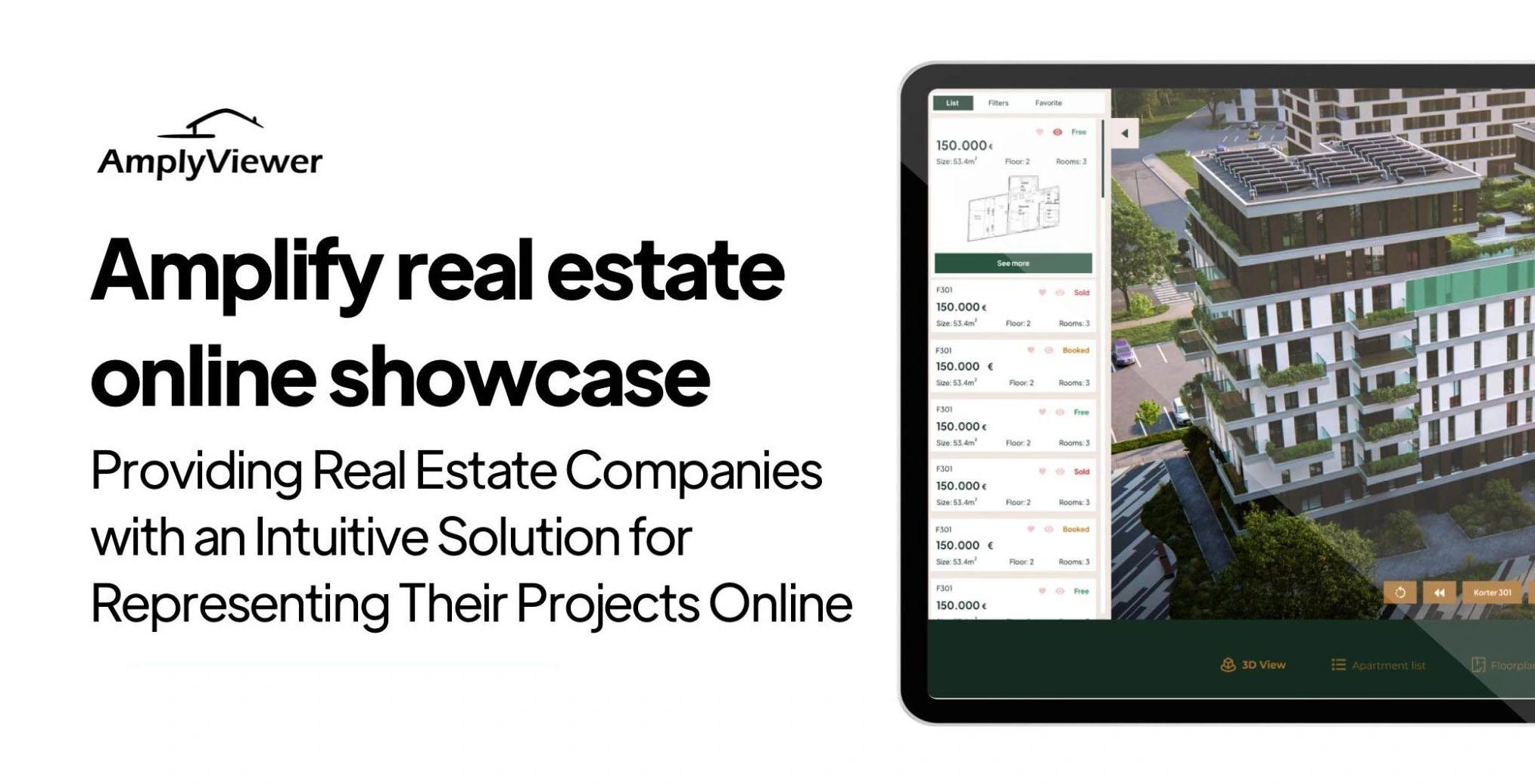
For developer clients, the destination problem is even sharper. A buyer who watched a five-minute video on a new project does not want to be sent to a PDF brochure and a static gallery. They want to keep exploring. The interactive viewer experience is part of why we built AmplyViewer the way we did. A YouTube viewer arrives ready to spend ten more minutes on the property, and the destination should give them somewhere to spend it. A static page wastes that momentum. An interactive 3D walkthrough of available units captures it. The deeper landing-page UX considerations that decide whether YouTube traffic converts at all are covered in real estate website user experience, and the broader set of interactive options for serious listings is in interactive ways to showcase properties.
Titles, Descriptions, and Thumbnails as Search Levers
Because YouTube is a search engine, the title and description are not branding decisions. They are ranking decisions. The most common mistake on real estate channels is to write titles in the voice of a listing agent rather than the voice of a searcher. "Stunning 4-bed family home in Boa Vista" is a listing-agent title. Nobody searches for it. "Is Boa Vista a good neighbourhood for families with school-age kids?" is a searcher title. Several hundred people a month search variants of it, and those are exactly the people who will become long-tail leads. Titles should be written by reading YouTube's auto-suggest results for your area, not by paraphrasing the headline you would have put on a listing flyer.
The description has two jobs that are routinely confused. The first sentence is the one that appears in the YouTube search snippet, and it has to give a viewer a concrete reason to click. The rest of the description does ranking work and should give YouTube enough natural-language context to understand what the video is actually about. Keyword-stuffed descriptions still work less well than well-written paragraphs that happen to contain the relevant terms, which is the same lesson that Google taught the web a decade ago and that YouTube has now fully internalised. Timestamps in the description help longer videos, both for viewers and for the rich result that sometimes appears in search.
Thumbnails are the third lever and the only one where the conventional advice mostly holds. High contrast, a clear human face where appropriate, and overlay text that does not duplicate the title. The piece of conventional advice worth ignoring is "test thumbnails aggressively". For the kind of evergreen neighbourhood content that wins on real estate YouTube, a thumbnail can run for two or three years, and the time spent A/B testing on a fresh upload is almost always better spent making the next video. Test only when an existing video has unusual reach potential and is underperforming on click-through against the rest of your channel.
What to Measure, and What to Ignore
The metrics dashboard on YouTube is large, and most of it is noise for a real estate channel. There are essentially three numbers that matter and one that is more dangerous than useful.
- Average view duration on neighbourhood videos, expressed as a percentage of total length, is the single best leading indicator of whether the channel is going to grow. Watch percentage below 35 percent on a six-minute video means the opening is failing. Watch percentage above 55 percent on the same video means the algorithm is about to surface it.
- Click-through from the description link to the destination page, measured on the website rather than inside YouTube. This is the only metric that converts viewing into business, and it depends almost entirely on whether the destination page matches the video, not on the size of the audience.
- Returning viewer share, available inside YouTube Studio, tells you whether the channel is building an audience or just intercepting one-off searches. A healthy neighbourhood channel runs at 25 to 40 percent returning viewers within the first year. Below that, the videos are working but the channel as an entity is not, and there is usually an editorial fix.
- Subscriber count is the metric to ignore. Almost nobody who hires an agent off YouTube subscribes to the channel first, and chasing subscriber growth biases the content toward the kind of personality-driven posts that perform on social platforms and underperform on YouTube search.
Most agents review these numbers far too often. A YouTube channel needs at least eight to twelve uploads of consistent format before the data is meaningful, and reviewing analytics on a per-video basis in the first six months is one of the more reliable ways to talk yourself out of the strategy that would have worked.
Where YouTube Sits in a Real Marketing System
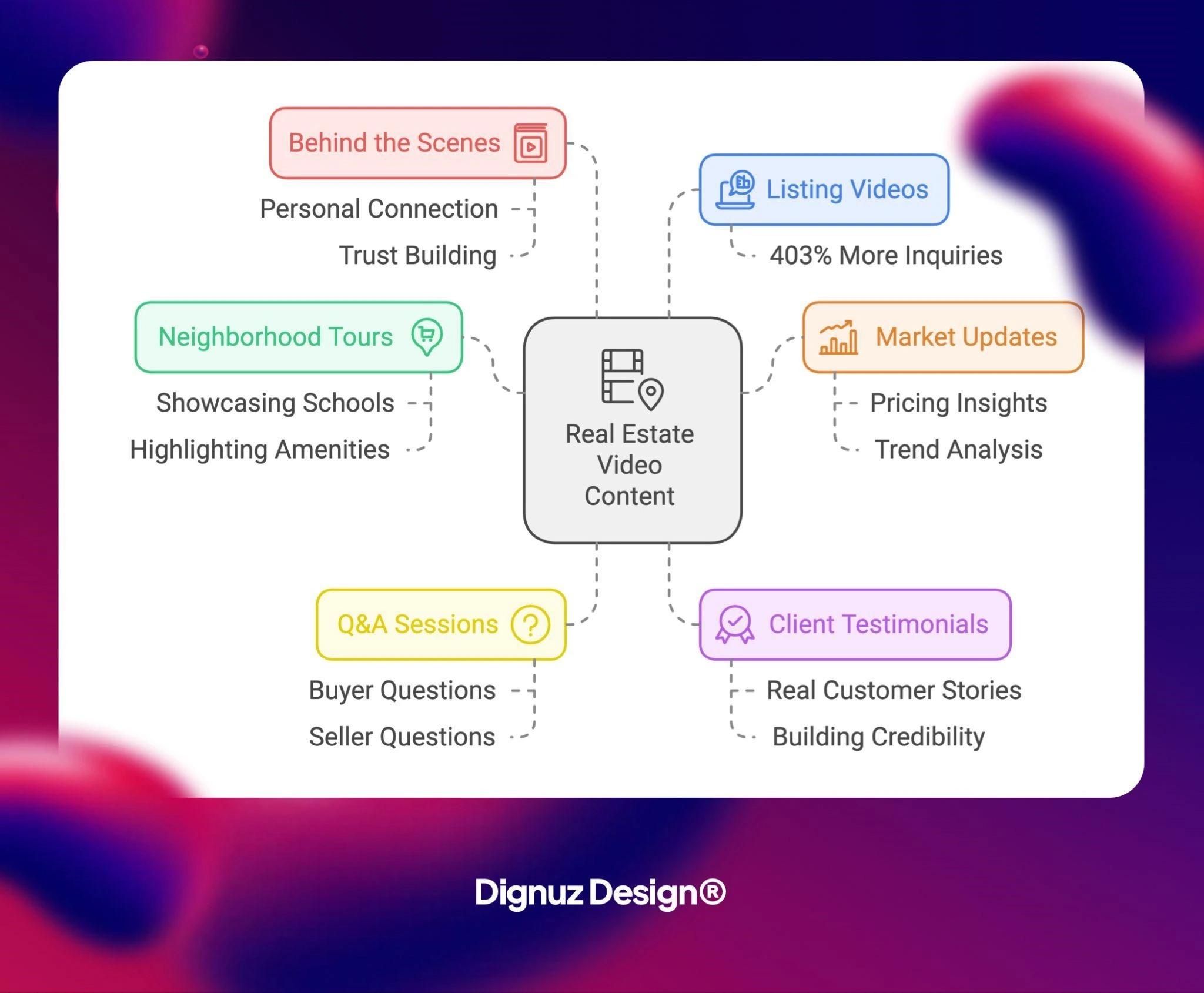
The reason a generic YouTube checklist almost never works for an agent or developer is the same reason a generic social media checklist does not. YouTube is one channel inside a system, not a system in itself. It sits in front of a website, behind a CRM, beside an email list, and adjacent to whatever paid distribution you run. Each of those pieces affects the others. A strong YouTube channel feeding a weak destination produces no business. A weak YouTube channel feeding a strong destination produces a trickle of unusually well-qualified business. The combination of both is rare in real estate marketing precisely because most operators put all their effort into one half of the system and assume the other half will resolve itself.
For property developers, the strongest version of the system is a YouTube channel that explains the area and a website that lets the viewer keep exploring the project interactively. For independent agents, it is a YouTube channel that owns a specific micro-market and a bio-and-listings stack that converts the search-driven traffic into appointments. For luxury agents, it is the cinematic channel paired with a presentation experience that justifies the price point. The matching of channel to destination is the work. The filming is the easy part. The wider funnel context, and how YouTube interacts with the other digital channels an agent should be running, is covered in estate agent digital marketing strategies and from a different angle in real estate social media marketing, which sits in front of this piece in the same content arc.
One last point that is worth saying directly. Building a YouTube channel that produces real estate leads is at least a twelve-month commitment, and most agents who quit do so somewhere between months four and seven, after the initial enthusiasm has worn off and before the search compounding has shown up. The channels that win are not the ones with the best gear or the most creative editing. They are the ones still uploading in month thirteen.
Frequently Asked Questions
How long does it take for a real estate YouTube channel to start generating leads?
For the neighbourhood-expert format, the realistic answer is six to nine months before the first inbound lead, and twelve to eighteen months before the channel produces consistent monthly pipeline. The reason is mechanical rather than artistic. YouTube's algorithm needs enough videos and enough viewer signal to confidently surface the channel in search, and that threshold is rarely hit in the first quarter of uploads. Agents who treat the first six months as audience-building rather than lead generation tend to make it through that window. Agents who measure month two by inbound calls almost always quit.
Do I need to be on camera to make a real estate YouTube channel work?
Eventually, yes, on the channels that produce leads. The neighbourhood-expert format depends on a recognisable human voice and face, because the audience is choosing not only the area but the person they might want to work with. You can run the first ten videos as voiceover-over-footage to find your editorial voice without the discomfort of being on camera, but the channel will not convert to actual inquiries at a meaningful rate until the agent appears in the frame. Cinematic property channels are an exception, since the property itself is the subject.
How often should I upload?
For a working real estate channel, one well-researched video every two weeks outperforms two rushed videos every week over any reasonable measurement window. The temptation is always to upload more, both because the conventional advice says to and because the algorithm feels punishing when you are starting. Resist it. A YouTube viewer remembers a channel that taught them something specific about a place. They do not remember a channel that posted seventy videos last year, half of which they did not finish. Consistency matters more than frequency, and consistency means honouring whatever schedule you can sustain in month eleven, not month one.
Should I run YouTube ads on my real estate videos?
Paid distribution can work, but only after the organic version of the channel is producing signal that the algorithm can amplify. Running ads on a channel with three videos and no audience is mostly buying view counts that do not convert. Running ads on a channel that already has half a dozen well-watched videos to a defined geographic audience can compress the ramp-up by several months and is worth budgeting for once that base exists. Housing-related ads also carry compliance considerations on every major platform, and any paid distribution targeting should be set up with Fair Housing rules in mind from the first campaign rather than retrofitted later.
Is short-form video on YouTube Shorts useful for real estate?
Shorts are useful as a feeder into longer videos, not as a primary channel format. A short clip of a single street, a market data point, or a viewing tip can pull viewers into a related long-form video that is doing the actual conversion work. Treating Shorts as a separate strategy almost never produces leads in property, because the format is too brief to do the trust-building that turns a viewer into a client. Used as discovery on top of a real long-form channel, they materially improve session time and channel growth, which is exactly the kind of compounding effect YouTube's current algorithm rewards.
Where does AI search fit in this, given the way buyers are starting to research online?
Increasingly, buyers do not start on YouTube directly. They start on an AI tool, ask a question about a neighbourhood, and click through to the source the model surfaces. A well-built real estate YouTube channel becomes one of those sources, because models lean heavily on transcribed video content and on the surrounding written descriptions. The same neighbourhood-expert format that ranks on YouTube tends to be the format that gets cited by AI tools, which means the long-term payoff of this channel type is becoming larger rather than smaller. As an aside, the daily flow of changes in property marketing and AI search is exactly the kind of thing I built AmplyDigest for: it summarises newsletters and videos into one morning email so you can keep up without spending an hour a day on it.