How to Stand Out as a Realtor: What Wins Clients Today

Every article about how realtors can stand out reads the same way. Run more social media. Get a logo. Buy a 3D tour. Send more emails. The writers never look at the actual question underneath, which is how clients pick an agent in the first place. Once you look at that data, the answer to "how do I stand out" becomes much narrower, and a lot of the standard advice falls away.
I run a small studio called DignuzDesign, where I build websites for real estate developers, architects, and agents. I also run Faraday3D, where we produce renders and virtual tours for the same kind of client. Between those two pieces of the business, I see the full marketing stack that an agent or developer puts in front of buyers, and I see which parts actually move people from a Google search to a viewing booking. The thing that frustrates me about most "stand out as a realtor" articles is that the people writing them have never watched what a buyer actually does in the first ninety seconds on a listing page. The advice ends up being aspirational rather than mechanical.
This piece is about the mechanical version. What clients actually use to choose you, what they look at before they ever pick up the phone, and where investing in technology and presentation actually pays back.
The Decision Is Faster Than You Think
The single most useful piece of data for thinking about how to stand out comes from Zillow's Consumer Housing Trends Report for Agents. According to their survey, 47 percent of buyers and 59 percent of sellers hire the first agent they speak to. That is not a small number. Most clients are not running a beauty contest between three candidates. They are talking to one person and then signing.
The implication is the opposite of what most realtor marketing advice assumes. The competitive moment is not the meeting. It is everything that happens before the meeting, because by the time the client calls you, they have already decided you are probably the one. The same Zillow report shows that 36 percent of sellers now find their agent through online channels, more than double the share in 2018, and that 33 percent of buyers say online research played a key role in how they chose their agent. The agent profile, the photos on the website, the listings the buyer has been clicking through for weeks - that is the interview. The call is the confirmation.
The National Association of Realtors' Profile of Home Buyers and Sellers backs this up from the other direction. The single biggest factor sellers cite when choosing an agent is reputation, at 35 percent, followed by trustworthiness at 21 percent. Reputation does not get built during the listing presentation. It is built in the months and years before the call, in the visible trail of work the agent has put online. If clients are choosing on reputation and most are interviewing only one person, the agents who win are the ones whose visible trail is dense, current, and clearly theirs.
The conclusion that follows from those two reports is uncomfortable for a lot of agents: most of the work of standing out is done before any client ever knows you exist. If you wait until you have a listing to invest in your visual presentation, you have already missed the part of the funnel that does most of the conversion.
The Online Research Filter
When a seller searches for an agent in their area, they almost never end up scanning a long list and ranking it. They look at two or three names, click into each, and within about a minute they decide who feels real. That minute is where most agents lose, and they lose for predictable reasons. There is no clear photograph of the agent. There are no recent sold listings shown with anything more than a thumbnail. There is no actual writing from the agent about the area. The page tells a visitor nothing about why this person is different from the next one.
I see this every week in the analytics of the agent and developer websites I build. The pages that drive inquiry on agent sites are almost always the same two: the agent's bio page, and a single high-quality recent listing or sold project. Everything else, including the home page, gets less attention than people assume. The implication for how you spend time is that the highest-leverage work is not adding more pages. It is making those two pages genuinely strong.
A strong agent bio page on its own is one of the cheapest pieces of differentiation in real estate. It needs a real photograph that does not look like an MLS headshot, a paragraph in your own voice that explains how you actually work, a small set of recent transactions with the actual outcome, and a credible reason a stranger should trust you. Most agents have none of these. The few who do stand out without doing anything else. If you want a deeper take on why this matters more than most marketing tactics, the piece on what makes a real estate agent stand out covers the positioning side of the same problem.
Photography Carries More Weight Than Any Other Marketing Choice
The 2025 NAR Profile of Home Buyers and Sellers found that 81 percent of buyers rate listing photos as the most useful feature during their online home search. That number has been at or near the top of NAR's list for years. Photography is not one of several things that matter for an agent. It is the single thing that matters most, and it is also the thing most agents cut corners on.
Working with developers and agents on hundreds of listings has taught me a few things about why so much agent photography is mediocre. Most agents buy a photography package as a transaction cost rather than as a marketing investment, which means they accept whatever the vendor delivers and never push back. The vendor knows this and works in volume. The result is a set of correctly exposed but generic frames that look like every other listing in the area. There is no point of view in the framing, no consideration of how the lead image will perform as a thumbnail on Zillow or Rightmove, and no consistency from listing to listing that signals a coherent agent brand.
If you want to stand out without changing anything else, the cheapest move is to buy better photography and use it consistently. The 2025 Zillow report also shows that 78 percent of sellers were more likely to hire agents who offer high-resolution photography. That is a hiring lift, not a listing lift. The decision to invest in better photography is paying off twice: once on the listing itself, and once on the next seller who is comparing you to a competitor whose photos are not as good. The deeper mechanics of how lighting, composition, and time of day affect listing performance are covered in our piece on real estate photography tips, which is worth reading before the next shoot you commission.
Consistency matters as much as quality. An agent whose listings all look like they came from the same visual studio reads to a seller as someone with a system. An agent whose listings look like they came from twelve different sources reads as someone winging it. The piece on consistent real estate photography branding goes into how to set this up without micromanaging every shoot.
Where 3D and Virtual Tours Actually Earn Their Place
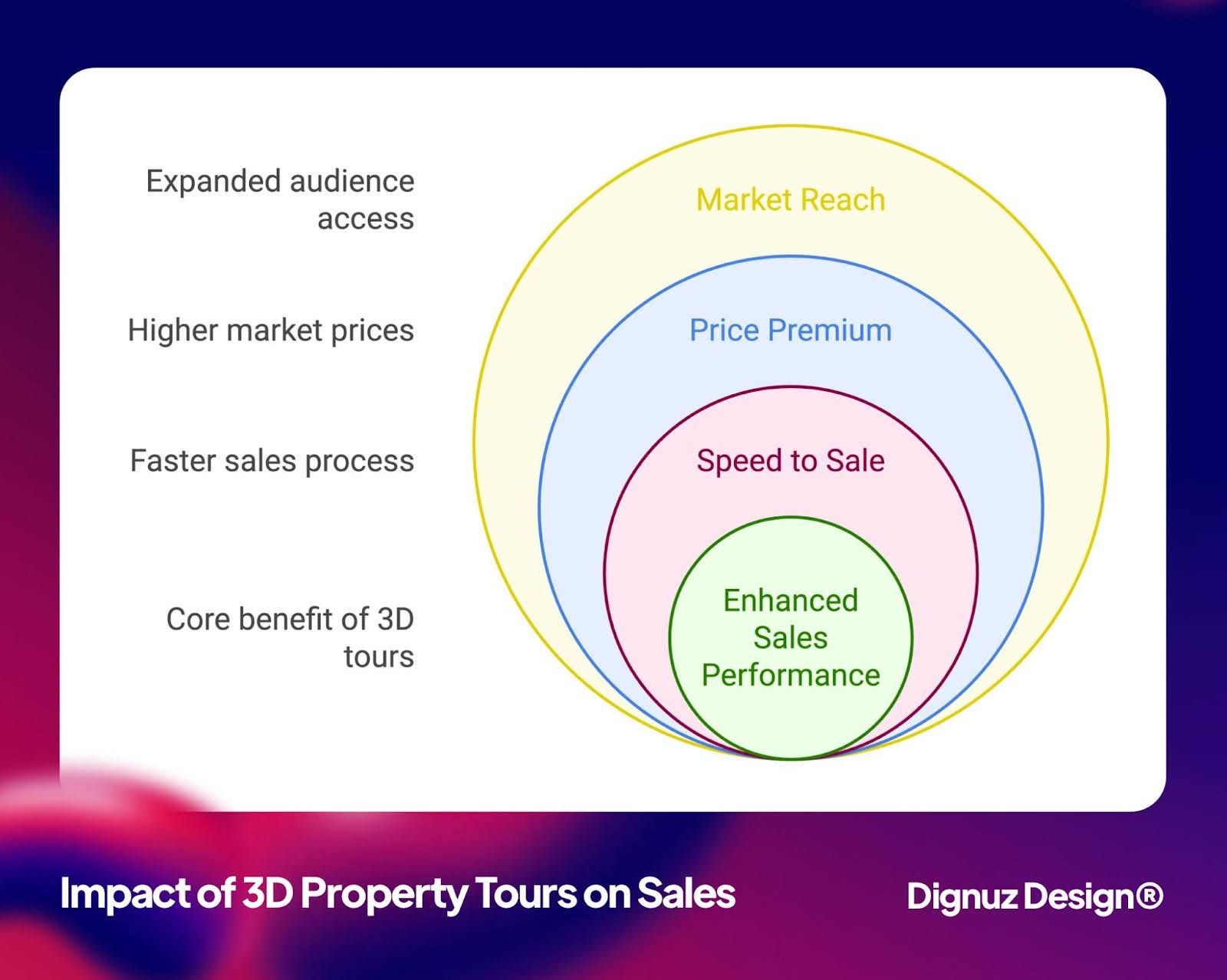
The original version of this article led with 3D tours and quoted a statistic about them selling properties 31 percent faster and at four to nine percent higher prices. The numbers floated around the industry for a while, were never sourced to a real study, and have been quietly dropped by most serious commentators. The fact that buyers do not respond uniformly to 3D tours does not mean the format is useless. It means it has a specific job, and you need to know what that job is before you spend money on it.
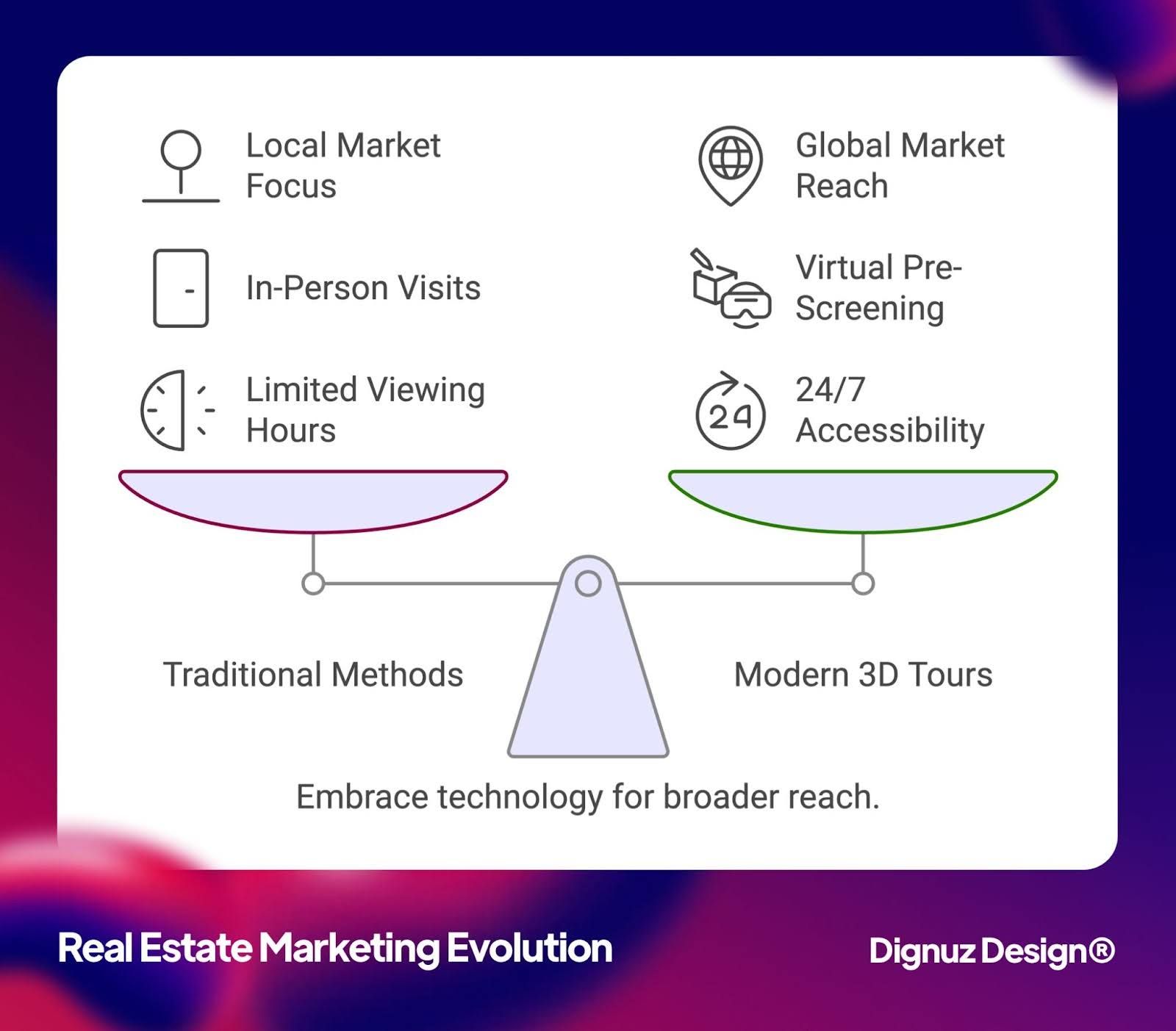
What 3D tours actually do well, based on the analytics from the developer sites I build for, is keep a serious buyer on a listing longer and reduce the volume of low-intent viewing requests. Buyers who would never have flown in to see a listing now self-screen before booking. Buyers who would have walked through and dismissed the property in five minutes can pre-walk it from a laptop. That is the value. It is not a magic accelerant on every listing.
The places where the tools genuinely move the needle are:
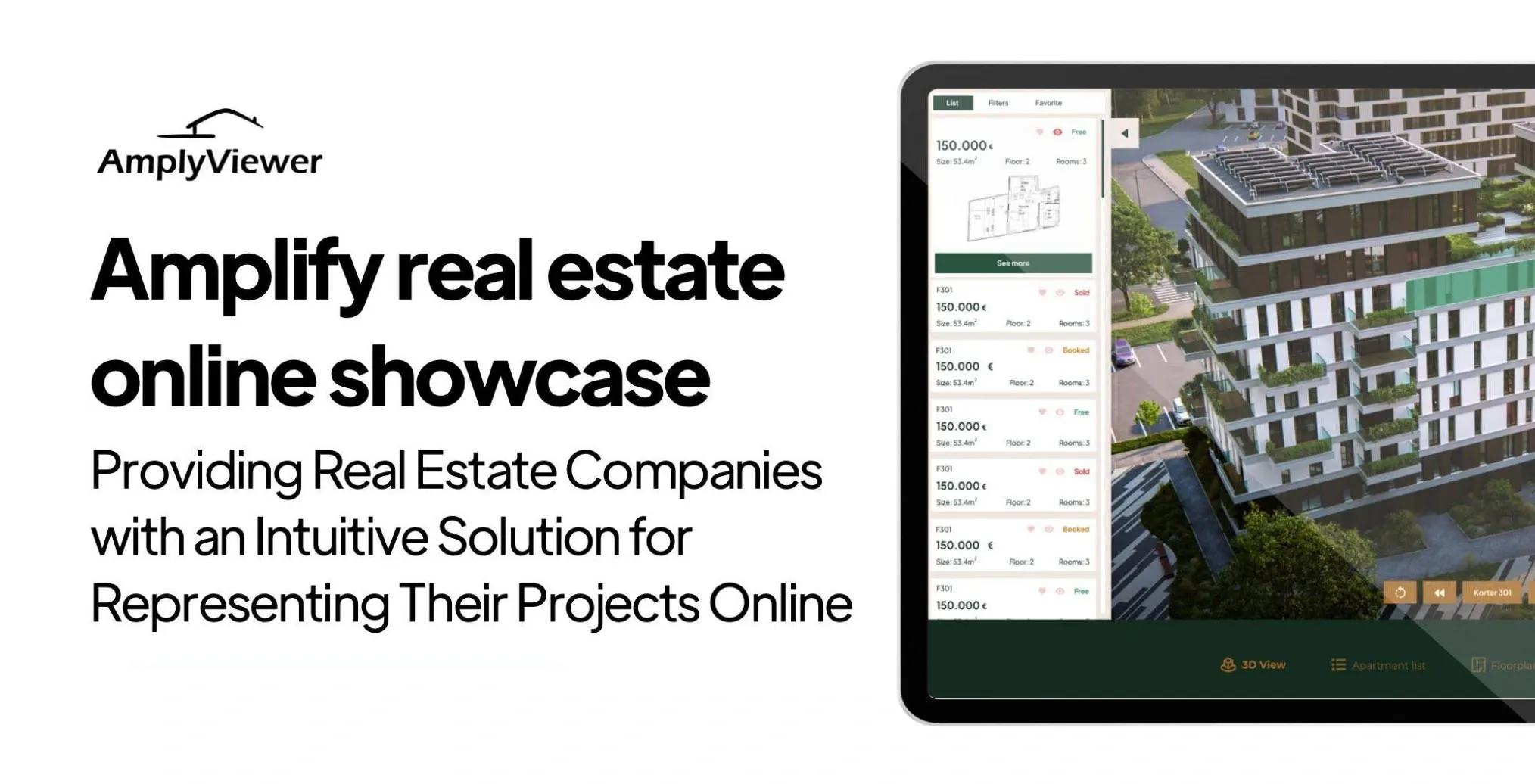
- New construction and off-plan sales, where there is no physical unit to walk through and a 3D walkthrough or render is the only way a buyer can experience the space before deciding. This is where I see the highest impact, and it is also where our work on AmplyViewer spends most of its time, because the interactive viewer was specifically built for developers selling units that do not yet physically exist.
- Out-of-area or international buyers, who cannot physically visit and need a way to qualify properties remotely. For luxury and second-home markets this is the difference between making the shortlist and being filtered out.
- Architecturally distinctive properties, where the layout is the selling point and conventional photography cannot communicate the spatial experience. A converted warehouse or an unusual floor plan benefits far more than a standard three-bedroom semi.
On a normal listing in a normal market, the same Zillow data shows that 75 percent of sellers are more likely to hire agents who provide virtual tours and interactive floor plans. That is again a hiring effect rather than a sale-speed effect. Offering it makes you look more equipped than the agent across the street, even when the buyer never actually uses the tour. That is a perfectly good reason to have one in your toolkit. It is not a good reason to put it at the centre of your pitch. The deeper case for where immersive 3D actually changes outcomes is in the piece on immersive 3D real estate experiences.
Owning a Category You Can Actually Win
Most agent marketing fails because the agent is trying to compete on the general category of "real estate in our city". That is not a winnable position unless you are the dominant player already. The agents who break out tend to do one of two things instead. They get specific about a geography that is narrower than a city, often a single neighbourhood or even a few streets. Or they get specific about a property type or buyer profile, such as period homes, new builds in a specific development, downsizing retirees, or international investors. In both cases, the strategy is the same: you make the addressable market small enough that you can be obviously the best person in it.
From a marketing point of view, this changes everything about what you produce. A generalist agent writing area guides for an entire city ends up with thin, indistinguishable content. A specialist agent who has worked thirty deals in one neighbourhood can write a page that no algorithm and no generalist can match. The same applies to photography. A specialist who shoots in the same area repeatedly develops a recognisable look. The framing on the listings starts to feel intentional rather than rented. Buyers in that area start to recognise the work before they know the name.
This is also where the messaging stops being generic. There is a difference between "I sell homes in the city" and "I sell Victorian terraces in three specific postcodes and I know which ones flood." The second statement does the work of differentiation in a way no marketing tactic can replicate. The piece on real estate marketing messages that resonate goes into how to construct these messages without sliding into cliche.
Building a Digital Footprint Clients Actually Look At
Once the decision to specialise is made, the question of where to invest digitally becomes much simpler. You need three things working together: a website that loads quickly and feels like yours, a clear way to be reached, and a steady output of work on at least one platform where your target clients spend time.
The website point is worth dwelling on. Agent websites are usually one of three things. They are a template from a portal vendor that looks like every other template from that vendor. They are a WordPress build that nobody has maintained for three years. Or they are a single-page profile bolted onto an MLS feed. None of these reads as serious to a prospective seller comparing options. A site does not need to be elaborate to do the job. It needs to load on mobile within two seconds, show recent work prominently, make the agent feel like a person, and provide a low-friction way to start a conversation. Most agent sites I am asked to rebuild fail at least two of those four. The general principles are covered in our piece on property listing design best practices, which applies to agent and developer sites equally.
Beyond the site, the next mechanical improvement is making yourself easier to contact and share. A digital business card is one of the few pieces of agent infrastructure that has actually changed the conversion path in the last few years. When a referral lands and the prospective client wants to share you with their partner before booking a call, an old-school contact form does not survive that handoff. A shareable digital card does. This is the kind of small, mechanical thing that does more for client acquisition than another social media platform.
On social media, the rule that has held up across every agent I have worked with is to pick one platform and produce real work on it consistently. Not three platforms half-heartedly. Not a content calendar built from generic templates. Real work. A specific listing, a specific street, a specific transaction explained in your own voice. The piece on social media rules for realtors is worth reading before committing to any platform, because the cost of the wrong choice is months of effort that produces nothing.
The Habit That Beats Most Tactics
None of the work above matters if you cannot follow up. The single most consistent observation across every agent and developer client I have worked with is that the difference between the agents who win and the agents who plateau is not technology. It is whether they reply within an hour, remember what was said in the last conversation, and stay in front of past clients without becoming a pest. The NAR data backs this up indirectly. Most repeat buyers say they would consider working with the same agent again, but only a small share actually do, because the agent disappeared after the closing.
The technology side of this is much smaller than vendors want you to believe. A simple CRM with reminders, a calendar block for client outreach, and a habit of writing things down after a viewing is enough for almost any independent agent. The bigger thing is the discipline. Standing out comes from being the agent who answers, who remembers, and who shows up again three years later when the client is ready to move. None of that scales through software. All of it compounds.
💻 Let us help you create a stunning online showcase for your projects that works seamlessly across all devices. Ready to amplify your real estate business? 👉 Explore AmplyViewer now
Frequently Asked Questions
How long does it take to actually start standing out as a realtor?
The visible changes that move client decisions show up within a few months. A new website, better photography, and a focused specialisation can shift inquiry quality within the first quarter. The deeper reputation effect, where you are recommended without having to ask, builds over twelve to thirty-six months of consistent work in the same niche. Most agents quit somewhere around month four because they expected a faster lift.
Are 3D tours worth the cost for a single agent rather than a developer?
It depends on the price band. For luxury, distinctive, or out-of-area properties the cost is recovered easily. For standard listings in a competitive local market, the value is mostly in the hiring effect, where having a tour on offer helps you win the listing rather than helping you sell the unit faster. If you do invest, focus on a small number of high-value listings rather than putting a low-quality tour on every property.
What is the most important page on an agent's website?
The agent bio page, by a wide margin. It is the page sellers and buyers click on when deciding whether to call. A strong bio page with a real photograph, work history, recent transactions, and the agent's own voice does more for conversion than the home page or the listings page. Most agents underinvest in this page because they assume the listings are doing the work. They are not.
How important is social media for attracting new clients?
It is one channel among several, not the channel. The agents I see succeeding on social media do so because they treat it as a place to publish real work consistently for a specific audience. The agents who fail treat it as a content calendar and post generic material to a generic audience. Pick one platform where your target clients actually spend time and commit. Skip the rest until that one is working.
Should new agents copy what established agents in their area do?
No. If you copy the dominant agent's tactics with a smaller budget and less name recognition, you will lose every comparison. The better move is to look for a category they are not serving well, or are too big to bother with, and position yourself as the obvious choice in that smaller market. Specialisation is the only competitive advantage available to a new agent.
What is the single highest-return change an agent can make this year?
Invest in better photography and use it consistently across every listing and every channel. It is the closest thing to a guaranteed return in real estate marketing. It improves listing performance, it improves the agent's perceived professionalism, and it carries directly into the hiring decision when the next seller is comparing options.
Closing Thought
Standing out as a realtor is less about tactics than most articles on the topic suggest. The data on how clients actually pick agents is clear. They use reputation, trust, and a fast online filter, and they usually do not interview many people. The agents who win that filter are the ones with a sharper specialisation, better visual presentation, a real digital presence, and the discipline to follow up. Most of the technology in real estate marketing is in service of those four things. None of it replaces them.