Real Estate Marketing Messages That Convert Buyers

Most real estate marketing messages sound interchangeable because they are written as if the words do the work alone. They do not. By the time your message reaches a buyer, it has already been filtered through a portal card, a hero image, a loading spinner, a phone screen held at a train station, and three other listings the same person opened in adjacent tabs. The message is never just the words. It is the whole package and the timing of it, and that is why most of the "persuasive copy" advice floating around real estate marketing fails the moment you ship it.
I am Dimitri. I run DignuzDesign, a studio that builds custom sites for real estate companies, architects and property developers, and Faraday3D, the 3D visualization studio that often produces the renders and interactive tours those sites ship with. Between the two, I also build AmplyViewer, an embeddable 3D property viewer that lets buyers explore a property on a listing page before deciding whether to visit. Most weeks I am working on a listing template, a message on that listing, and the interactive tour embedded beside it at the same time. That is the angle this article is written from. The goal is to tell you what a real estate marketing message actually has to do in 2026, not to recite the generic "know your audience, use a strong CTA" checklist that every marketing blog has already written.
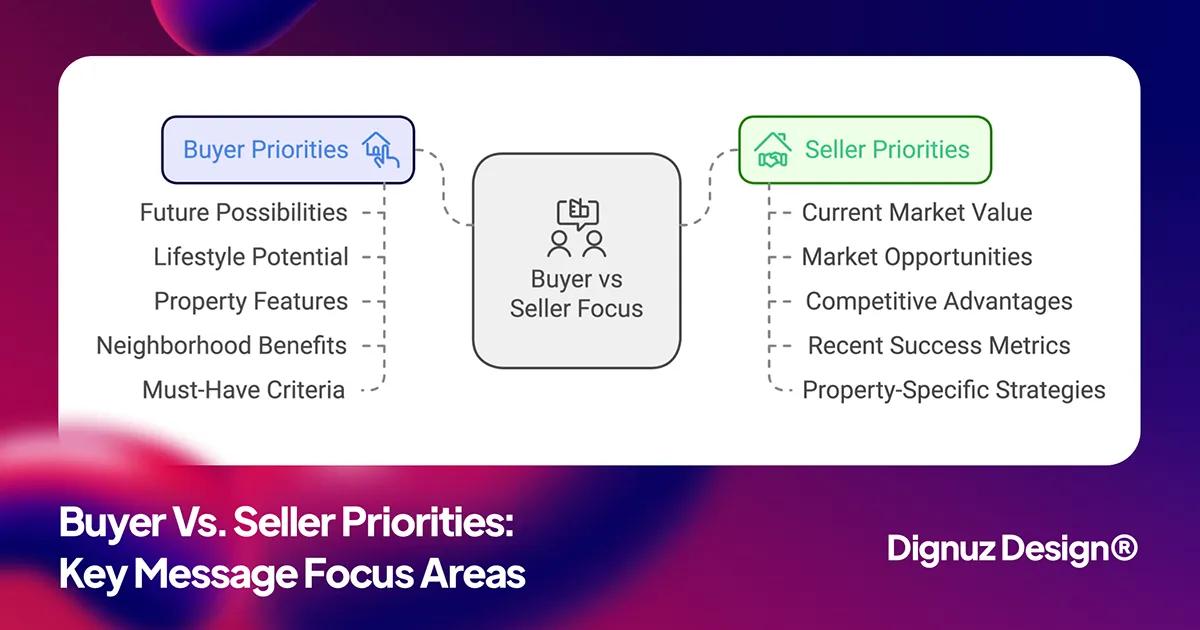
What Buyers and Sellers Are Actually Doing When Your Message Arrives
Start with the behavior, because it has changed more than most agents want to admit. In the National Association of Realtors 2025 Profile of Home Buyers and Sellers, the median buyer search took ten weeks and involved a mix of online browsing and in-person viewings, with 88% of buyers ultimately using an agent. The same report ranked finding the right property as the single hardest part of the purchase for 56% of buyers. That sets the real shape of the problem. You are not sending a message into a silent room. You are sending it into the tenth week of someone's increasingly frustrated search, where they have already rejected twenty listings and started to distrust the language in the ones that sound too good.
On the seller side, the picture is different but related. Sellers who come to you in 2026 have usually been watching Zillow, Redfin or Rightmove for months before they speak to anyone. They have a rough, and often wrong, number in their head. Any message that ignores what they already believe about the market will be read as salesmanship. Any message that engages with it earns a reply.
This is the context your messaging actually lives in. The generic advice to "personalize" and "tell a story" does not survive contact with a buyer who has seen your listing for the fourth time across three devices. What survives is specificity and respect for how tired the audience already is.
The Message Is Never Just the Words
The single biggest mistake I see in real estate marketing is writing as if the text runs on its own rails. It does not. A buyer reading "sun-filled family home" on a listing card with a dim, auto-flashed phone photo registers the words as a lie. The same phrase beside a bright, consistently graded hero shot and an interactive floor plan registers as a plain description. Same words. Different outcome, because the medium changed what the message meant.
Zillow's Consumer Housing Trends Report makes the point with unusual clarity: 72% of buyers somewhat or completely agreed that a 3D tour gave them a better feel for a space than static photos, and 67% said they wished more listings had 3D tours. What that means for messaging is not "add a 3D tour," although you probably should. It means your copy is now sharing the page with an interactive element, and it has to behave differently when it is. If a buyer can already walk the layout in a viewer, the description should stop listing rooms and start doing what the viewer cannot: telling them the neighborhood is quiet on weekday mornings, the natural light peaks at 3pm in the main bedroom, the basement was rewired in 2022. The copy narrates what the immersive tour does not.
This is one of the practical insights that is only visible if you ship both at once. When we embed an AmplyViewer tour above the fold on a developer's project page, the right copy around it looks almost nothing like the copy we wrote for the same project's flat PDF brochure six months earlier. The viewer has already done the "feel of the space" work. The words need to pivot to decisions: orientation, finishes, what changes between the second floor and the penthouse. Treat the immersive experience and the text as one composition and the message starts working harder per word.
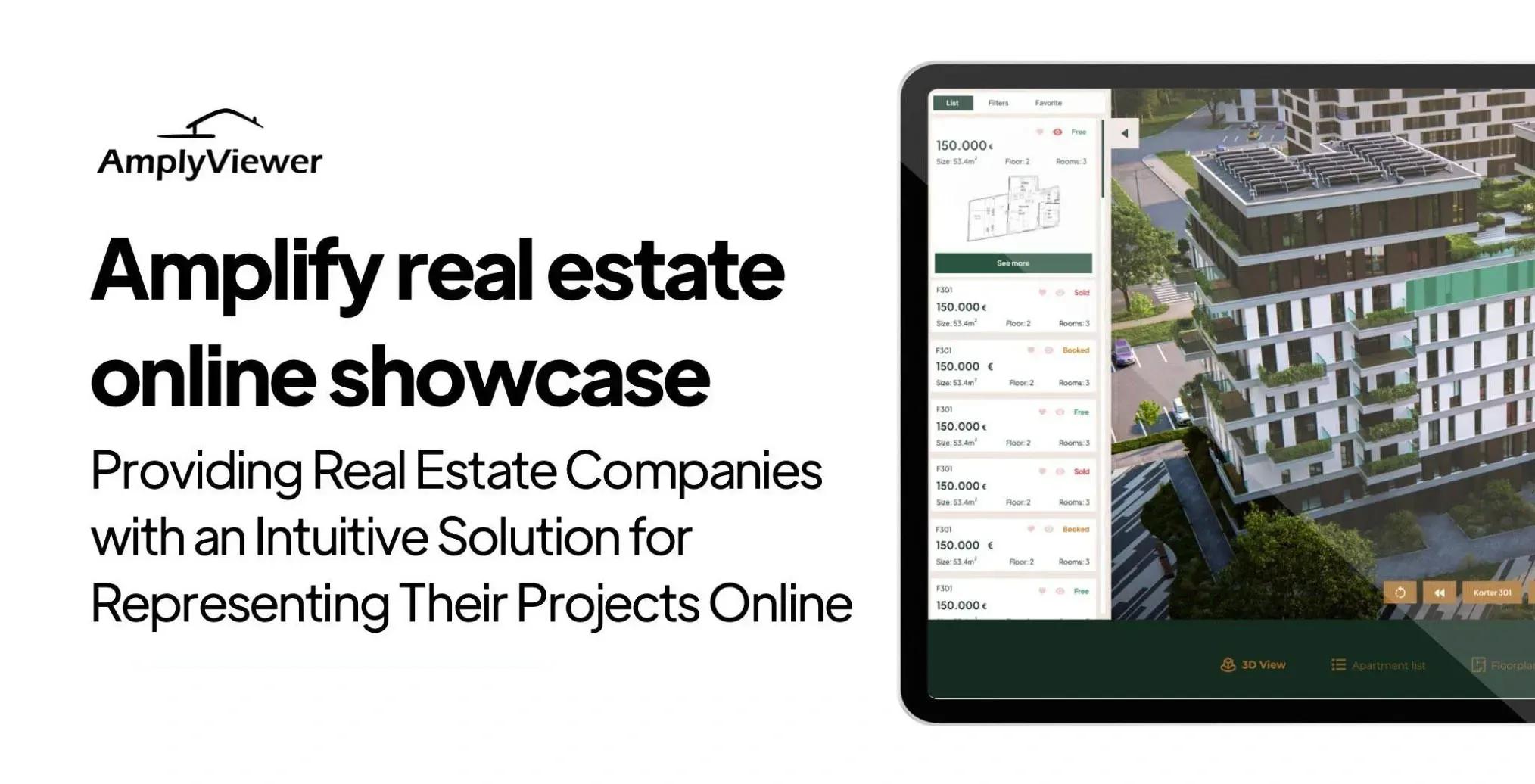
💻 Let us help you create a stunning online showcase for your projects that works seamlessly across all devices. Ready to amplify your real estate business? 👉 Explore AmplyViewer now
Property Descriptions That Actually Move Price
There is real research on this, and it is more specific than the "use sensory words" advice typically trotted out. A 2023 Iowa State University study by Hua Sun and collaborators, built on Zillow data, found that listings using "experiential" descriptions alongside more photographs commanded measurably higher sale prices, particularly for homes that deviated from the neighborhood average. The effect was largest at the top and bottom ends of the local price band, where buyers have the least comparable inventory to anchor on and rely more heavily on the description to form a mental model.
The practical read of that finding is not "write more flowery descriptions." It is that descriptions pay off most where a property is hard to compare to its neighbors. A standard three-bedroom in a developer estate does not need, and will not be helped by, rich narrative copy. The listing card and the photos carry it. But a renovated stone house on a street of new builds, a split-level penthouse in a tower of flats, a restored period property on a road of semi-detached 1980s homes - these are properties where the description is doing real pricing work, because the buyer has no nearby listing to index against.
So write your descriptions proportional to the property's distance from its neighbors. For comparable stock, keep it factual and specific: materials, dimensions, recent improvements with years, utility bills, what is included in the sale. For atypical stock, spend the word budget that the research says pays off: describe the experience of the space, the unique constraints the architect solved, what the current owners discovered after living there a year. This is also where a serious property listing design pays back, because atypical stock needs more room to breathe on the page than a portal template allows.
Two small mechanical points I insist on with clients. Never begin a listing with the bedroom count. Portals already show it. Use the first line for what is specific to this property, not what is common to its category. And stop using the real estate vocabulary that has been drained of meaning by overuse: "spacious," "stunning," "must-see," "a true gem." These words now read as filler, which means a description built on them reads as having nothing specific to say.
Buyers Are Not One Audience, and Neither Are Sellers
The generic framework splits the world into "buyers" and "sellers." That is too coarse to write against. The three segments that behave most differently in practice are first-time buyers, repeat move-up buyers, and investors. The Zillow report noted that 72% of buyers cite a life event as the reason for the move, with household size changes leading at 42%, remote work second at 30%, and a job change at 28%. That life-event framing is useful because it tells you what your message is actually competing with in the reader's head.
A first-time buyer reading your message is almost always also reading a mortgage calculator, a guide to stamp duty, and a Reddit thread about whether the neighborhood floods. They do not need another "your dream home awaits" email. They need help collapsing uncertainty. Write to them with numbers, timelines, and what to expect at each step. The message that earns their reply is the one that sounds least like a sales message.
A repeat buyer, usually up-sizing after a household change, is already emotional but in a way that looks calm. They are deciding against their current home, not just for your new one. Messages that reference the cost of staying, the tipping point where the current property stops working, and the realistic sequence for selling and buying in their specific market land harder than abstract aspiration does.
An investor does not care about "lifestyle" copy. They want yield, unit mix, tenant demand, and a credible projection. A single paragraph of rental comparables and a recent occupancy number will outperform a page of lifestyle prose, every time. If you run both owner-occupier and investor listings off the same template, you are mismatched on half of them.
On the seller side, the underrated segment is the one that has not listed yet. The seller-oriented marketing strategy for real estate operators that works best is the one that earns attention before a decision to sell has been made. A quarterly note to a neighborhood that opens with three sold prices from the last 90 days, one sentence on what they tell you about demand, and a link to get a realistic valuation will outperform a glossy "thinking of selling?" postcard every time. The message respects what the reader is actually doing, which is casually calibrating their sense of their own property's worth.
Calls to Action That Match Where the Reader Is
Most real estate CTAs are written as if every reader is ready to convert right now. They are not. A decent listing page or email gets read by people at three distinct distances from a decision: browsing, shortlisting, or ready to move. A single "Book a viewing" button treats all three the same, which is why most of them click nothing.
What works better is a primary CTA matched to the likely majority action and a secondary CTA for the next most likely one. For a listing that has been live for a week, the primary is probably "Book a viewing" but the secondary should be "Save this property" or "Get alerts for similar listings." For a just-launched development, the primary is likely "Download the brochure" or "Explore the 3D tour"; a "Book an appointment" button as the only option will harvest the two ready-to-buy readers and lose the other hundred. For an email to a seller-intent list, the primary should almost always be "Get a realistic valuation," with a secondary of "See recent sales on your street." The pattern is that the CTA is a menu, not a single door.
This is also where the distinction between a portal listing and your own website becomes load-bearing. On the portal you are stuck with its CTA grammar. On a listing hosted on your own site, you own the entire stack, and a properly designed real estate web page built for conversion will outperform the same property on a portal for qualified enquiries, because the CTA can match the actual composition of the audience.
Market Intelligence in the Message, Not Next to It
One of the weaker patterns in real estate messaging is the "market update" that lives on a separate page and gets pushed out monthly. Buyers and sellers do not visit a market update page. They read the message that is directly in front of them. If you want market intelligence to do work, it has to live inside the specific message to the specific person.
Compare two versions of the same outbound to a seller list. The first says "the market is strong, now is a great time to sell." The second says "three properties on your road have sold in the last sixty days. The average time on market was nineteen days, and two sold above asking. If you have been wondering whether to move, this is what the last quarter of data looks like." Same claim. Different signal. The second one reads like it was written by someone who spends their days inside this data, because it was. The first one reads like it was written by a template, because it was.
The same logic applies to buyer messaging. Tell a first-time buyer that mortgage rates on two-year fixes have moved by a specific number of basis points in the last month and explain what that does to the repayment on a property at their target price. That message is market intelligence shaped into a decision aid. The generic "rates are moving, act now" version has been optimized out of buyers' attention for a decade.
Brand Voice and the Cost of Sounding Like Everyone Else
There is a voice failure mode specific to real estate marketing. Read ten agent or developer email messages in a row and they become indistinguishable: the same adjectives, the same cadence, the same soft-exclamation closing. That sameness is a brand problem, not a copy problem. If your email ever feels interchangeable with your three local competitors' emails, your brand is undifferentiated, and no amount of clever property copy will fix it.
The cleanest way to tell whether a voice exists is to take your last ten messages, remove your logo and signature, and ask whether anyone on your team can identify them as yours. Most agencies cannot pass this test. The fix is not a tagline. It is a written voice spec: what your messaging says, what it refuses to say, what adjectives it has retired, what sentence lengths it favors, what the opening and closing conventions are. A developer with a serious property developer brand identity has this document, even if it is a single internal page. An agency without it writes differently every time a different person opens Mailchimp.
In the luxury segment, the voice problem is even sharper. High-end buyers have a finer-tuned ear for effort than mid-market ones, and nothing signals "trying too hard" more than a message built from luxury-marketing cliches. I wrote up what actually differentiates messaging for high-end buyers separately, and the shortest version of it is: the premium signal is usually restraint, not decoration.
Where the Medium Changes What the Message Can Say
Rightmove, the dominant portal in the UK, has added video viewing functionality to over 400,000 properties, and the platform's own data is that there is a direct correlation between listing click-through and the number of viewings booked. In most markets the portal you list on now carries images, floor plans, video and a 3D tour in the same card. That changes the editorial job of your description, because the buyer is no longer using it to picture the property. They have already pictured it. They are using it to decide whether to trust you.
This is where the intersection of 3D rendering services, video walkthroughs and on-site copy becomes strategic rather than decorative. If your listing has a good 3D tour, your description should not repeat the spatial information the tour already conveys; it should add the information the tour cannot. That is: dates, materials, boring structural facts, adjacency details the camera did not catch, and a short, honest account of what kind of buyer this property is really for. The message and the medium should stop duplicating each other and start dividing labor. That division is what the generic "tell a story" advice never mentions, because it has never actually worked alongside the visual assets.
A Short Implementation Sequence
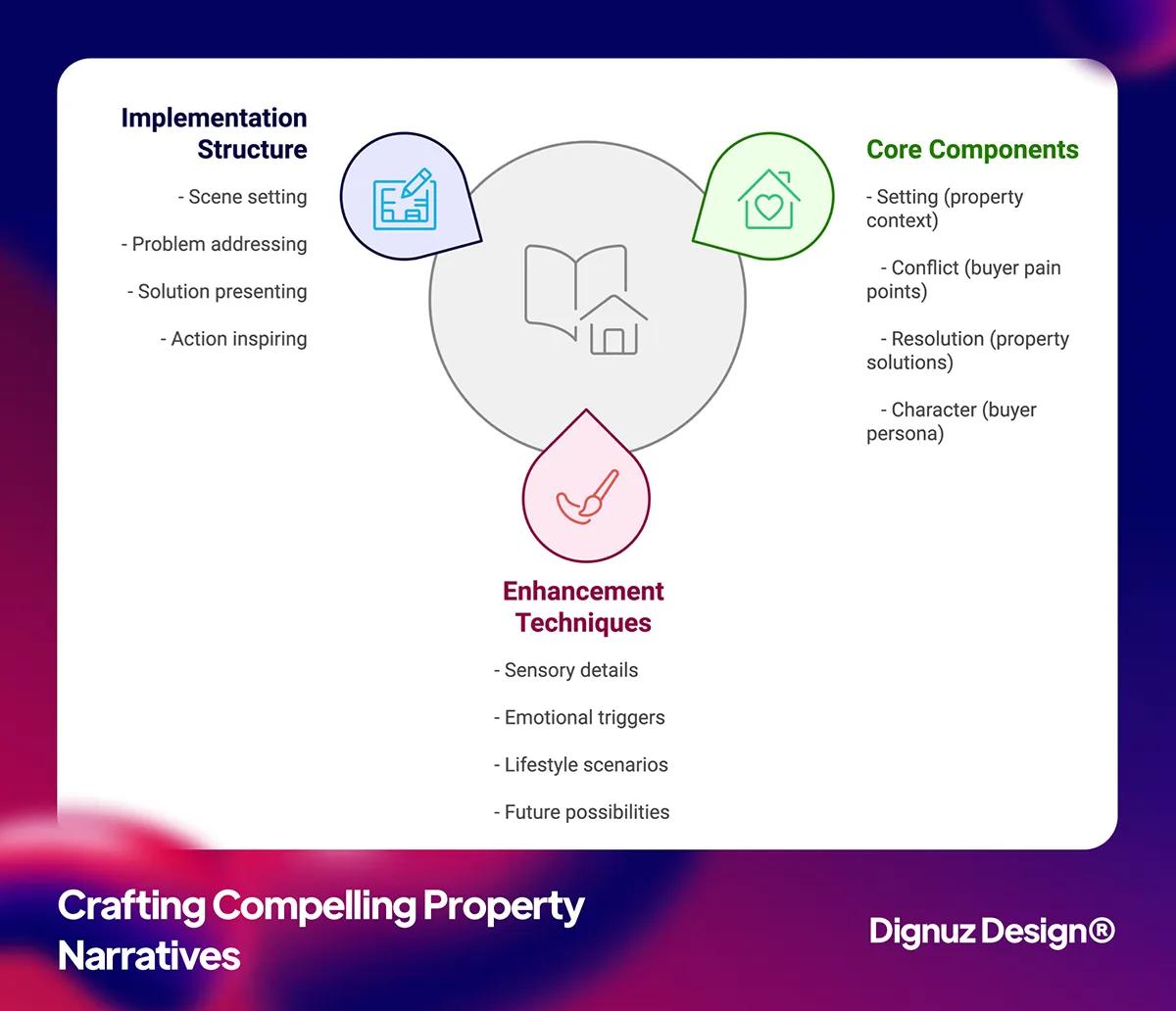
If you want to upgrade your real estate marketing messages, the order that actually works looks like this. Tighten your buyer and seller segments until you can describe three specific readers you write for, not two abstract ones. Rewrite one flagship listing with the description proportional to the property's distance from its neighbors. Match your CTAs to the composition of your actual audience at each touchpoint, not to the single reader who is ready to convert today. Move your market intelligence inside specific messages rather than onto a separate page. And stress-test your last ten messages for whether they sound like you or like anyone. Do these five things and your messaging will do more work than a year of generic "improve your copy" advice will deliver.
Frequently Asked Questions
How long should a real estate listing description be?
Long enough to do the pricing work the photos cannot, and no longer. For comparable stock in a well-photographed portal listing, 80 to 120 words of specific, factual copy usually outperforms a longer version because it respects the reader's time. For atypical stock where there is no close comparable, the Iowa State research suggests that longer, experiential descriptions correlate with higher sale prices, and 250 to 400 words is a reasonable target. Match the length to the property's distance from its neighborhood average.
What is the best call to action for a real estate listing page?
There is no single best CTA. The right answer depends on the composition of the readers on that page. A hot, just-listed property with urgency can run "Book a viewing" as the primary action. A new-build development launched to a cold audience should offer "Explore the 3D tour" or "Download the brochure" as the primary and save "Book an appointment" as the secondary. A CTA works when it matches the next realistic step for the majority of readers on the page, not when it demands the furthest possible step.
Do 3D tours actually help sell properties or are they marketing theater?
Both. They help at the top of the funnel by increasing listing engagement and by filtering out buyers who would have rejected the property on the viewing anyway. Zillow's research shows that 72% of buyers feel a 3D tour communicates a space better than static photos, which is the engagement effect. The filtering effect matters more in developer sales: interactive tours reduce the number of low-quality inquiries because buyers who do not like the layout self-select out before booking. Where they become marketing theater is when they are bolted on to one listing and not the rest, because the inconsistency reads as experimentation rather than curation.
How do I write to sellers who have not decided to sell yet?
Write to the decision they actually face, not the one you want them to make. A pre-list seller is calibrating a vague sense of what their property is worth against what they see on Zillow or Rightmove. The message that lands is usually a short, specific note with recent sold prices on their street, the average time on market in the last quarter, and a low-friction way to get a realistic valuation. The message that fails is the "thinking of selling?" postcard that assumes the decision is already made.
What is the single most common mistake in real estate marketing messages?
Writing as if the text runs on its own, without regard for the photos, the portal card, the loading speed, the phone screen, or the other nine listings the reader has open. A good real estate message is composed alongside its medium, not sent into it. The same sentence beside a dim auto-flashed photo and beside a consistently graded hero image is not the same message. Treat the words and the visual context as one composition.
How do I stop my property marketing from sounding like every other agent's?
Take your last ten outgoing messages, strip the logo, and check whether your team can identify them as yours without the branding. If they cannot, you do not have a voice problem in one message, you have a brand voice problem across all of them. Fix it with a short written voice spec: the adjectives you have retired, the sentence patterns you favor, the claims you refuse to make. Then enforce it every time a new message ships. Voice is a discipline, not a tagline.