Luxury Real Estate Marketing: How High-End Buyers Decide
Most articles about luxury real estate marketing read like the playbook for mid-market homes with the word "luxury" pasted in front of every section. They tell you to take better photos, run social ads, host an open house with champagne, and mention smart home features. None of this is wrong. None of it is the reason high-end buyers do or do not respond to a listing.
I am Dimitri. I run DignuzDesign, a small studio that builds custom websites for property developers, architects, and real estate companies, and I run Faraday3D, a 3D architectural visualization studio that produces renders and virtual tours for luxury developers. Most weeks I am inside a marketing decision for a property priced between two and twenty million. The patterns are consistent enough that I want to lay them out honestly, because the generic luxury marketing advice that fills the first page of Google search results is recycled from sources that have never sold a single luxury home.
The thesis of this article is simple. Luxury property marketing is not about adding ornament to a normal listing. It is about removing friction from a decision the buyer has already half-made, and signalling, in every small operational detail, that the property is being represented by people who understand what they are selling.
Understand who you are actually selling to
The first mistake almost every luxury marketing piece makes is treating "the luxury buyer" as a single archetype. There is no such person. The Knight Frank Wealth Report 2026 tracks high-net-worth and ultra-high-net-worth behaviour across one hundred prime residential markets, and the most useful pattern in it is not the price index. It is the mobility. The ultra-wealthy now buy homes in multiple cities, switch primary residences more often than a generation ago, and treat property as part of an actively managed wealth platform rather than a long-hold sentimental asset. Roughly ten thousand family offices globally now operate as professional investment vehicles, and a meaningful share of luxury residential purchases either runs through one of them or is influenced by one.
This changes the marketing job. The person opening the listing email is rarely the person writing the cheque. It is more often an advisor, a relocation specialist, a wealth manager, or a personal assistant filtering on behalf of a principal who will spend forty seconds with the result. The advisor is technical, time-poor, and skeptical. They have already seen everything in the brand's reference set. The job of the marketing piece is to give them something they can confidently forward upward, not to persuade them emotionally.
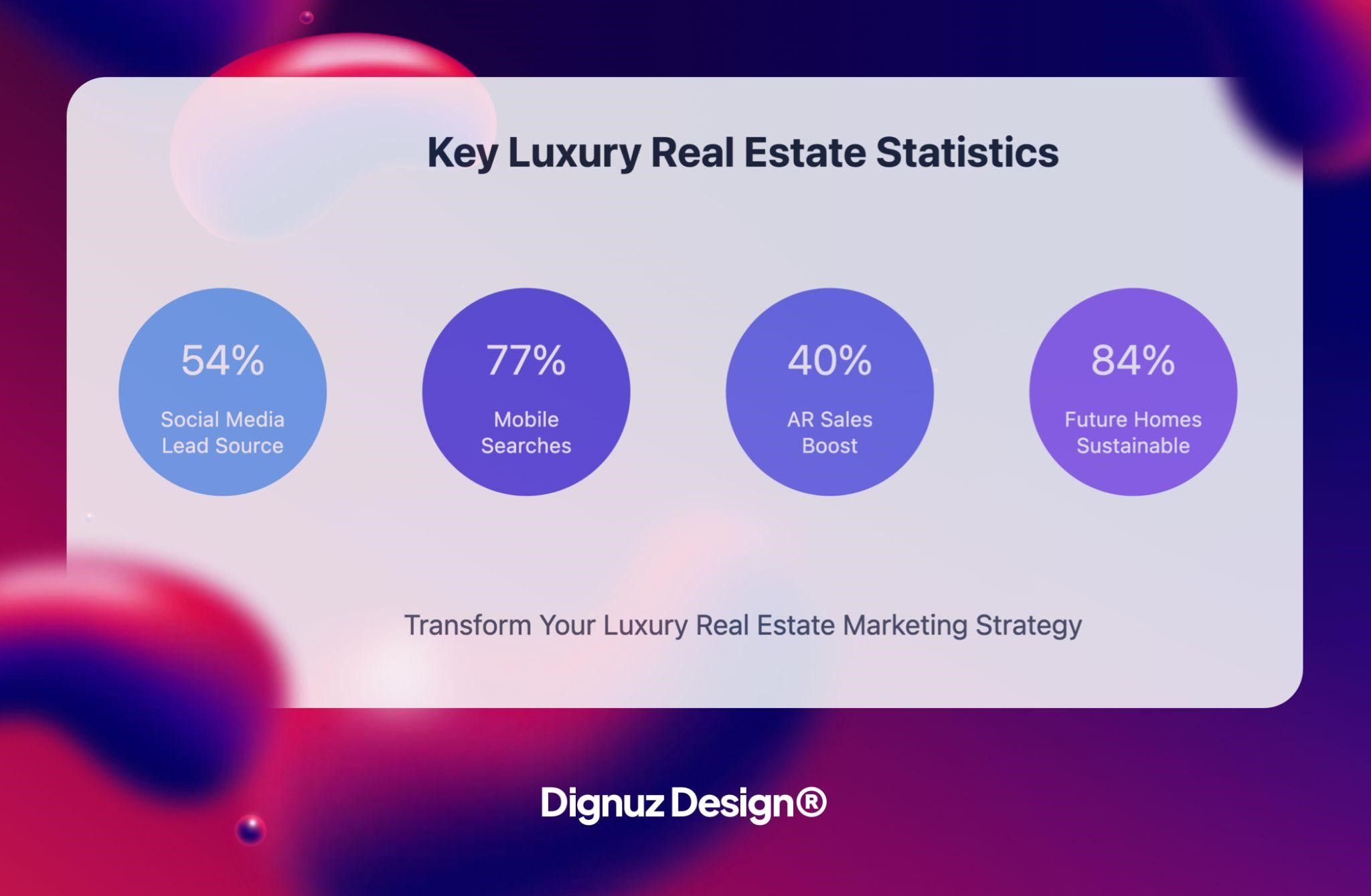
The other shift worth taking seriously is generational. Coldwell Banker's most recent Global Luxury Trend Report projects that Gen X and millennial heirs will inherit roughly $2.4 trillion in U.S. real estate wealth over the next decade. The buyers receiving that wealth are tech-fluent, less impressed by ceremony, and much more demanding about the digital experience around the property. A printed brochure and a paid listing on a portal do not satisfy them. They expect to be able to interrogate the property online before they decide whether to spend two hours of their day on a viewing.
Visual fidelity is the entry ticket, not a differentiator
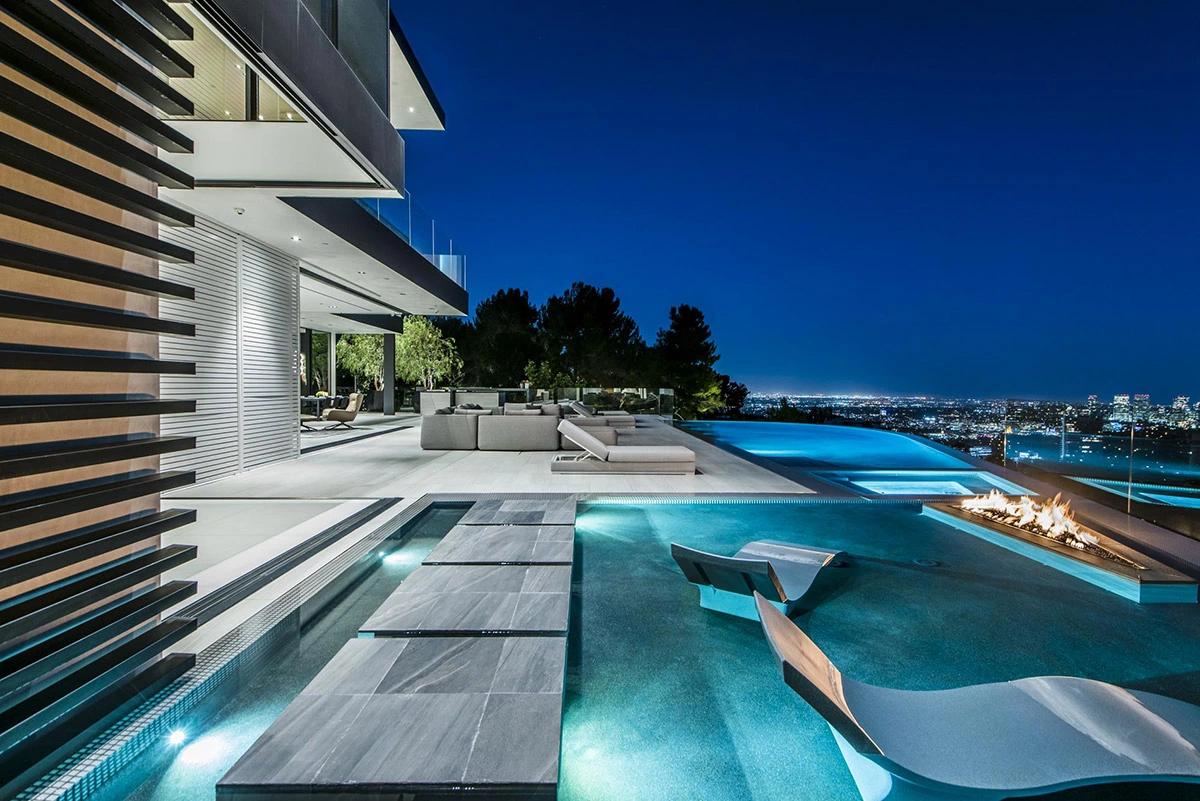
Every conversation about luxury property marketing eventually arrives at 3D tours, drone footage, and high-end photography. The framing in most articles is that these are competitive advantages. They are not. They are the price of being taken seriously. A $7 million listing with twelve dim phone photos and no walkthrough tells the buyer's advisor that the seller is not serious about the sale, and the advisor responds accordingly.
The data confirms the floor without overselling the ceiling. The National Association of Realtors reports that roughly seventy percent of buyers now expect some form of virtual tour when browsing online, and listings with proper 3D walkthroughs spend measurably less time on market. This is even more pronounced at the upper end, where buyers often live in a different city or country than the property and cannot economically visit twenty homes in person to shortlist. The walkthrough is the shortlist.
What separates a luxury walkthrough from a mid-market one is not the resolution. It is the accuracy. A buyer at this price point will notice if the ceiling height in the render does not match the planning documents, if the proportions are off, if the materials in the visualisation are not the materials that will actually be installed. We have rebuilt a Faraday3D tour twice for a single project because the developer changed the kitchen stone late in the build and the original renders no longer represented the property honestly. That is the standard. Visual fidelity in luxury is not about beauty. It is about not lying. Most stock-shot or AI-staged imagery fails this test the moment a serious buyer looks at it. I have written more about this gap in real estate 3D rendering services.
The other dimension worth being honest about is interactivity. A flat 360 image of a room is useful. A genuine interactive 3D model of the whole property is in a different category, because it lets the buyer answer their own questions instead of waiting for an agent to reply. We built AmplyViewer specifically for this. It embeds an interactive 3D property model directly into the developer's website, lets the buyer walk through, switch finishes, change the time of day, and look out of every window at the actual view. The pattern we see consistently is that engaged buyers spend ten or fifteen minutes inside a session of that kind, which is roughly the attention budget a luxury buyer would otherwise allocate to a brochure plus a phone call. The depth of engagement is not the headline metric. The qualification it provides for the agent's follow-up call is. The same point is unpacked in more detail in immersive 3D real estate experiences and sales.
The website is the listing, not a brochure for it
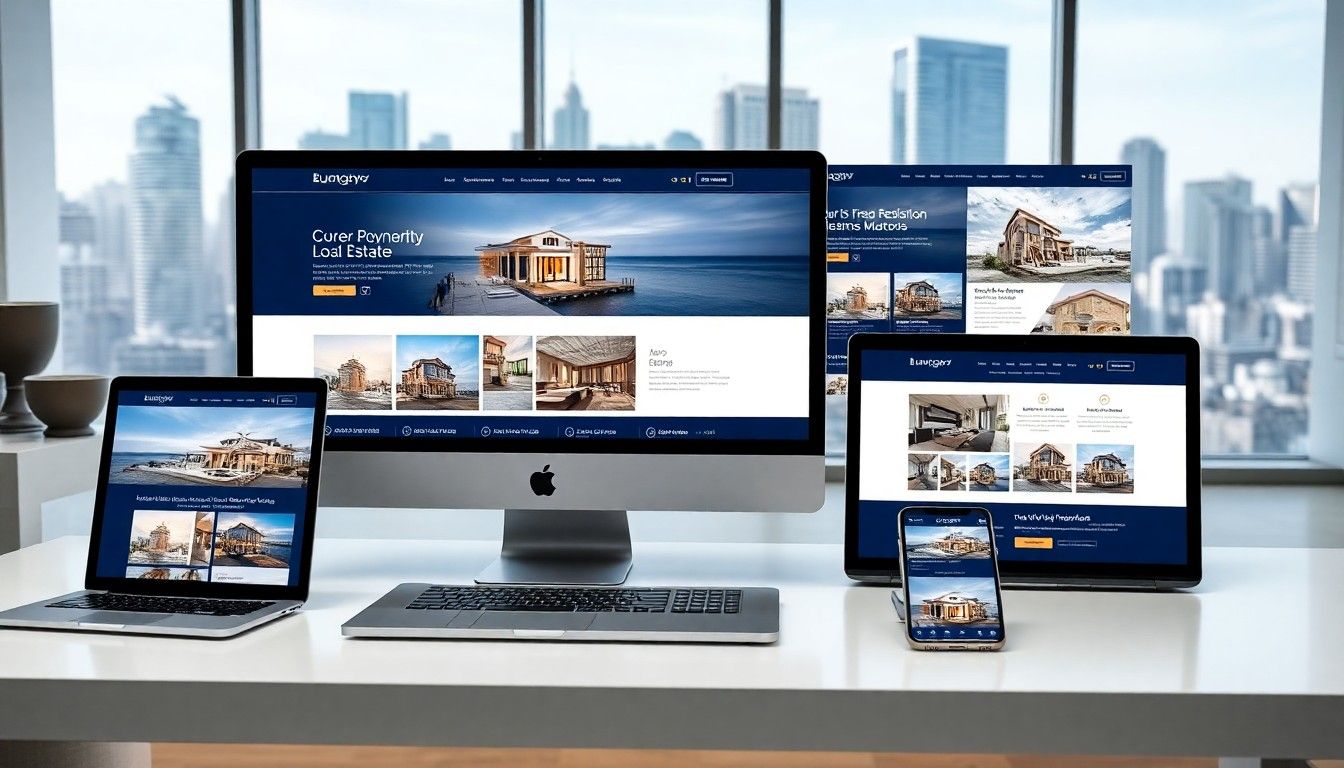
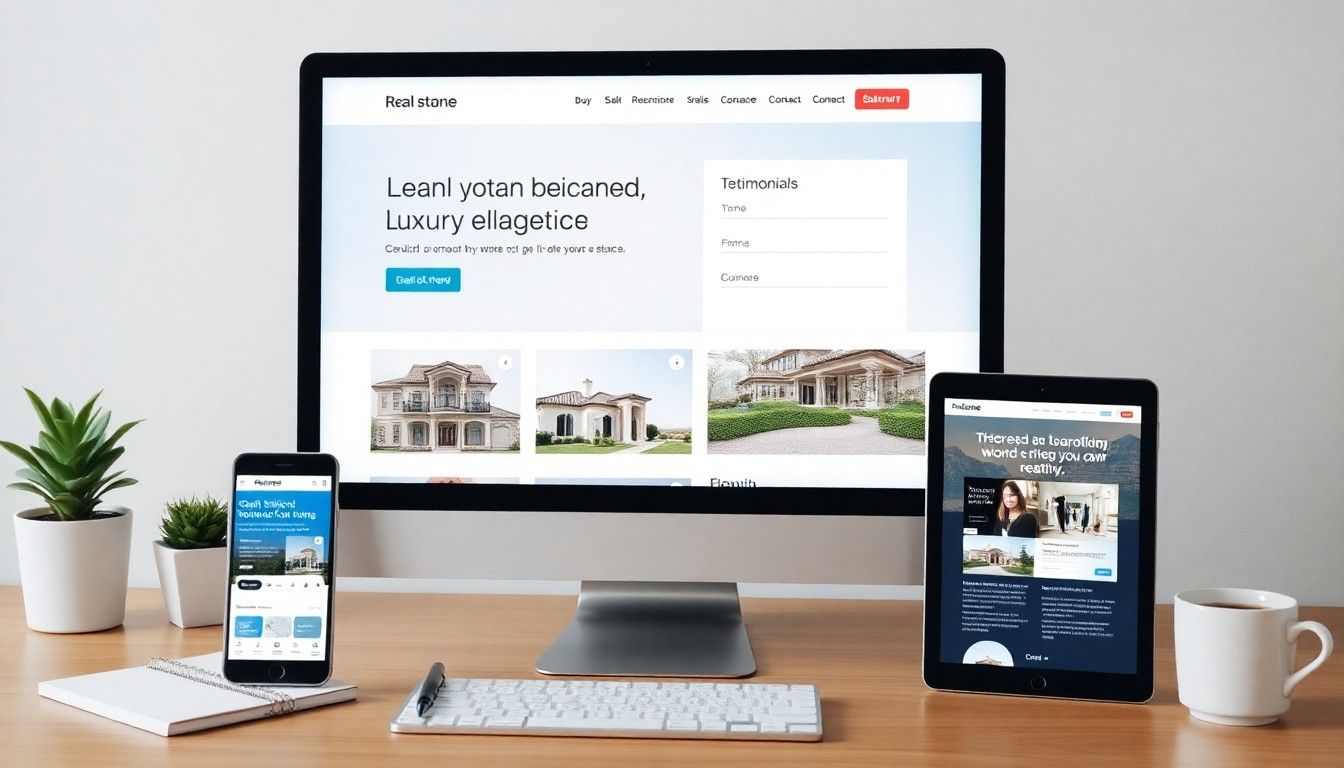
One of the most consistent mistakes in luxury property marketing is treating the website as an afterthought to the portal listing. The portal listing is the discovery channel. The website is where the decision is actually made, and it has to behave like the canonical reference for the property. That includes the brand site of the developer or boutique brokerage, not only the dedicated landing page for the asset.
The buyer at this level is forming an opinion about the seller's seriousness in the first five seconds, almost entirely from the website's behaviour. A site that takes four seconds to render the hero image, jolts as the layout shifts in, pops a chat widget after twenty seconds, or shows a cookie banner that covers the offer is signalling something specific. It is signalling that the team selling this property has cut corners somewhere, and the buyer's pricing instinct adjusts in response. The site cannot save a bad property. A poor site can quietly delegitimise a strong one.
The technical decisions that matter most here are unglamorous. Image delivery has to be tuned per device. The page has to ship as little JavaScript as the design allows. Core Web Vitals have to be green on a real-world phone, not just on a developer laptop. Forms have to actually work, including the privacy mode quirks that some agency-built sites silently fail on. The principles I apply when I build these are covered in detail in luxury real estate website design and in real estate website speed optimization. The argument that performance is a brand attribute, not a developer concern, is the part most teams hear and then quietly deprioritise. It is also the single most reliable way to make a luxury listing feel more expensive than competing properties at the same price.
Exclusivity is about access, not gates
Almost every article on this topic recommends invite-only events and membership in luxury real estate networks as the answer to "how do I create exclusivity." Both of these can work. Both are also often confused with the substance of exclusivity, which is something else.
Real exclusivity, in the way a high-end buyer reads it, is not the same as scarcity theatre. It is the credible sense that the property and the access to it are being managed by someone with judgement. An invite-only dinner at a property hosted by a brokerage that throws ten of them a month does not register as exclusive to the people who attend. A single, careful introduction by an agent who has clearly understood the buyer's portfolio and is bringing the right property does register. The difference between these two is invisible from a marketing-budget perspective and is one of the most important variables in the actual sale.
Networks like Who's Who in Luxury Real Estate and Forbes Global Properties are most useful for what they signal about the brokerage, less for the buyer flow they provide. They give a small firm a defensible reason to be in the conversation with international clients. They rarely deliver the buyer directly. The honest framing for a developer or boutique brokerage choosing whether to invest in this is that the membership is a brand asset, comparable to a publication credit, not a lead generation channel. Treating it as the former tends to produce better decisions than treating it as the latter.
The events that move the needle are usually smaller than the marketing-conference advice suggests. A walkthrough for six people, each of them seriously in the market in the right price range, hosted by the developer alongside the architect, often produces one serious offer. A glossy open house for fifty people produces social-media content and very few qualified buyers. The signal in luxury is the room being small enough to take seriously. That is hard to fake and difficult to scale, which is the entire point.
Personalisation that respects the buyer's time
The standard advice on personalisation is to tailor presentations to individual buyer interests. That is correct, and the advice is also almost always implemented in a way that produces worse outcomes than no personalisation at all.
Personalisation at this level is not about reshuffling the brochure to put the home cinema first because the buyer's profile said they like films. It is about respecting that the buyer has limited time, has probably already looked at three other properties this week, and needs the marketing to remove questions rather than add features. The most effective version I see in practice is a one-to-one private listing page, password-protected, with the property's essentials presented in the order the buyer's advisor would want to see them: legal status, planning, energy performance, finish schedule, comparable transactions, and an honest virtual tour. The flourish is the absence of fluff.
The other version that works is short, recorded video from the agent or architect walking through the specific things this buyer has previously cared about across other viewings. Not generic property videos. Specific responses to questions, sometimes only a minute long, delivered by someone the buyer recognises. This is harder to produce at volume and is one of the few places where small brokerages have a real structural advantage over large firms.
Where AI helps in this workflow is back-office summarisation, not front-of-house personalisation. The same logic I built into AmplyDigest, which is an AI service that condenses long-form input into a daily digest, is the right use of the technology for an agent: summarise the buyer's history, surface what they have signalled they care about, save the agent twenty minutes of pre-meeting prep. The buyer should not feel the AI. The agent should benefit from it invisibly. That distinction is doing a lot of work, and it is the one most brokerages get wrong when they bolt on a chatbot.
Sustainability framed as financial logic
The sustainability section in most luxury marketing articles is the weakest, because it leans on the assumption that high-end buyers are emotionally motivated to pay more for greener homes. Some are. Most are not, in the way the writing implies. The version of the sustainability argument that actually closes deals at this price point is financial and operational.
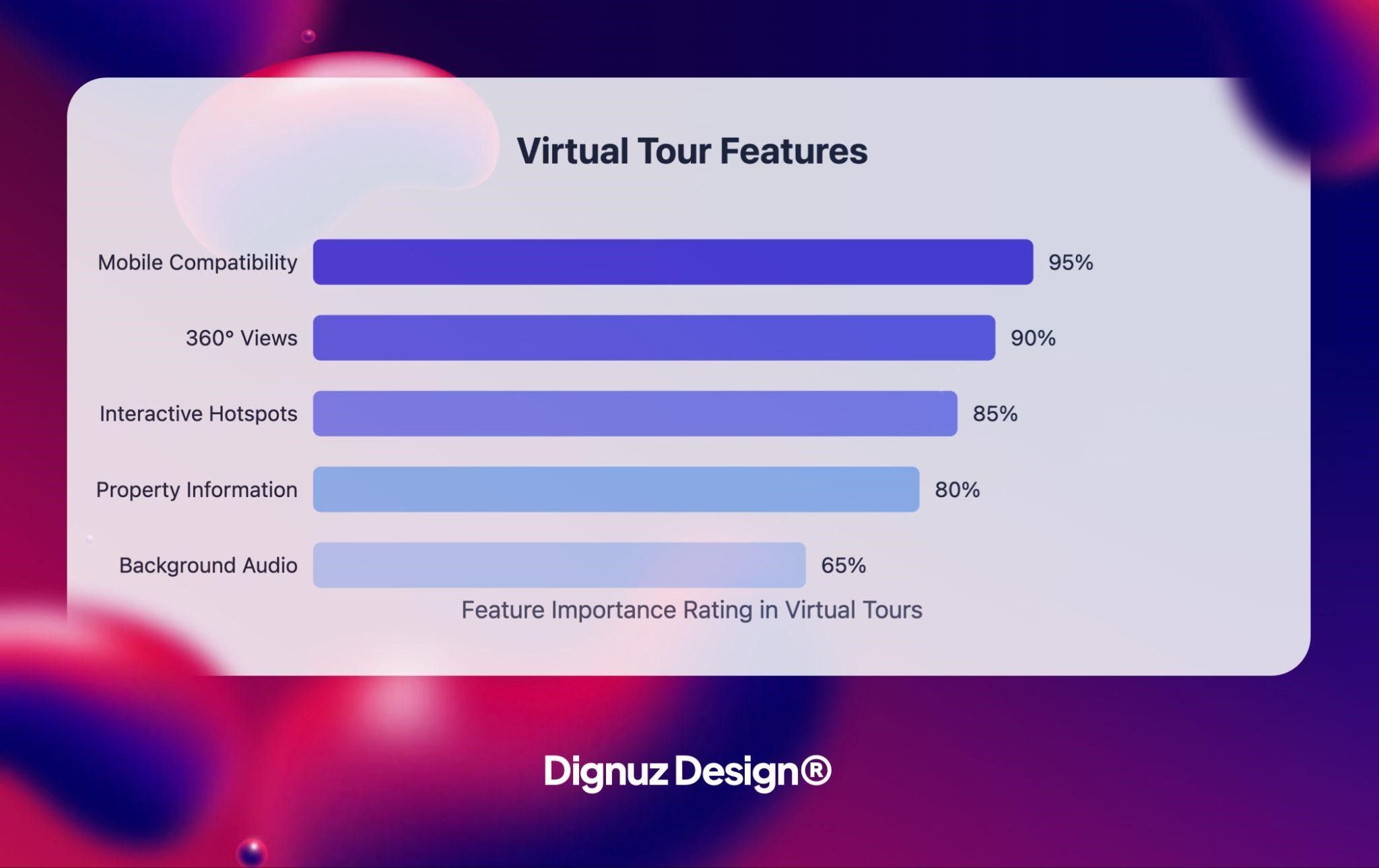
The U.S. Green Building Council reports that LEED-certified homes typically use twenty to thirty percent less energy and water than equivalent non-certified builds, with some projects pushing past sixty percent on energy. The total number of LEED-certified residential units globally is now approaching half a million, with more than four hundred thousand in the United States. The relevant USGBC residential certification documentation lays out the framework. The reason this matters in a luxury marketing pitch is not because the buyer is making an environmental choice. It is because the buyer is buying a property that will be cheaper to run, more comfortable, better insulated from regulatory tightening in the next decade, and more straightforwardly resaleable to the generation that will be in the market by the time they exit.
That framing reads completely differently to a wealth advisor than "eco-friendly features." Once you present the certification, the energy performance, the lifecycle cost projection, and the planning resilience argument together, sustainability becomes part of the financial case for the asset rather than a values-based add-on. Younger heirs, who are increasingly making the actual purchase decision, respond to that framing more reliably than to ESG language.
The features that earn their place in a luxury listing on this argument are roughly predictable. Properly specified HVAC with mechanical ventilation and heat recovery, solar with integrated battery, deep wall insulation that does not compromise architectural intent, EV charging that is designed in rather than bolted on, and a building envelope that has been actually tested rather than only modelled. The marketing job is to present these as part of how the property is going to behave for the next thirty years, which is exactly the timeframe a luxury buyer is implicitly underwriting.
The technology stack worth paying for
There are a lot of confident claims in luxury marketing articles about AR, AI virtual staging, and immersive tech. Some of them are useful. Most of them are oversold by people who do not have to live with the production cost of getting them right.
The honest hierarchy, from years of building this stack for real luxury projects, runs in roughly this order. Accurate 3D models and interactive viewers are worth the investment for almost any property above the local luxury threshold. Drone footage is worth it for any property with land, a view, or a meaningful position in its setting. Professional photography of finished interiors is non-negotiable. AI virtual staging is genuinely useful for empty units, off-plan listings, and cases where the buyer needs to see one alternative furnishing scheme without committing to a physical stager. AR overlay tools that let a buyer view a property from their phone in a real environment are interesting but currently solve a smaller problem than the marketing literature suggests, and they fail in inconsistent ways on different devices. VR headsets remain a novelty for most buyers and a friction layer for most agents.
The point is not that any of these are bad. It is that the budget gets allocated more sensibly when the stack is treated as a hierarchy rather than a checklist. The studio building the visualisation matters more than the format. A bad render in any technology is worse than no render at all, because it introduces uncertainty. A good static photograph beats a clumsy 3D walkthrough every time, even at this price point.
Common mistakes worth avoiding
The list below is the short version of the patterns that come up repeatedly when a luxury property is underperforming its market. Each item is something I have seen multiple times across real engagements.
- The brochure mismatch. The printed brochure shows one set of finishes, the website shows another, and the 3D tour shows a third. Buyers and their advisors notice this within the first ten minutes and quietly lose confidence in the developer's attention to detail.
- Lead form theatre. The site is gated behind a contact form that exists to harvest leads rather than to help the buyer, and the most serious prospects simply leave instead of filling it in. High-end buyers do not perform a lead form, and treating them as if they will is one of the most reliable ways to lose them.
- Performance debt. The site looks beautiful on a developer laptop and breaks on a phone in poor signal, which is exactly where the buyer is looking at it during international travel. This is read as carelessness, and it cheapens every other piece of the brand work.
- Generic agent narrative. The agent's bio reads like a template and the property narrative could be lifted onto any other listing. Specificity is one of the strongest signals of competence and is almost free to produce well.
- Overproduced video. The hero film leans on motion graphics and dramatic music and tells the buyer almost nothing about what it is like to live in the property. Restrained, honest footage of the space and the surroundings outperforms cinematic edits for actual decision-making.
Frequently asked questions
How is luxury property marketing actually different from standard real estate marketing?
The biggest difference is the role of the marketing in the buyer's decision. In mid-market real estate, the marketing is creating demand and matching it to a property. In luxury, the buyer largely already knows the market and the comparable inventory. The marketing is reducing uncertainty for an advisor who is forwarding the listing upward, and signalling, through small operational details, that the team representing the property is competent enough to be trusted with the transaction.
Are 3D tours and interactive viewers worth the investment on a luxury listing?
For any property where the buyer is likely to be remote, the answer is yes, with the caveat that the production has to be accurate. A flawed 3D model is worse than no 3D model because it introduces doubts that an in-person visit will then have to resolve. For developers with several units in a single project, an interactive viewer like AmplyViewer tends to pay for itself in qualified viewings within the first few months, because it filters out the buyers who would not have proceeded anyway and gives serious buyers a credible reason to fly in.
How do you reach high-net-worth buyers without intrusive marketing?
You do not reach the buyer directly in most cases. You reach the advisor, the wealth manager, the relocation specialist, or the trusted agent who already has the buyer's confidence. The marketing job is to give that advisor everything they need to present the property confidently inside thirty seconds and to make the developer or brokerage look like a credible partner. Building relationships with that advisor layer, often through industry networks like Who's Who in Luxury Real Estate, is a more durable investment than any direct-to-buyer campaign.
Does sustainability genuinely affect what luxury buyers will pay?
It affects the financial case more than it affects the emotional one. A certified, energy-efficient build with a credible long-term operating cost projection is a better asset to underwrite, and the price will reflect that over the hold period regardless of whether the buyer personally cares about climate impact. Younger heirs, who are starting to make the actual decisions, are noticeably more attentive to this argument than the previous generation.
Do you need a separate website for each luxury property, or is a single brand site enough?
A dedicated landing page or microsite per asset is worth it for any single property above a few million, especially if the buyer pool is international. The brand site of the developer or brokerage carries the credibility. The asset page carries the specific buying decision. They have to feel like part of the same family and load at the same level of polish. More on the underlying design principles is in luxury brand website design.
How does an architect or a developer benefit from luxury marketing they would not otherwise get from a brokerage?
The brokerage sells the asset once. The developer and the architect are building a portfolio that the next asset will be sold against. Investing in proper visual identity, a credible website, and project-specific 3D content compounds across multiple builds, and starts to generate inbound enquiries for future projects without paying a commission. The marketing case for taking this in-house, or at least for treating it as the developer's responsibility rather than the brokerage's, is covered in more depth in real estate development marketing.
Final thought
The shortest version of everything above is that luxury real estate marketing is not a layer of polish applied on top of normal real estate marketing. It is a different game, played on the buyer's terms, with much less room for theatre and much more emphasis on the small operational signals that tell an advisor whether the team representing the asset is competent. The best property marketing pieces I work on do not look obviously luxurious from the outside. They are accurate, well-paced, restrained, and quietly excellent in every detail that the buyer's eye moves across. The brief that asks for visual luxury is usually solving the wrong problem. The brief that asks for buyer-grade clarity at every touchpoint is solving the right one.