What Makes a Real Estate Agent Stand Out?

A View From the Outside
I spend a lot of time working with estate agents - building their websites, creating their digital presence, integrating their property data, and occasionally watching how buyers respond to what they have put in front of them. My perspective on what actually differentiates one agent from another is shaped by that position: I see what buyers encounter when they land on an agent's digital presence, and I see what agents think makes them different versus what actually registers.
Most agents believe they differentiate on service. Every agent website makes roughly the same claims: dedicated, responsive, local expertise, going the extra mile. These qualities may all be true, but they are invisible to a buyer before a transaction begins. They are table stakes that every agent claims equally.
The agents who actually stand out are doing something different. And it is usually not what the conventional advice about personal branding and CRM systems would suggest.
Why Most Differentiation Strategies Do Not Work
The real estate market is crowded. Depending on the country and region, there are between several hundred thousand and several million licensed agents competing for the same clients. Most of them are marketing themselves in essentially identical ways: professional headshot, list of services, testimonials, social media presence, neighbourhood guides.
The National Association of REALTORS' 2024 Profile of Home Buyers and Sellers found that roughly 61% of buyers found their agent either through a referral from someone they know or by working with an agent they had used previously. Among sellers, that number is even higher. This means most new business comes from relationships and reputation, not from marketing activities that are visible to strangers.
What this implies is counterintuitive: the way most agents try to stand out - digital advertising, social media content, email newsletters to cold lists - targets the smallest segment of their potential client base. The relationship-based majority is won through the quality of the work itself, not the visibility of the marketing.
If referrals drive most business, the question of differentiation becomes: what are you known for among the people who would refer you? What specific, memorable capability makes your clients tell their friends "you should call this person"?
The Case for Genuine Specialisation
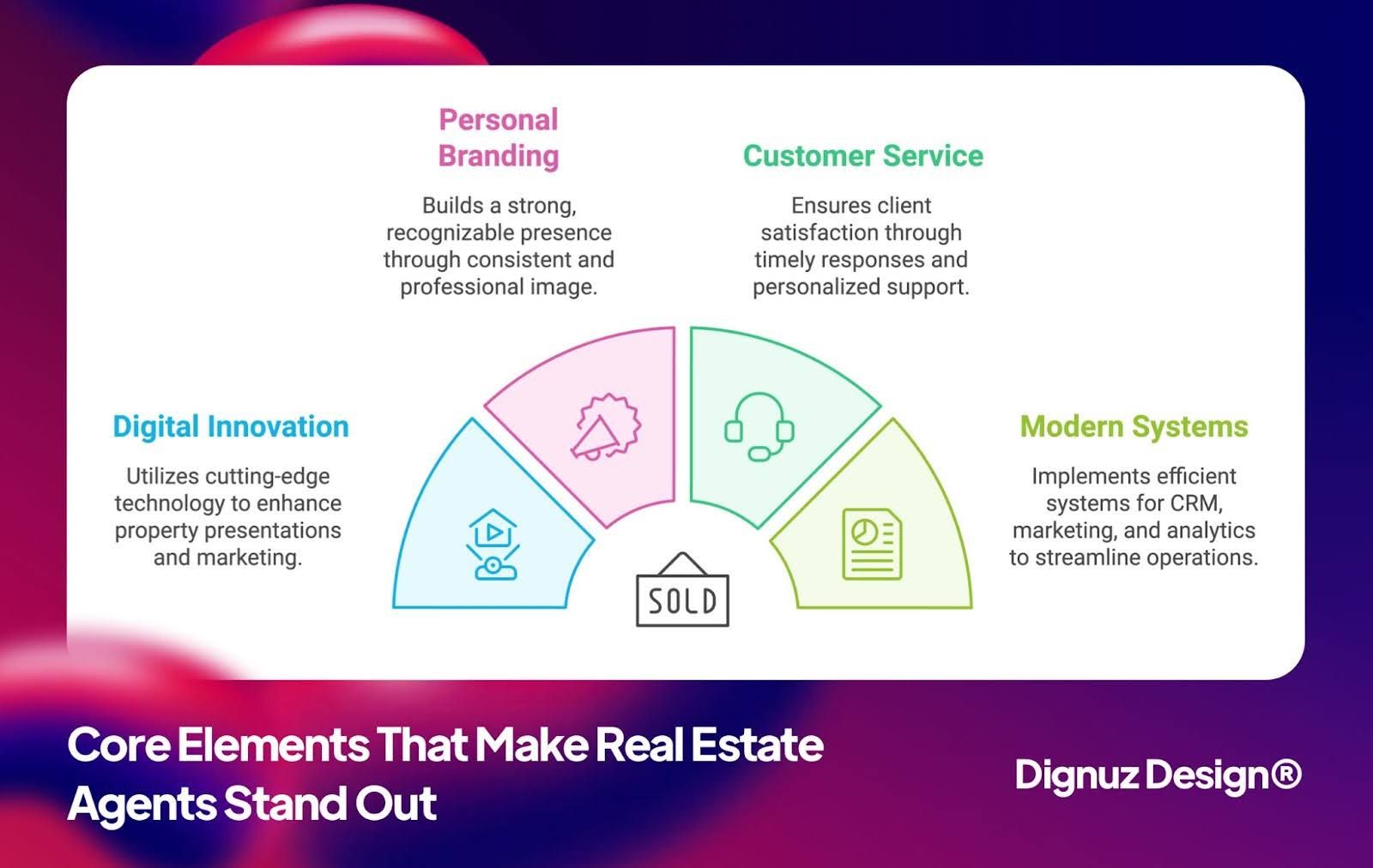
The most reliably effective form of differentiation in real estate is specialisation. Not geographic farming in the conventional sense - being present in a neighbourhood - but genuine expertise in a specific type of property, client situation, or market segment that buyers and sellers in that niche recognise as distinct from what a generalist offers.
The NAR's own guidance on niche positioning, published in their magazine, identifies six categories along which agents can meaningfully differentiate: geographic area, property type, price segment, client demographics, experience level, and process specialisation. The key observation is that geographic area alone is insufficient, because any agent can claim to serve a neighbourhood. The strongest positioning combines at least two of these categories.
An agent who works exclusively with property developers and new-build buyers in a specific city is different in a way that is immediately intelligible to a developer looking for representation. An agent who specialises in listing inherited properties, with deep knowledge of the legal and emotional complexity those sales involve, is different in a way that their niche clients will not only understand but will actively seek out and recommend to others in the same situation.
Specialisation reduces competition, increases the specificity and credibility of your marketing, and - critically - makes referrals more effective. People can only refer you when they can clearly articulate what you do that others do not. "She knows the new development market" is a referral. "He is a good agent" is not.
Visual Presentation Quality Is a Bigger Differentiator Than Most Agents Realise
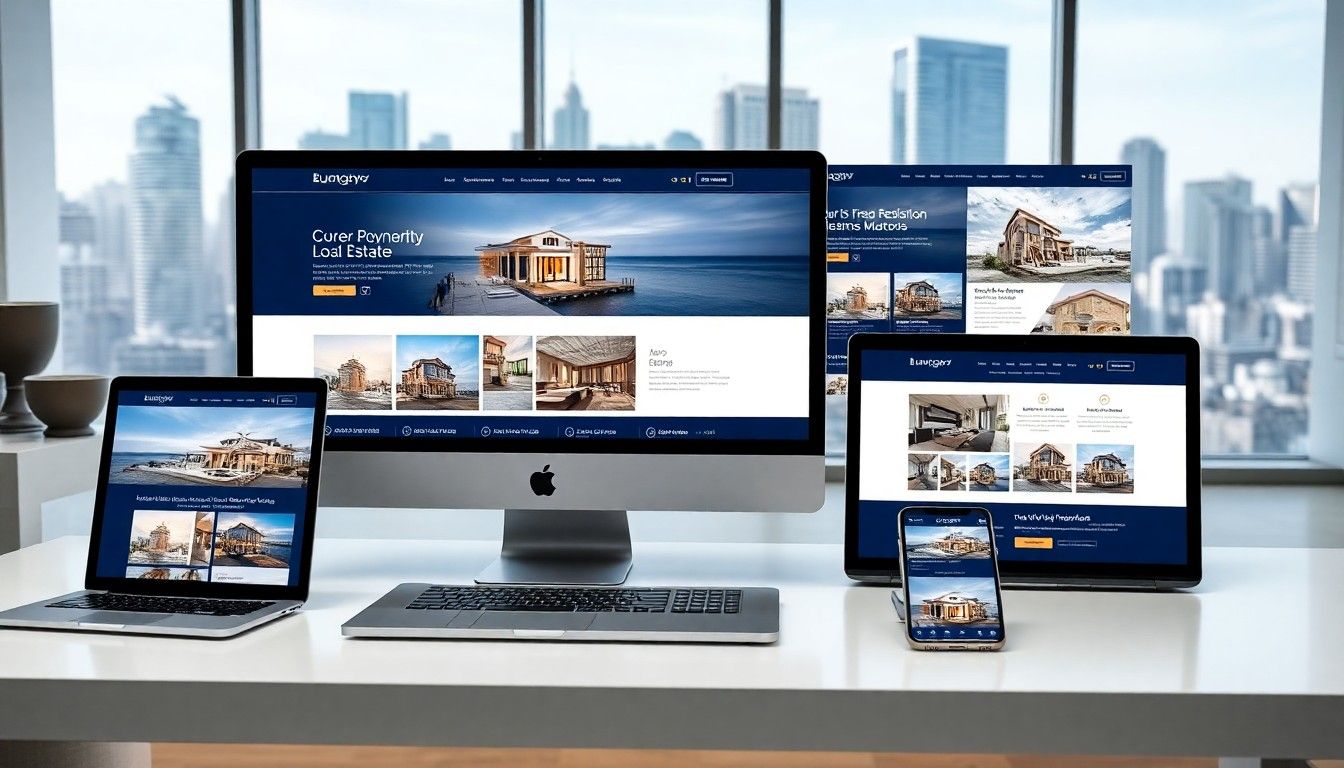
From where I sit, one of the most underestimated differentiators for estate agents is the quality of property presentation. I have built a lot of estate agent websites and redesigned a lot of listing pages, and the difference between mediocre and excellent property presentation is not subtle. Buyers notice it immediately, even when they cannot articulate what they are responding to.
Most agents accept whatever photography the vendor provides or whatever the cheapest local photographer produces. They accept the lighting, the angles, the clutter in the background. They present the listing as they found it rather than as it could look. A minority invest in professional photography, proper staging, and considered sequencing of the visual story a property tells. Those listings look categorically different, and they attract categorically different buyer behaviour.
The same logic applies to off-plan and new development work. A developer selling units before completion is asking buyers to make a multi-hundred-thousand-euro decision based on rendered images and floor plans. The quality of those assets directly determines the quality of buyer engagement. An agent who brings access to high-quality architectural CGI and 3D visualisation to a developer relationship, or who uses an interactive 3D property viewer to let buyers explore a development online before it is built, is not just offering better marketing - they are offering something that changes how buyers engage with the decision. That is a real differentiator, and it is one that almost no generalist agent offers.
From the developer's perspective, an agent who can speak credibly about visual marketing, interactive presentation, and the buyer psychology of off-plan sales is worth more than one who cannot, because the developer's biggest risk is unsold units at launch. The agent who reduces that risk through superior presentation capability earns a different kind of trust.
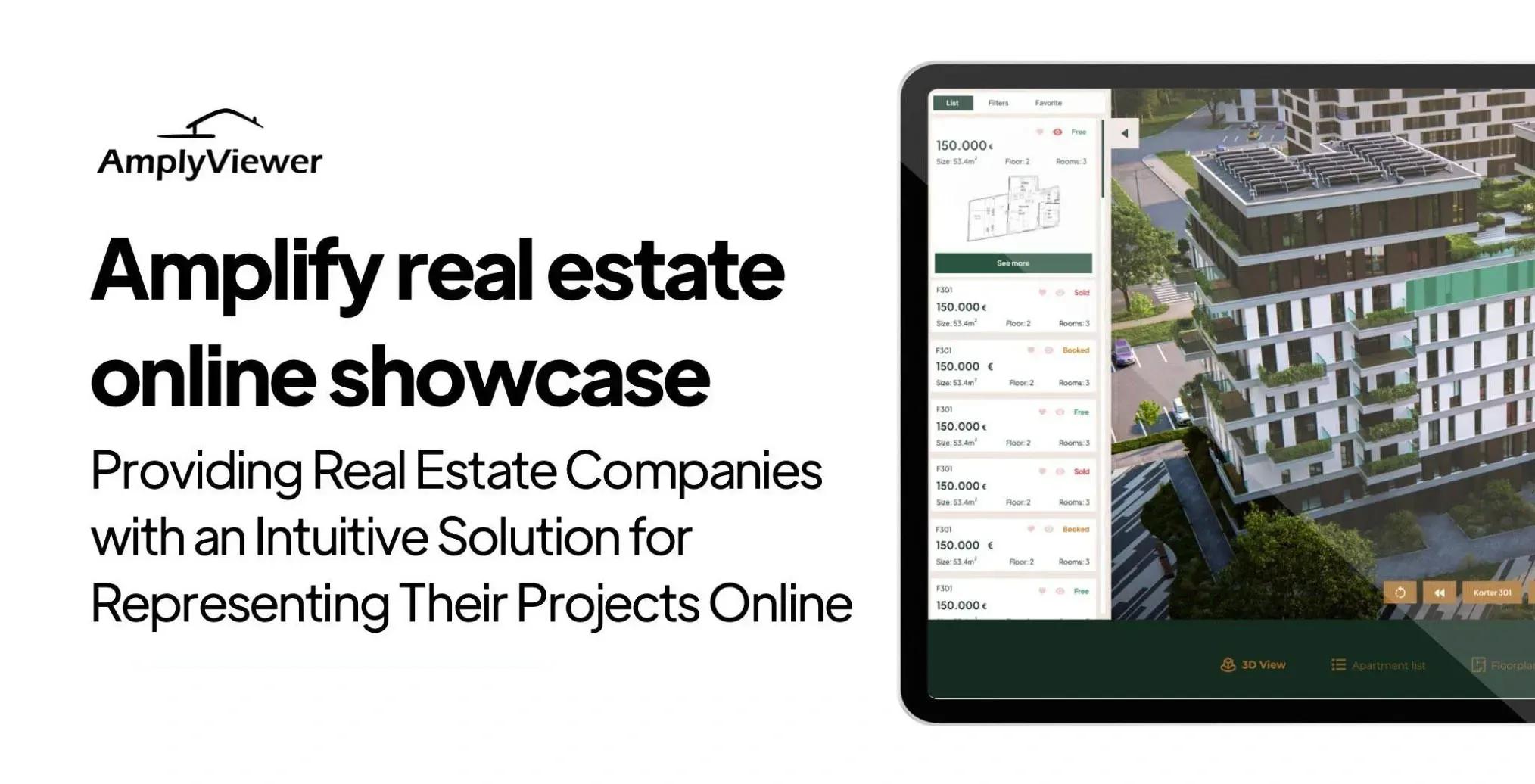
💻 Let us help you create a stunning online showcase for your projects that works seamlessly across all devices. Ready to amplify your real estate business? 👉 Explore AmplyViewer now
Your Digital Presence Is the First Filter
Before a buyer or seller calls you, they will find you online. They will look at your website, your listing photos, your social media, and they will form a first impression that determines whether they proceed to contact you. That impression is not formed by reading your bio or your list of services - it is formed by the overall visual quality and professional calibre of what they encounter.
An agent with a slow-loading website, low-resolution photos, and a template that every other agent in the city is also using communicates something - not necessarily that they are incompetent, but that this aspect of their practice is not a priority. For buyers who are deciding who to trust with a large financial transaction, that signal matters. The estate agent website is not just a marketing channel - it is evidence of the standard to which the agent holds themselves.
Agents who invest in a proper custom web presence designed around conversion - clear contact points, fast loading, professional photography throughout, well-presented listings - consistently receive more and better quality enquiries than those who use generic portals as their primary digital presence. The website tells buyers who you are before you get the chance to say a word.
This is not an argument for spending lavishly on web design for its own sake. It is an argument that the digital first impression costs something to get right, and agents who treat that investment as optional are ceding ground to those who do not.
Local Knowledge That Is Specific Enough to Be Useful
Every agent claims local expertise. The phrase has become so commonplace that it has lost most of its meaning. What actually differentiates an agent is local knowledge specific enough to change a client's decision.
Knowing that a particular block of flats has had structural issues that affect resale value. Knowing that a developer's scheme in a specific postcode is likely to be delayed based on planning history. Knowing which solicitors in the area are reliable and which cause completions to drag. These are the observations that a client cannot find in a marketing brochure, cannot Google, and cannot get from a portal. They come from transactional experience in a specific market over time.
The challenge is making this knowledge visible to potential clients before they hire you. One effective approach is content that demonstrates the knowledge without simply asserting it. An article about what the planning history of a particular area means for buyers who are considering purchasing there - or a piece about how a new development scheme will affect values in surrounding streets - signals expertise in a way that a testimonials page cannot. It shows the thinking rather than asking the reader to trust a claim.
This kind of content is also good for search visibility in a way that generic real estate advice is not. A buyer searching for information about a specific building, development, or street is searching with high intent, and an agent who has published something useful about that exact topic has a genuine advantage.
How You Communicate Is a Differentiator More Agents Should Invest In
Many agents offer roughly equivalent knowledge and roughly equivalent availability. The differentiator that clients notice most once they are in a relationship - and the one they talk about when making referrals - is communication quality.
This is not about being more responsive in the sense of replying to messages faster, though that matters. It is about the quality of information clients receive at each stage of a transaction. Clients who feel genuinely informed - who understand what is happening, what the risks are, what is being done about them, and what they need to decide - feel differently about their agent than clients who receive occasional updates that summarise events without explaining them.
The agents who are consistently referred are often not the most technically skilled or the most experienced - they are the ones whose clients feel confident that they know what is happening. That confidence comes from proactive, clear communication rather than from a client having to ask.
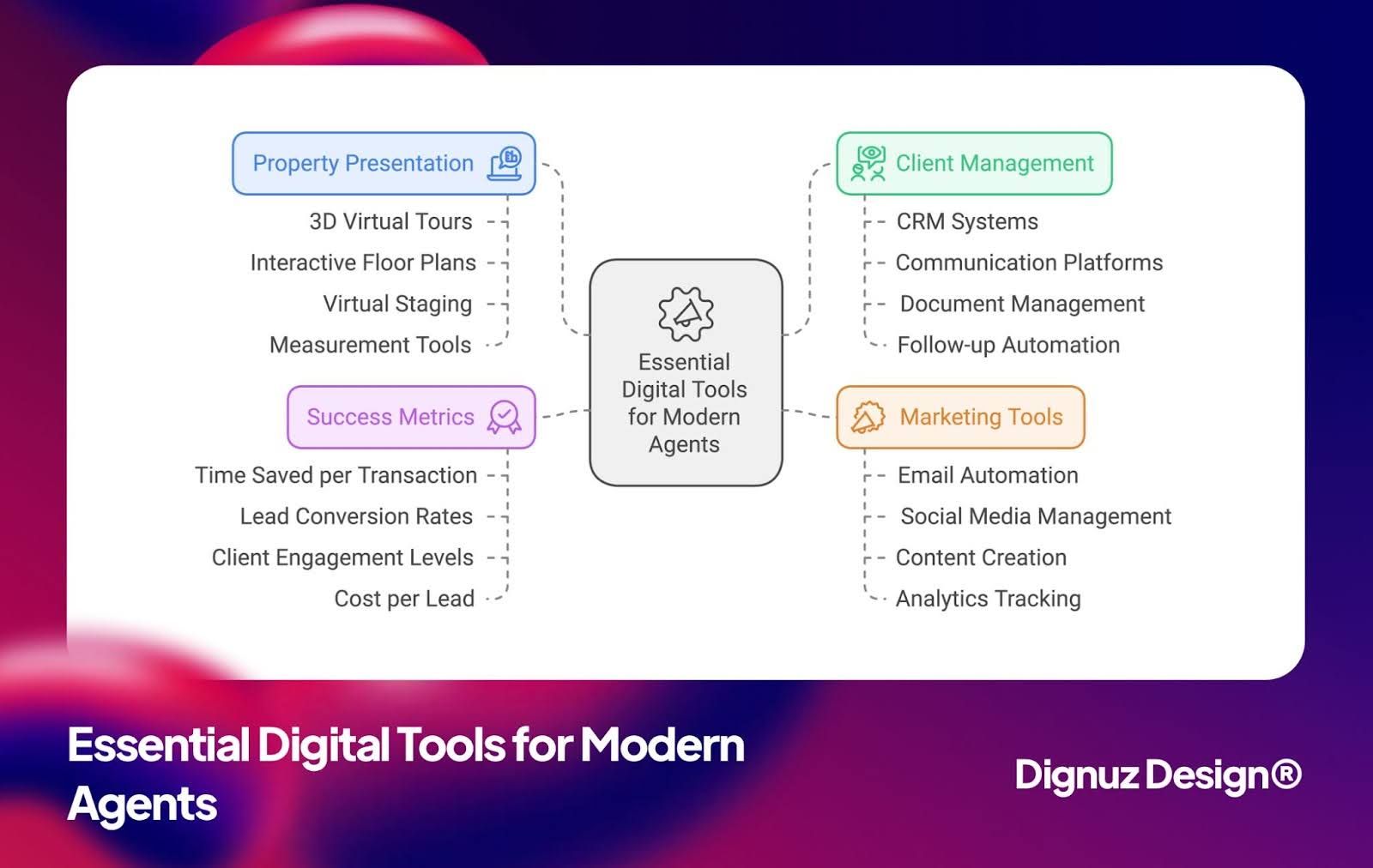
Systems help here - tracking where each transaction is in the process, setting up regular touchpoints at key stages, having a clear handover between the sales process and the legal process. But the systems only work if the communication itself is substantive. A weekly email that says "everything is progressing well" does not build confidence. A weekly email that says "the survey is booked for Thursday, here is what the surveyor will be looking at and what to expect if issues are found" builds a different kind of relationship entirely.
The Agent Who Understands the Seller's Business Problem
For agents working with property developers, there is a specific form of differentiation that is rarely discussed in generic advice about standing out: understanding the developer's business problem, not just their property.
A developer selling units in a residential scheme is not primarily motivated by getting the best price for each individual unit - they are motivated by velocity, cash flow, and minimising the period between completion and sale. A slow sales programme is expensive. An agent who understands that priority will present, price, and market differently from one who treats the development as a collection of individual sales.
The agents who consistently win developer relationships understand this. They can speak to absorption rates, to how marketing sequencing affects pricing power across the scheme, to how pre-launch enquiry data can inform unit pricing before formal sales open. They bring a strategic perspective on development marketing rather than a transactional one.
Developers talk to each other. An agent who has genuinely performed for one developer - who has sold a scheme efficiently and communicated intelligently throughout - will be referred to others in the same development community. That referral network is worth more than any advertising spend, and it is built through depth of understanding rather than breadth of market presence.
What Actually Earns Repeat Business and Referrals
The research on how buyers and sellers choose agents consistently points to the same conclusion: most people use an agent once, are satisfied, and do not think about them again until they need an agent for the next transaction - at which point they may or may not remember who they used. The agents with strong referral businesses have found a way to remain present and relevant between transactions without being intrusive.
What works here is not a monthly newsletter full of market statistics that nobody reads, but genuine, occasional contact that is relevant to the specific person. Following up six months after a sale to ask how the new property is working out. Sending a note when something changes in the local market that is directly relevant to what they bought. Remembering specifics - a renovation they mentioned, a school change they were navigating - and checking in at the point when that would be relevant.
This requires a system - some kind of contact record that captures the details that make follow-up specific and meaningful rather than generic - but it does not require sophisticated CRM software. It requires paying attention during transactions and building the discipline to follow up deliberately.
The agents who stand out in their markets over time are those who have built genuine reputations for being good at their job and good to deal with. Both matter. Being good at the job without being good to deal with generates satisfied clients who do not refer. Being good to deal with without being good at the job generates warm relationships that produce poor outcomes. The reputation for both takes time to build and cannot be accelerated by advertising - it comes from doing the work well, consistently, for long enough that the people who have experienced it talk about it to the people who have not yet met you.
FAQ: What Makes a Real Estate Agent Stand Out
What actually differentiates one real estate agent from another?
The honest answer is that most agents are differentiated primarily by their referral network and their track record in a specific market, not by their marketing materials or digital presence. The agents who stand out durably have a genuine specialisation - in a property type, a client segment, or a particular kind of transaction - that makes them specifically valuable rather than generically capable. Visual presentation quality, local knowledge specific enough to change client decisions, and the clarity of their communication during transactions are the things clients talk about when they refer someone. Marketing visibility matters for reaching strangers, but the majority of estate agent business comes from people who already know or have been referred to you.
How important is an estate agent's website for standing out?
It functions primarily as a credibility filter rather than a lead generation tool. When a prospective client is considering working with you - whether they found you through a referral, a portal, or a social media post - they will almost certainly look at your website before making contact. What they find there either reinforces the impression that led them to you or undermines it. A slow, generic, or visually inconsistent website communicates something about your standards. A fast, well-designed, visually coherent website communicates something else. Most buyers do not consciously think "this website is professional, therefore this agent is professional" but the association operates regardless.
Does specialising in a niche limit the number of clients an estate agent can work with?
It reduces the total market you address, but it increases your capture rate within that market and usually increases the quality of both the clients and the transactions. Agents who specialise in luxury properties, new development sales, or specific property types typically transact fewer deals at higher value and with less competition for each instruction. They also find that referrals compound more effectively because people can specifically recommend them for a particular situation rather than vaguely as "a good agent". The early period of specialisation can feel like a constraint, but established specialists consistently report lower marketing costs and better conversion rates than when they operated as generalists.
How can a real estate agent stand out when selling new-build developments?
The key differentiator in new-build and off-plan sales is the quality of the buyer experience before the property exists. Buyers making a decision about a unit that has not yet been built are relying entirely on how well the agent and developer present the opportunity. Agents who bring genuine capability in this area - access to quality immersive 3D visualisations, interactive floor plan navigation, clear and credible communication about the construction programme and handover process - consistently outperform those who offer the same standard listing pack for every development. Developers notice this, and developers talk to each other.
What do buyers say they want from an estate agent, versus what actually matters?
Buyers typically say they want an agent who is knowledgeable, honest, and responsive. Those qualities all matter, but they describe a baseline rather than a differentiator, because every agent claims them. What actually creates the experience of a good agent, in the feedback I observe from clients, is communication that is specific and proactive - being told what is happening before having to ask, and being given enough context to understand what it means. The agents who generate the strongest referrals are almost always described as "easy to deal with" and "always kept us informed" rather than as specifically skilled negotiators or market experts, even when they are all of those things. The communication quality is what clients feel and remember.
Is social media an effective way for estate agents to stand out?
It can be, but the relationship between social media activity and actual business generation is weaker than most advice suggests. Social media is most effective when it demonstrates specific expertise rather than general presence - a post about why a particular development's location makes it a good investment decision is more effective than a post showing a kitchen with the caption "just listed". Agents who use social media to share the specific knowledge that makes them valuable in their niche do build audiences that convert to clients over time. Agents who post generic content at high volume typically build audiences that do not. The quality of what you say matters more than the frequency at which you say it.