Commercial Real Estate Branding That Actually Differentiates

Every commercial real estate firm I have ever audited describes itself in nearly the same sentence. Full service. Client focused. Trusted advisor. Decades of experience. Strip the logos and you could paste any firm's positioning statement into any other firm's website and nobody would notice. That is not a branding problem in the creative sense. It is a business problem. It means the firm has not yet decided what it wants to be known for, and no amount of logo refresh will fix that.
I build websites and digital experiences for commercial real estate firms, property developers, and architects through DignuzDesign, and I produce the 3D visualizations that fill those sites through Faraday3D. That combination gives me a front-row view of how CRE branding actually plays out in the wild: what tenants, investors, and brokers look at before they ever send an email, and what gets quietly dismissed in a thirty-second scan. Most of what is written about commercial real estate branding treats the subject as a visual exercise. It is not. It is a trust-engineering exercise, and the visual layer is the last mile, not the first.
This article is about where the actual differentiation in CRE branding comes from, why most rebrands fail to produce pipeline, and the specific decisions that separate a firm a buying group short-lists from one it ignores.
Why Most Commercial Real Estate Branding Goes Nowhere
The standard branding project at a CRE firm follows a predictable arc. A partner decides the firm needs a refresh. An agency is hired. Four months later a new logo, a new color palette, and a shiny homepage launch. The press release goes out. Six months later pipeline is unchanged, and the partner quietly concludes that branding does not work in this industry. Branding worked fine. What was done was not branding.
A logo redesign is a finish, not a strategy. If the underlying positioning is identical to the other fifteen firms competing for the same office leasing mandate, a sharper typeface changes nothing. McKinsey's research on B2B branding found that the brand messages companies push are often strikingly misaligned with what their customers actually value, and the gap is widest in industries where everyone sells a similar-looking service against a similar-looking competitor. Commercial real estate is near the top of that list.
The firms that break out are the ones that choose. They pick an asset class, a tenant type, a region, or a transaction profile and commit. The positioning sentence becomes specific enough that half of prospects self-select out, which is precisely the point. A CRE firm that positions itself as "the last-mile industrial specialist between Porto and Lisbon for operators under 20,000 square meters" will never be everyone's broker. It will be the obvious call for the buyers and operators who match that profile, which is the only kind of call that closes.
The Buying Group You Are Actually Branding For
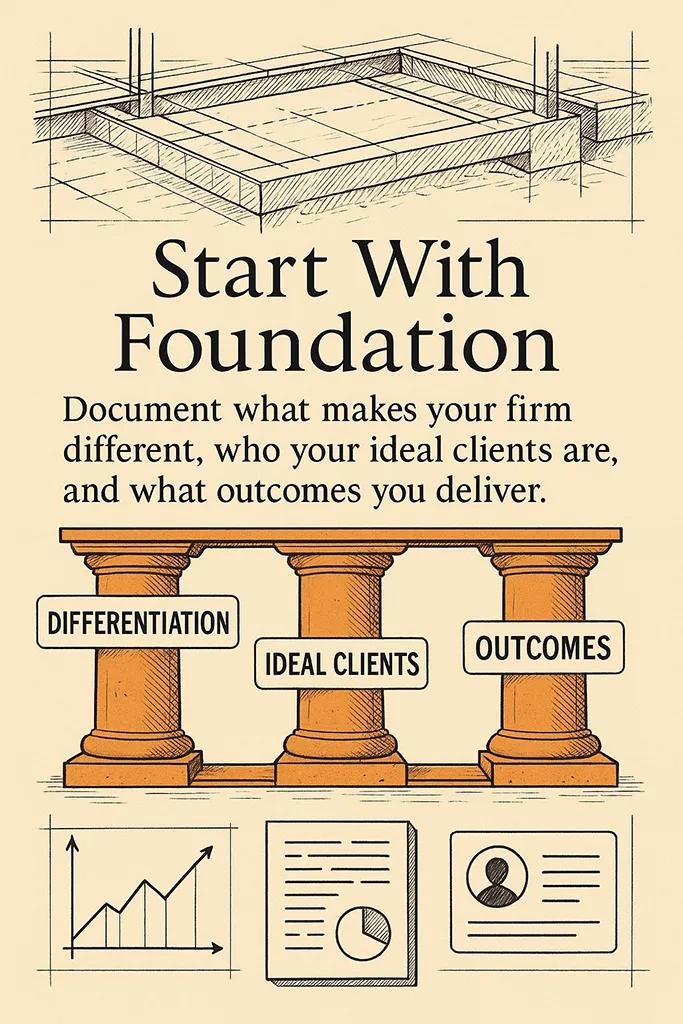
A commercial real estate transaction is almost never a one-person decision. An industrial tenant signing a ten-year lease has a CFO, a COO, a real estate director, sometimes a board sub-committee, and a retained broker all weighing in. Gartner's work on complex B2B buying journeys has shown that the typical buying group for a significant B2B purchase now involves six to ten stakeholders, and each arrives with independent research already done. Your CRE brand has to survive scrutiny from every one of those people, most of whom you will never speak to directly.
This changes the job of your website and your wider digital presence. The CFO is looking for financial credibility, comparable transaction evidence, and whether your numbers hold up when cross-checked. The operations lead is looking for whether you understand the actual work their business does inside a building. The general counsel is looking for red flags in how you describe risk and disclosure. The retained broker is looking for whether they can recommend you to their client without it blowing back on them. A single polished homepage speaks to none of these readers. What speaks to them is the depth of what is twenty clicks in, which is exactly the part most CRE websites never invest in.
This is the most important mental shift for anyone running a CRE branding project. You are not branding for the prospect you happened to meet at a conference. You are branding for the four other people in that prospect's organization who have never met you, will never meet you, and whose shortlist decision will be based entirely on the digital artifacts you produced.
Sector Specialism Is the Real Differentiator
When a firm says "we work across all asset classes," what the buying group reads is "we have no particular expertise in any of them." Generalism used to be a defensible CRE posture in a sleepier market. It is no longer. Data-led buyers can see the pattern of your work immediately, and the firms winning mandates now are the ones that dominate a slice.
The practical consequence for branding is that your messaging, your case studies, your content, and your visual identity all need to align around a narrow center of gravity. A CRE firm specializing in life sciences real estate should have imagery of labs, language that reflects how biotech tenants think about HVAC and floor loading, and case studies that name the kinds of trial-stage companies a real life sciences landlord would recognize. A firm specializing in dark-store logistics should be talking about last-mile routing, dock ratios, and the planning constraints of urban infill sites. The moment your website could plausibly belong to a different firm in a different sector, you have lost the branding argument.
There is a related point about the messaging that resonates with sophisticated property buyers, which is that specificity is read as competence and vagueness is read as inexperience. A tenant or investor reading your site is performing an expertise check in the first ninety seconds. If the only thing you can tell them is that you are "trusted" and "client-focused," you have failed that check before they reached the contact page.
Visual Identity Is Downstream of Position, Not Upstream
Plenty of CRE branding guides open with color psychology and typography. That is the wrong end of the sequence. A color palette cannot carry weight for a positioning that has not been decided. I have reviewed rebrands where the firm spent a six-figure sum on identity work before a partner could answer the question "who is this firm for, and who is it not for" in a single sentence. The identity looked beautiful. The firm still could not be distinguished from three competitors down the street.
Once the position is clear, visual decisions fall out of it almost mechanically. A boutique firm positioning itself against the large global brokerages will typically benefit from restrained typography, generous whitespace, and editorial photography rather than stock imagery. A data-heavy investment platform benefits from a visual system that can carry dashboards, charts, and comparative tables without feeling cluttered. There is useful guidance on color psychology in real estate once you know what emotional register the position calls for, but the register has to be decided first.
The discipline I apply with CRE clients is to refuse to open Figma until the positioning document is short enough to fit on one page and clear enough that a stranger could summarize who the firm is for after reading it once. If that document cannot be written, no amount of visual work will compensate. Reasonable real estate brand guidelines are the output of a clear position, never the cause of one.
Where the Brand Actually Lives: the Digital Experience
Most CRE buying groups will form their first and often final impression of your firm through your website, your LinkedIn footprint, and whatever portfolio assets surface on Google. Everything else is secondary. If the digital experience is slow, generic, or thin, the brand is slow, generic, and thin, regardless of the logo at the top of the page.
Three digital failure modes recur in the CRE audits I run. The first is performance. CRE sites are unusually heavy with large images, embedded map widgets, and bloated page builders, and mobile Largest Contentful Paint times north of six seconds are common. A tenant's real estate director opening your site on a phone at an airport is not going to wait. The second is superficiality of content. Firms publish quarterly market commentaries that repeat the same macro talking points available from any brokerage, which signals that you do not have a proprietary view. The third is lack of asset-level evidence. Case studies read like press releases rather than detailed accounts of a deal's mechanics, which is what a sophisticated buyer is actually trying to assess.
Fixing the first is a technical problem and I typically move CRE client sites onto lean stacks like Astro with Cloudflare at the edge, exactly the same approach I use for property developer websites built on Jamstack architectures, because the performance floor is so much higher. Fixing the second and third is an editorial and strategic problem, and it is where most of the brand work actually lives.

Asset-Level Proof: the Part Most CRE Firms Skip
Commercial real estate is ultimately about specific buildings, specific deals, and specific tenants. A CRE brand that cannot show its work on that level is asking the buying group to take a great deal on faith. Detailed asset-level case studies are among the highest-leverage pieces of brand content a CRE firm can produce, and they are the ones firms consistently under-invest in.
A strong case study for a CRE firm includes the brief the client came in with, the constraints and trade-offs that shaped the solution, the financial outcome in defensible numbers, and enough detail that a reader in the same asset class can recognize the work as real. Generic "we helped Client X grow" language is useless. It is also where visualization starts to earn its keep. For off-market industrial sites, developments in planning, or repositioning opportunities, photography does not yet exist. That is where I produce renders, walkthroughs, and interactive models through Faraday3D, and where AmplyViewer embeds those walkthroughs directly into the case-study page so a prospect can explore the asset without booking a call.
I have watched this change the quality of inbound enquiries on CRE client sites measurably. A prospect who has walked through a render of a warehouse repositioning and read a defensible account of how rent was grown from X to Y does not need the early discovery call your competitor is still trying to book. They arrive already serious, which is the kind of lead a specialized CRE firm actually wants.
Content Depth: Having a Market Thesis Worth Reading
Commercial real estate has no shortage of market reports. Every large brokerage publishes them. Nobody reads most of them because they say the same thing. A CRE brand that wants to carry authority in its niche has to publish content with an actual argument. "Last-mile logistics demand in Iberia is being mispriced because planning authorities are slower to release infill sites than the market expects" is a thesis. "Retail remains challenging" is filler.
The firms that get this right pick a few questions they are genuinely opinionated about and write about them consistently. The rest of the content calendar can be lighter, but the anchor pieces need weight. In practice this means longer-form work, proprietary data where possible, and a willingness to be wrong in public. A CRE firm that never takes a position that could be tested against reality will never be trusted enough to be worth calling.
This is also where tactical content infrastructure helps. Many CRE principals are smart readers but time-poor, and they rely on filtered information. I built AmplyDigest partly to solve my own version of this problem: newsletters, long-form articles, and YouTube content summarized into a single morning email. The broader lesson for a CRE brand is that the people you want to reach are already drowning in market noise. Rising above that noise does not mean publishing more. It means publishing sharper.
One Structural Checklist for a Working CRE Brand
If you want a concrete way to pressure-test whether a commercial real estate brand is doing its job, this is the list I run through on every audit:
- The one-sentence position is narrow enough that some prospects self-select out. If every CRE buyer could plausibly be your client, the position is not specific enough to be worth differentiating on in the first place, and the downstream branding will have nothing to build around.
- The homepage tells a stranger who the firm is for inside ten seconds. Not what you do in a generic sense, but who you do it for and what narrow promise you make to them. A homepage that could belong to any competitor has already lost the visitor's attention.
- Case studies include real numbers, named asset types, and honest mechanics. If every case study reads like a press release with the client's name changed, the buying group will assume there is nothing specific behind the claim and the rest of the brand loses credibility with it.
- Mobile performance puts Largest Contentful Paint under 2.5 seconds. Heavy hero imagery and embedded third parties are the most common culprits; a slow site on a phone quietly reads as a firm that is behind in other ways too.
- Content has a market thesis a competitor could actually disagree with. If your market commentary reads identically to the three other firms covering the same asset class, it is adding no brand equity and the investment in producing it is largely wasted.
- Visual identity feels inevitable given the position, not decorative. When a sharp brand is working, the type, color, and photography read as the only sensible choices for this particular firm, and any of them being swapped out would feel obviously wrong.
Most CRE firms I audit pass one or two of these and fail the rest. The ones that pass all six are rare, and they tend to be the ones with a visibly disproportionate pipeline for their team size.
Measuring Brand Impact Without Kidding Yourself
Brand measurement in CRE is notoriously soft, which lets a lot of mediocre branding pass unchallenged. Partners point to a new logo and declare the rebrand a success because "people liked it." That is not a measurement. The brand's job is to shorten the path from unknown to shortlisted to engaged, and you can measure that path if you instrument it.
The metrics that actually matter for a CRE brand are: quality of inbound enquiries relative to outbound pursuit, time between first touch and first real meeting, win rate against named competitors on head-to-head pitches, and premium over market on fees. These are harder to measure than web traffic but they are the honest ones. A site that tripled its sessions while inbound enquiries went sideways did something for SEO and nothing for the brand. A site whose traffic was flat but whose inbound-to-pitch conversion doubled is the rebrand that actually paid for itself.
There is also the uncomfortable internal test: ask your last five clients, in a genuine conversation rather than a survey, what they thought your firm was known for when they first engaged you. The gap between what they say and what you believed your position was is the most useful branding data you will ever collect. If the words do not match, the brand has not landed. That diagnostic is also where most B2B content strategy goes wrong, because it corrects the marketing without ever checking what buyers actually took away.
Frequently Asked Questions About Commercial Real Estate Branding
What is the difference between CRE branding and residential real estate branding?
The biggest structural difference is the buying group. A residential transaction usually has one or two decision makers. A commercial transaction has a board, a CFO, an operations lead, a general counsel, and sometimes external consultants, all of whom form an impression of your firm independently. That changes the brand's job from making a single buyer feel something to surviving scrutiny from multiple readers with different priorities, which in practice means deeper content, more asset-level evidence, and a sharper sector focus than residential branding typically requires.
How long does it take to build a strong commercial real estate brand?
The positioning work can be done in a month if the partners are honest with themselves. The visual identity and website rebuild usually take three to four months if the scope is tight. The part that takes real time is publishing enough depth on the chosen niche to be recognized as expert, which realistically runs eighteen to thirty-six months of consistent output. Firms that expect brand equity to follow a logo launch are usually disappointed; firms that commit to the longer horizon tend to find the compounding starts in year two.
Should a small CRE firm try to look like a big brokerage?
No, and the attempt almost always backfires. A boutique firm has genuine advantages that large brokerages do not: narrower focus, faster response, access to principals rather than junior brokers, and a visible style rather than corporate beige. Presenting as a miniature version of CBRE or JLL abandons those advantages in exchange for looking like an inferior copy of a larger firm. The stronger move is to lean into boutique scale and make it a visible part of the brand rather than something to disguise.
How important is 3D visualization in commercial real estate branding?
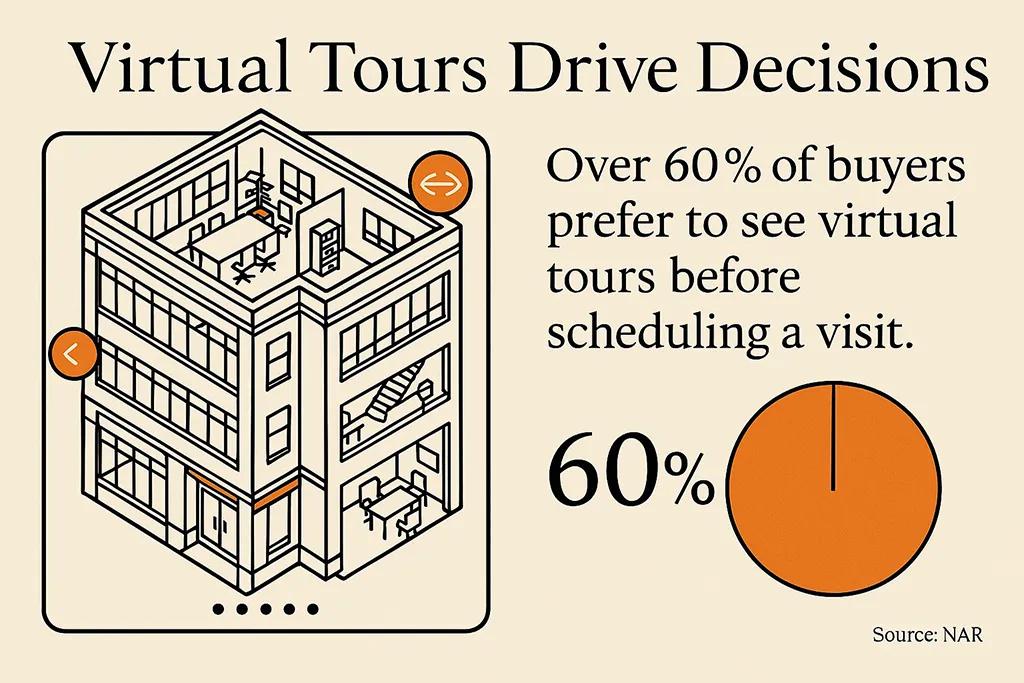
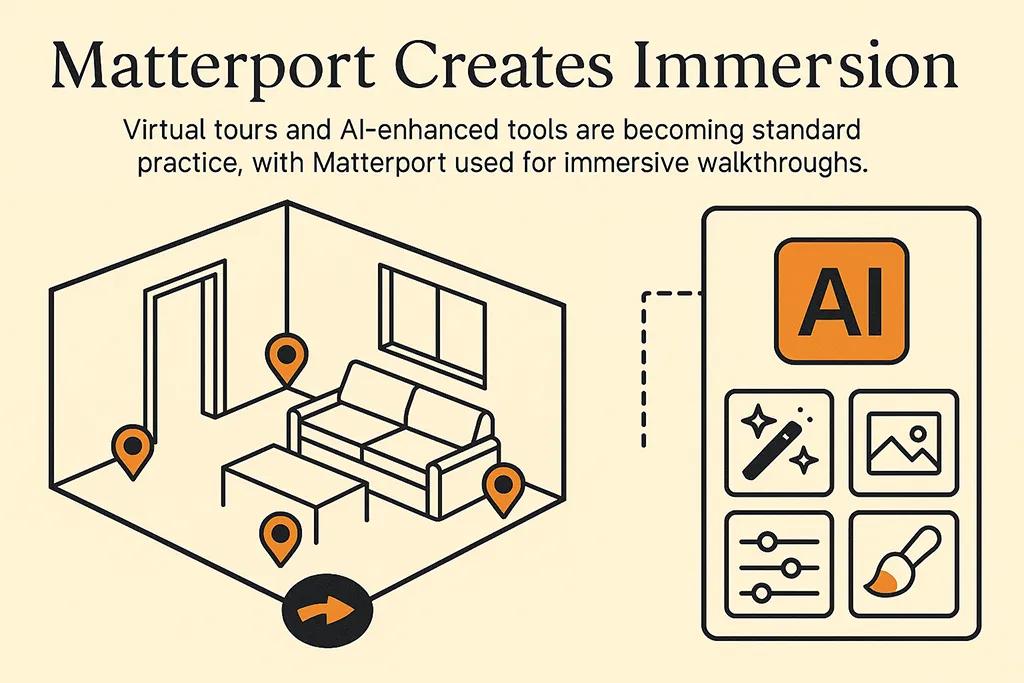
It depends on what the firm does. For agency work on existing assets, high-quality photography and drone footage usually cover the ground. For developers, repositioning specialists, or any firm selling off-plan or pre-construction assets, 3D visualization moves from nice-to-have to essential because there is no other honest way to show the asset. Interactive walkthroughs and embedded 3D models, particularly when delivered through interactive ways to showcase properties, carry considerable weight with sophisticated buyers because they compress the information exchange that would otherwise require multiple calls.
What is the first thing to fix on an underperforming CRE website?
Almost always mobile performance. The single most common issue I find is that the site loads in three seconds on the partner's laptop and twelve seconds on a buyer's phone, and half the buying group is on a phone. After performance, the second fix is usually the case studies section, because that is where the brand's credibility either gets built or quietly undermined. Visual redesign should typically come last, not first.
Can a CRE firm have a strong brand without an in-house marketing team?
Yes, and many of the sharpest CRE brands I admire are run by firms with no dedicated marketing headcount at all. What they have instead is a partner who genuinely writes, genuinely cares about how the firm is perceived, and is willing to work with a small trusted roster of specialists for design, development, and visualization. A brand driven by one opinionated principal tends to feel more coherent than a brand produced by a five-person team acting without a clear editor.
Where to Start If Your CRE Brand Is Underperforming
If the brand is not producing pipeline, the instinct to rebrand is usually correct in diagnosis and wrong in prescription. A new logo will not fix the problem. What fixes it is a short, painful exercise in deciding who the firm actually serves best and owning that choice visibly. Everything else follows. I tell CRE clients that if we cannot get the positioning onto one page that a stranger could understand and recognize as distinctive, there is no point opening design software.
From that position, the sequence tends to work in this order: tighten the homepage, rewrite the case studies to include honest mechanics and numbers, fix mobile performance against current Core Web Vitals thresholds, build a small set of anchor content pieces that carry a defensible market thesis, and only then address visual identity at scale. Done in that order, each step produces measurable improvement and the visual work at the end has something real to express.
Commercial real estate branding is not a design problem disguised as a business problem. It is a business problem that happens to end with design. Firms that treat it that way start to stand out quickly, because the competition is still spending its budget on logo refreshes. The slower, harder work of deciding who you are for is the only branding work that has ever compounded, in this industry or any other.