B2B Website Content Strategy That Converts Real Buyers

The brief most studios get handed reads the same way. "We need more leads from the website." The site in question is already polished. It has a blog. It has case studies. It has a contact form nobody fills in. I have sat on that call maybe twenty times in the last three years, and the root cause is nearly always the same: the content was built for a buyer who does not exist anymore.
Every week I build B2B websites for property developers, architects, and estate agencies. My own site at DignuzDesign is itself a B2B lead channel, so I know what a polished site that converts nothing looks like from both sides of the table. If you run a B2B business where the contract value sits somewhere between twenty thousand and several million, and your sales cycle runs three to eighteen months, this article is for you. It is not a generic marketer's tour of "the B2B funnel." It is what I have learned works when you are trying to put a real inquiry from a real decision-maker into a real inbox.
The Buyer You Are Writing For Is Not Sitting in the Room With You
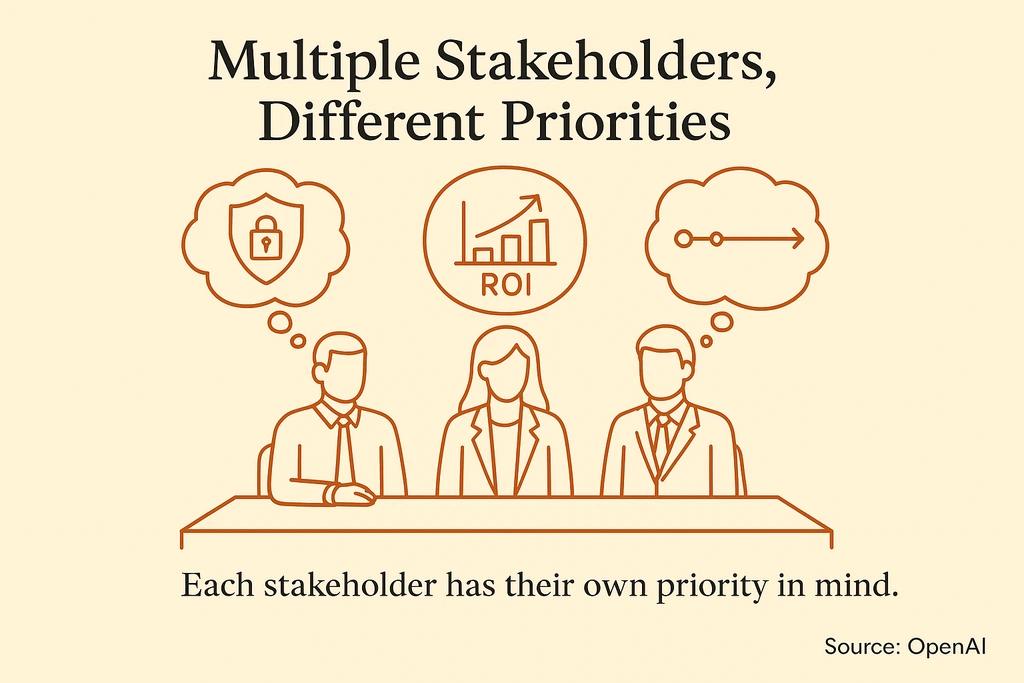
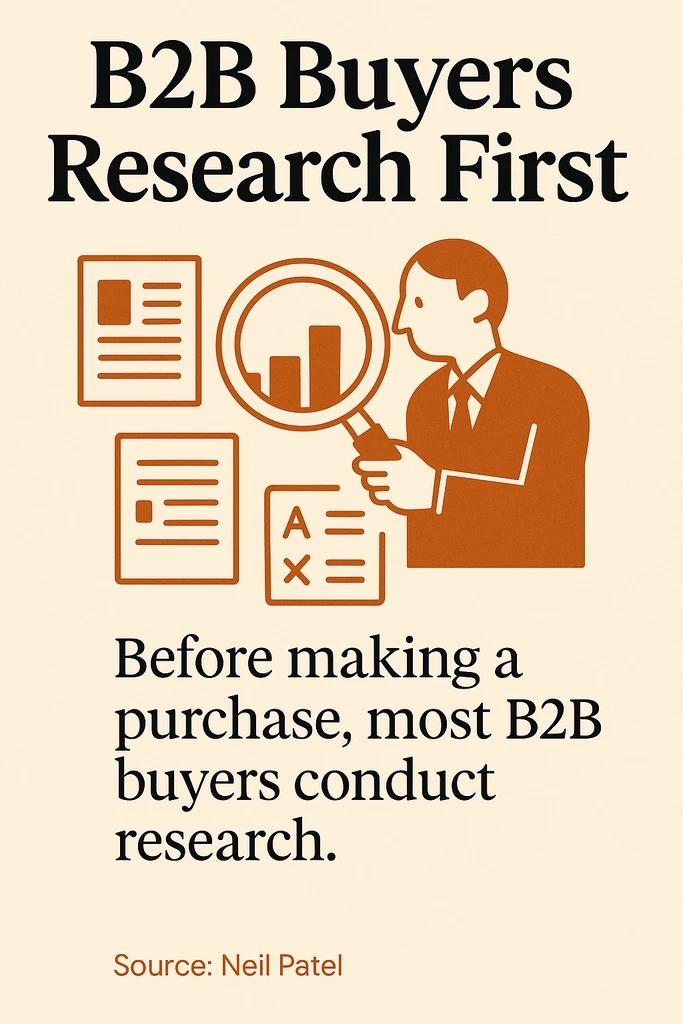
Before we get anywhere near content formats or funnel stages, you have to accept a difficult piece of data. Gartner's research on B2B buying groups shows that the typical buying committee for a complex purchase now runs between six and ten decision-makers, each of whom brings four to five pieces of independent research into the process. Seventy-nine percent of those decisions need CFO approval. Only seventeen percent of the total buying time is spent in direct contact with potential vendors.
Forrester's data goes further. Around seventy-five percent of B2B buyers now prefer a rep-free experience. Roughly seventy percent of buying committee members never identify themselves to the vendor during the research process. The number of self-directed interactions in a B2B purchase already outnumbers the human ones.
What this means in practice: by the time someone from a property investment firm calls you, the buying committee has already read your website, looked at your portfolio, forwarded links to three internal skeptics, cross-referenced you against two competitors, and formed a working opinion on whether you are a serious vendor. If your site did not answer their questions, you never entered that room. You were not rejected. You were never considered.
Every piece of advice in this article assumes that buyer behaviour. The website is not a brochure. It is the only salesperson in the room for about eighty percent of the buying journey, and it has to sell to people it cannot see.
What a B2B Website Actually Has to Do
When I audit a property developer's or architect's site that is underperforming, I look for three things. They are the only three things that matter for content performance. Everything else is downstream.
Legibility of the offer
Within thirty seconds of landing, can a director of acquisitions at a property fund understand what you do, who you do it for, and why they should spend another ten minutes with your site. Not your mission, your values, your vision. What you sell and to whom. Most property and architecture websites fail here within the first scroll because they were written for the founder's ego instead of the reader's triage problem. I have watched finance people open a site, scroll once, not find the number or the case they were looking for, and close the tab. You will never know it happened.
Proof that survives skepticism
This is where the property, architecture, and development verticals have an unusual problem that generic B2B marketing advice ignores. Your proof is visual. A portfolio of eight sharp renders is evidence. A stock image of a handshake is the opposite of evidence. A real project page with actual photographs, actual specs, actual outcomes, and actual client quotes reads as credible. A case study written in vague prose with a logo wall does not. I cover this in more detail in our guide to real estate web page design and conversion, but the shortest version is this: if your proof is not specific enough to verify, buyers assume it is fake.
Answers to the real objections
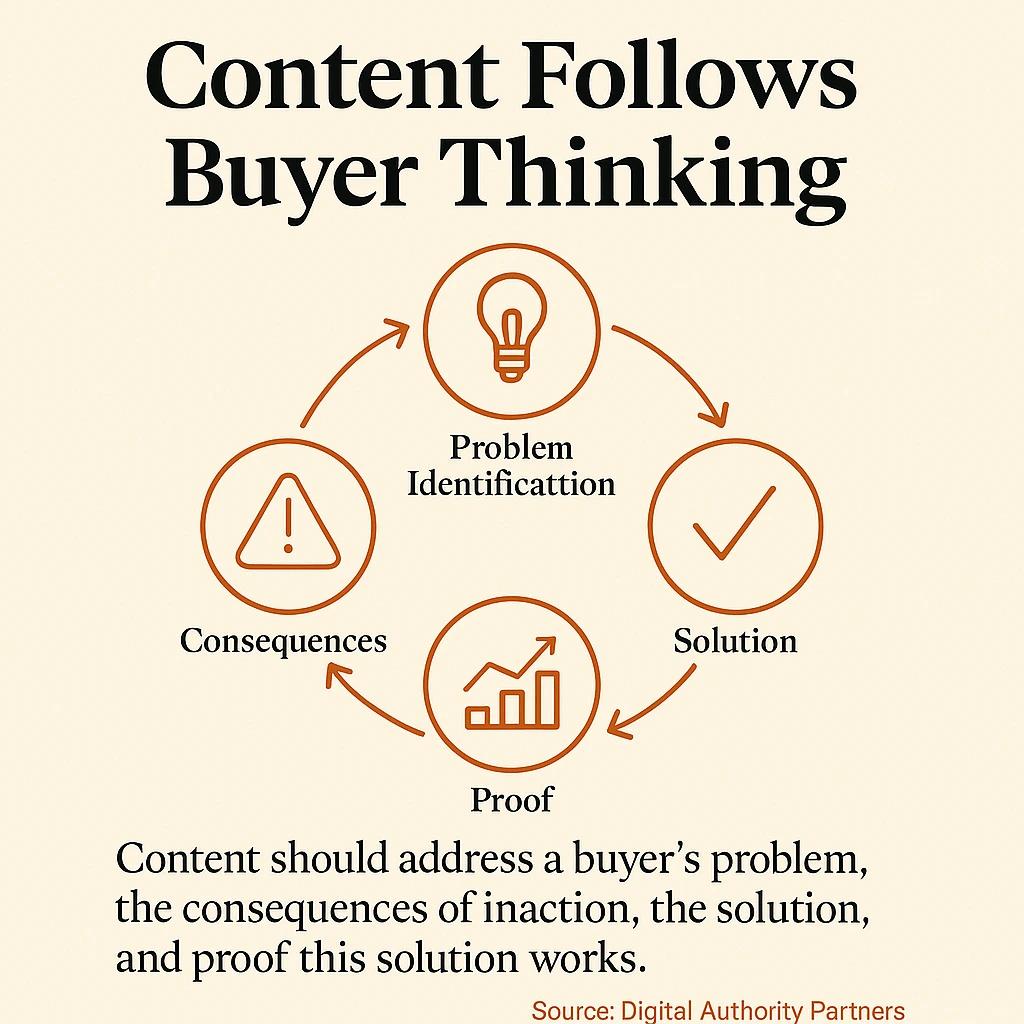
This is the part almost every B2B site skips. A buying committee does not ask "are they good." It asks "will this blow up." What is the timeline risk. What is the cost overrun history. What happens if the lead designer leaves. How does the contract work. Can you deliver under our regulatory environment. These are the questions that kill deals silently. If your content does not answer them, the skeptic on the buying committee wins the argument, because there is nothing on your site to counter them with.
The Real B2B Buying Journey, Without the Table
The original version of this article had a three-row table mapping awareness stages to content types. I am not going to reproduce that. In practice, the stages bleed into each other and the content that wins is not neatly classified. Here is how I think about it instead.
At the earliest stage, someone has a problem and has not yet found a vocabulary for it. A regional property developer realises the units on their last scheme took too long to sell. A commercial architect notices that pitch-to-win rates are dropping against two local competitors. A small agency head reads that their main rival just launched an interactive masterplan tool and wonders if they are falling behind. The content that serves this person is diagnostic. It names the problem, puts a shape on it, and gives them language they can use internally when they start explaining it to a partner or a board. This is almost always long-form search content, and it almost never mentions you until late in the piece. Its job is to be useful, found, and trustworthy enough that the reader bookmarks it and tells one other person.
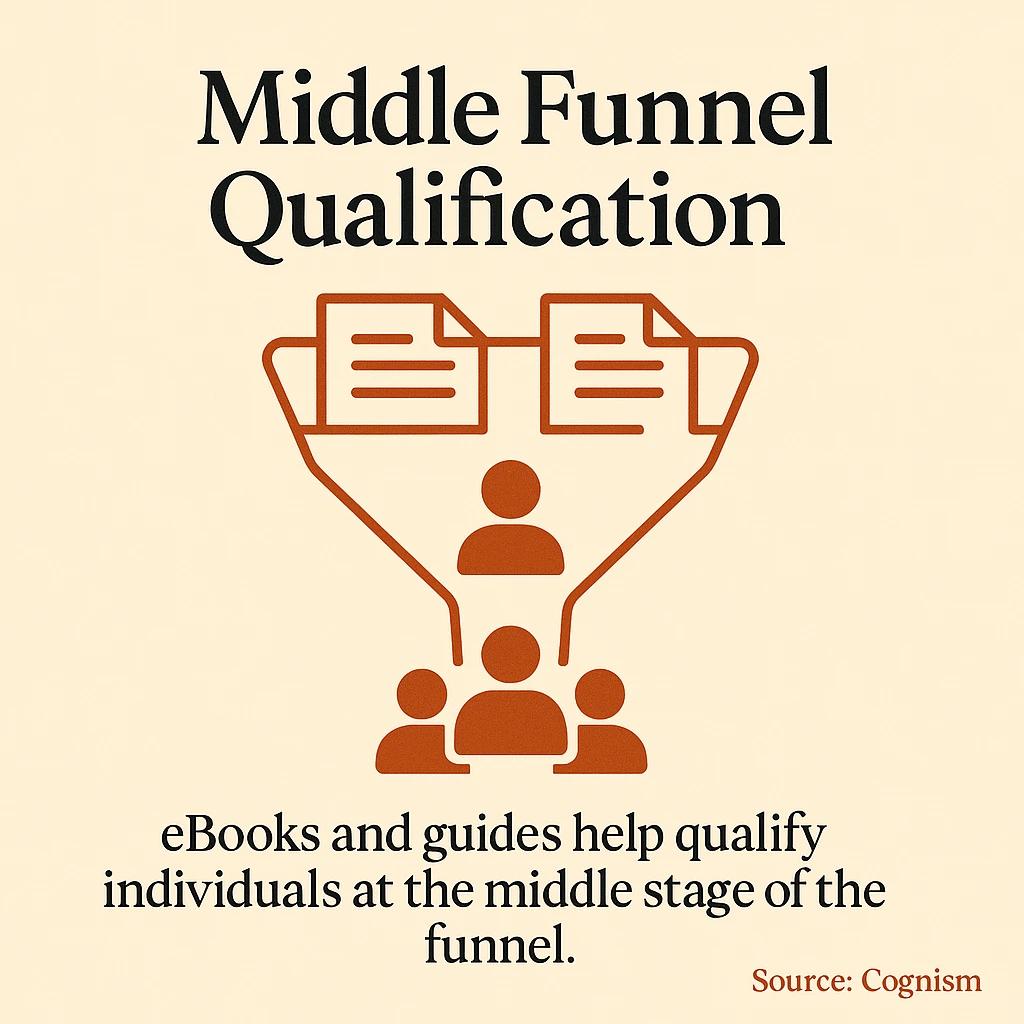
At the next stage, the prospect knows roughly what kind of solution they need. They are searching comparatively. "Custom real estate websites vs template builders." "Webflow vs WordPress for property sites." "3D rendering services for developers." Now the content has to help them build a mental shortlist. This is where honest, detailed comparison content beats everything. Most firms are too nervous to write comparison content because it involves naming competitors. The ones that do get rewarded. I have tracked the difference personally. A buyer-guide style article that names alternatives and explains when each makes sense brings in inquiries that have already pre-qualified themselves. A vague "why choose us" page brings in nothing.
At the final stage, the buying committee is evaluating specific vendors, and someone inside the client organisation has to defend the choice internally. This is the stage where case studies, portfolio depth, specific project pages, and proof of process matter most. A case study that shows the starting brief, the work done, the hard trade-offs made, the actual financial or commercial outcome, and a real quote from a real named client is worth more than twenty glossy images. One good case study can win a deal. Most B2B sites have none that actually do this work. They have a portfolio grid. A portfolio grid is not a case study.
Worth noting: most serious B2B buyers will also check your About page. In the property and architecture verticals this is almost universal. Committees want to know who actually runs the firm, who will be on the project, and whether there is a named accountable human at the top. If your About page is a stock paragraph and a team photo, you are losing deals there.
The Visual Credibility Problem Nobody Addresses
I said earlier that proof in property and architecture is visual. This is the single biggest leverage point in B2B content strategy for these verticals, and it is almost completely absent from mainstream B2B marketing advice because mainstream B2B marketing advice is written with software companies in mind.
If you are a property developer pitching units to an institutional buyer or a fund, your website needs to carry the weight of the sales pitch after the meeting has ended. That means renders that are actually good. Masterplans that a non-local investor can read. Interior CGI that does not look like 2012. It also means interactive tools where they matter. An investor reviewing a scheme remotely cannot walk the site. An interactive 3D property viewer like the one we build with AmplyViewer lets them do functionally the same thing in a browser. This is content. It is B2B content. It is also proof, and it is doing the job of a sales representative at three in the morning when the buying committee member finally gets around to looking at your site.
If you are an architecture practice, the portfolio page is your sales pipeline. It needs to load fast, show detail, explain the brief, and include credible exterior and interior imagery. I have written before about why specialist 3D rendering services matter to real estate firms, and the logic is identical for architects. Outsourcing this to generic stock or cheap freelancers reads on the page, and sophisticated B2B buyers can tell. I have watched an acquisition director reject a practice purely on the basis of the quality of the renders on their site, and their exact phrase was "if their images look like that, their drawings will too."
Visual credibility extends into brand identity. A property developer site with inconsistent typography, mismatched logo treatment, and three different grey palettes across pages reads as unserious. I have covered this at length in our piece on property developer brand identity. The relevant point in a B2B content strategy context is that the content is only ever as credible as its wrapper.
Writing the Content Itself
On the actual words on the page: most B2B websites in property and adjacent verticals are overwritten and under-specific. The hero says "transforming the future of real estate through innovative solutions." The service page says "bespoke offerings tailored to your unique requirements." The buyer leaves. I have pulled apart this pattern in depth in our guide on writing effective website copy that converts, but the single highest-leverage move for most firms is to strip every claim that could not be challenged. If a sentence could appear on any other site in your category without meaningfully changing, delete it.
Second leverage move: write service pages as answers to questions, not as descriptions of services. A page titled "Architectural Visualisation for Property Developers" that opens with the three questions a developer asks before commissioning a set of renders will outperform a page that opens with "We specialise in architectural visualisation" by a wide margin. The first is a buying resource. The second is marketing.
Third leverage move: pricing. Most firms in these verticals will not put pricing on the site. I understand why, and I am not going to argue every case. But silence on pricing is itself content. It tells the buyer that they cannot self-qualify without a call. For high-intent buyers, that is friction. For low-intent buyers, that is a filter. Decide which you want.
Distribution That Actually Works in These Verticals
Most B2B content advice treats distribution as a menu to be worked through. In property, architecture, and development, the menu is much shorter than the generic B2B advice suggests.
Search works and compounds. Ranking for specific, commercial, mid-competition terms is the single highest-return channel for a serious firm over a two to three year window. The reason is simple: the buyer is already searching, the intent is high, and the cost is effectively zero per lead once the content is in place. The catch is that it takes time, and no one wants to accept that.
LinkedIn is genuinely useful. It is the only social platform where the commercial real estate and development world actually lives. Thoughtful posts from the founder or principal, based on project experience, pull inquiries. Product posts from a company page do not. I have tested both and the difference is not subtle.
Industry publications and podcasts are real channels, particularly for the commercial side of the industry. A guest piece in a specialist property publication or an interview on a CRE podcast reaches people who would never type your name into a search bar but who trust the outlet. These placements pull inquiries for months.
Paid is almost always a waste in these verticals for content distribution. I have watched developers spend significant budgets running LinkedIn lead-generation ads to a whitepaper and produce nothing a sales team would accept. The reason is that the buying committee does not work that way. They do not click ads and hand over contact details. They read, compare, wait, and eventually ask a colleague.
I have written more specifically about channels for different roles in architect digital marketing and in our broader real estate development marketing strategy guide.
Measurement That Connects to Revenue
The 2025 B2B Content Marketing Benchmarks report from Content Marketing Institute found that only around one in three B2B marketers have a scalable content model, and that the top three reported challenges are attributing ROI, tracking the customer journey, and connecting content performance to business goals. This is consistent with what I see.
In my own business I track three things and ignore almost everything else on the dashboard. First, search visibility for the commercial pages that directly lead to inquiries. Not all traffic. The specific pages that matter. Second, inquiry form completion rate, broken down by the page the inquiry came from, because the page tells you what actually pulled them in. Third, the commercial quality of inquiries received, judged by the owner who reads them, not by a piece of software. A higher volume of worse inquiries is a strategic failure, not a win.
Everything else, page views, bounce rate, time on page, average session duration, I treat as secondary at best. They can flag a problem but they do not in themselves mean a strategy is working. If you want a deeper treatment of measurement logic for this sector I have written about it in how to optimize your B2B website.

A Ninety-Day Starting Plan
If you are a property developer, an architect, or a firm that sells to either, and you want to make a realistic start on this without hiring a content team, here is the minimum that will move revenue in a quarter.
Audit every commercial page on your site for offer clarity, proof quality, and objection coverage. Rewrite the two or three that would most directly influence a buyer ready to inquire. Do not touch the blog yet. Most of the gains in the first quarter come from the commercial pages, not from new articles.
After the commercial pages, add or rebuild two case study pages with the structure I described: real brief, real trade-offs, real outcomes, real quote. One good case study is better than ten weak ones, and the whole site lifts when the case studies start carrying weight.
Then, and only then, pick two search-driven content pieces to commission or write yourself, chosen by real keyword intent, not by what your agency suggests. They should target terms a buyer who already wants to buy would type. If you do not know which terms those are, talk to the sales side of the business and ask what buyers actually say on the first call.
Leave blog frequency aside until the commercial pages and case studies are working. Publishing two weak blog posts a month while your homepage is unclear is a waste of money.
Frequently Asked Questions
How long does a B2B content strategy take to pay off in property and development?
The commercial pages should show an uplift in inquiry quality within a quarter if they have been meaningfully rewritten, because that improvement is immediate. Search-driven content is a longer game. Expect nine to eighteen months for steady inquiry flow from organic search in a competitive vertical, and plan accordingly. If someone promises faster, be careful.
Should a property developer's website have a blog at all?
Yes, but not in the generic sense. A developer's blog earns its place when it answers investor or buyer questions that the sales team is already answering in emails. Publishing industry news summaries is a waste of time. Publishing clear, specific analyses of market conditions, unit economics, or scheme progress is useful and reads as expertise.
What is the single biggest mistake architects make on their websites?
Treating the portfolio as decoration rather than as the sales pitch. A portfolio that loads slowly, shows only exterior shots, lacks project context, and hides the brief is costing inquiries. The portfolio is the entire vendor evaluation for most committees. Invest in it accordingly.
Is gating content worth it in this sector?
Rarely. The audience is small, the signal-to-noise ratio on gated leads is bad, and the prospect you actually want is usually the one who will not give you a fake email for a PDF. An ungated guide with a clear call to action at the end produces fewer but higher-quality leads in my experience. If you gate, gate only the most substantial asset you have and accept the volume cost.
How much content do I actually need?
Less than the content marketing industry will suggest. For most property, architecture, and development firms, fifteen to twenty strong pieces that cover the buying questions your prospects actually have will outperform a hundred weak ones. Depth beats frequency in high-ticket B2B, every time.
What about AI-generated content?
It shows. Buyers in these verticals read widely and have developed a reliable filter for it. I have seen buyer-side notes that specifically cite AI-feeling content as a reason to drop a vendor. Use AI for research and scaffolding, not for the final text. The Content Marketing Institute found that while eighty-one percent of B2B marketers now use generative AI tools, only four percent report a high level of trust in the output. That skepticism matches what I see on the buyer side.
Final Thought
A B2B content strategy for property, architecture, or development is not about volume. It is about having the right answers in the right places for a buyer who will do most of the evaluation work without ever speaking to you. If your website cannot sell without a conversation, you are not in the running. If it can, the conversation becomes a formality. Build for that buyer, and the inquiries will come.