How to Choose a Web Design Agency for Real Estate

A few times a year, a property developer or estate agent walks me through a website they paid an agency to build, asks me to explain why it is not generating leads, and looks visibly tired when they realize the answer is most of it. The visuals are usually fine. The structure is wrong. The agency that built it had never sold an apartment, never timed a listing page on a slow phone, and never met a buyer who closes a tab if it takes four seconds to load a floor plan. Those conversations are the reason I am writing this guide.
Choosing a web design agency for a property business is genuinely different from choosing one for a SaaS company or a local restaurant. The asset values are higher, the sales cycles are longer, the visual asset load on every page is brutal, and the buyer behavior is researched and slow rather than impulsive. Most agency-selection advice does not factor any of this in. This piece does.
I am Dimitri. I run DignuzDesign, where I build custom websites for real estate developers, agents, and architects, and Faraday3D, where I produce the 3D renders and walkthroughs that fill those sites. The dual seat shapes everything I say below. I have shipped property sites that load in under a second on a 4G phone, and I have audited sites where the same listing page took twelve seconds. The gap between those two outcomes is the gap between an agency that understands the brief and one that does not.
A Property Website Is Not a Generic Brief
The first mistake most property companies make is treating the web design RFP as an interchangeable exercise. They send the same brief to a luxury branding studio in Milan, a Webflow specialist in London, and a five-person agency that mostly builds e-commerce. They compare proposals on price, timelines, and the prettiness of past work, and they pick whoever feels like the safest choice. Three months later the site is live, and the developer is wondering why their CRM is not filling up.
A property website is fundamentally a high-asset, high-intent platform. Every listing page hosts twenty to sixty large images, often a video, sometimes a tour or interactive viewer, a floor plan, a neighborhood map, a feature list, an agent block, and a lead capture form. Multiply that by hundreds of listings and you have a content system, not a website. The agency that wins the work has to understand listings as a data structure, not just as pages.
Most generalist agencies will produce a beautiful homepage and a generic listing template that the developer then quietly hates for the next three years. That is the recurring failure mode I see on audits. The homepage is the showpiece in the proposal deck. The listing template is where the business is actually won or lost. If your prospective agency cannot show you a listing template they built and a developer who is still happy with it eighteen months later, you are looking at a homepage shop. The deeper considerations behind web design for real estate companies sit in that listing layer, not in the hero banner.
Start by Defining What Success Looks Like, Not What Features You Want
Most property companies arrive at agency selection with a feature wish list: a search bar, a map view, a contact form, a blog, a multilingual switcher, integrations with the CRM. The wish list feels concrete, but it almost guarantees you end up choosing on price and visual taste.
Better to start with the few outcomes that actually matter for your business. A property developer launching a new building wants the unit roster to drive viewing requests. A multi-listing agent wants their listing pages to outrank the portals on the property's own address. An architect wants their portfolio to generate inbound briefs from developers who already have budget. These are completely different briefs, and they imply different agencies.
When you frame the project around two or three measurable outcomes, the conversation with each candidate agency changes. Instead of asking whether they can build a search bar, you ask how they would design the listing template to convert a high-intent visitor who has already opened twelve tabs. The agencies that have done this work answer with specifics: how they structure above-the-fold content, what they put in the gallery, where the agent contact lives, how they handle floor plans on mobile. The agencies that have not done this work answer with platitudes about user experience.
This framing also changes how you compare proposals. A cheaper bid that hits your two priority outcomes is more valuable than a more expensive bid that adds twenty features you did not ask for. Beware of the agency that pads the scope. Padded scope is how property websites end up with ninety percent unused features and a load time that scares buyers off the listing.
Read the Portfolio the Way a Buyer Would
Every agency has a portfolio. Most of those portfolios are aspirational. A site that looks polished in a thumbnail can be slow, broken on mobile, or quietly abandoned by the client a year after launch. The way to read a portfolio properly is to open the live sites on your phone, on slow Wi-Fi, and behave like one of your own buyers.
Open the homepage. Watch the loading. Scroll. Tap the menu. Open a listing. Open the gallery. Open the floor plan. Try the search if there is one. Submit the contact form. Look at how long any of this takes on a phone that is not freshly out of the box. Now check the same agency's other live projects in property. If they have only one property site in the portfolio, that is your signal. They are figuring it out on your dime.
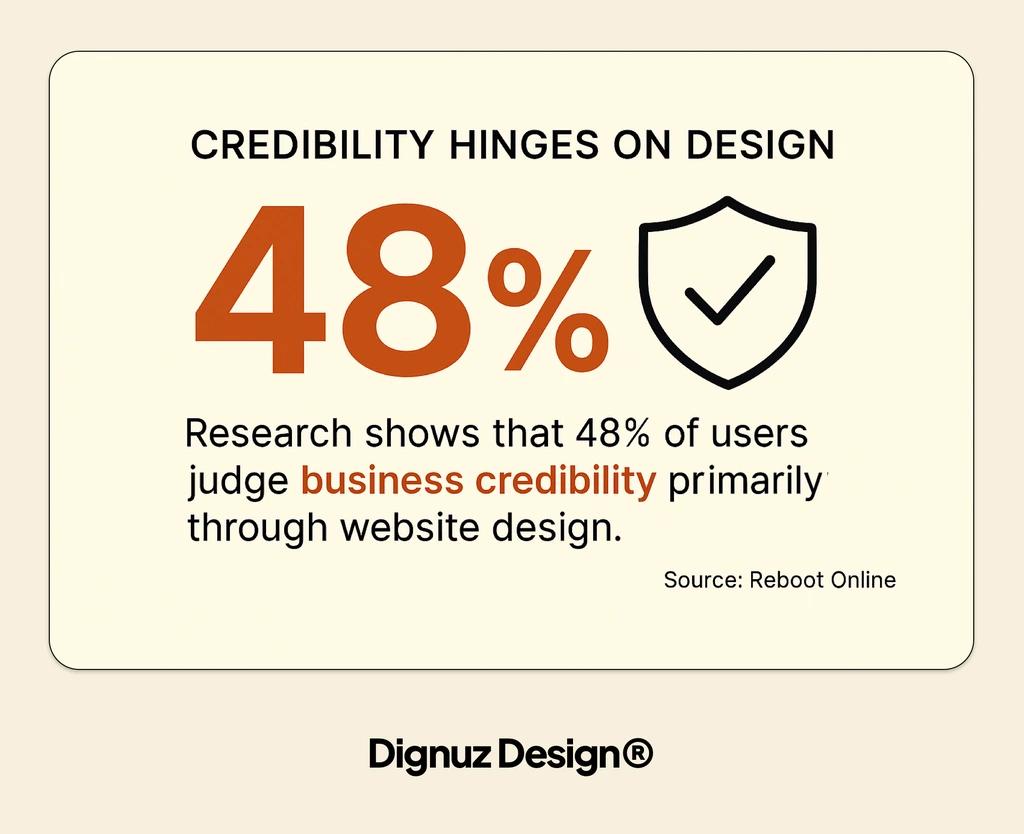
A useful second test is to look up the agency's live projects in a public performance tool. Google's Core Web Vitals documentation is the standard the search engine uses to measure page experience, and even a basic Lighthouse run shows you whether the agency knows how to ship a fast site or whether they only know how to make a static design file look good. I have seen agency sites that scored under thirty on mobile performance while charging premium fees. If the agency cannot make their own site fast, they cannot make yours. Performance is not a polish item on a property site, it is the floor that everything else stands on, which is why I treat real estate website speed as a non-negotiable part of every brief I take.
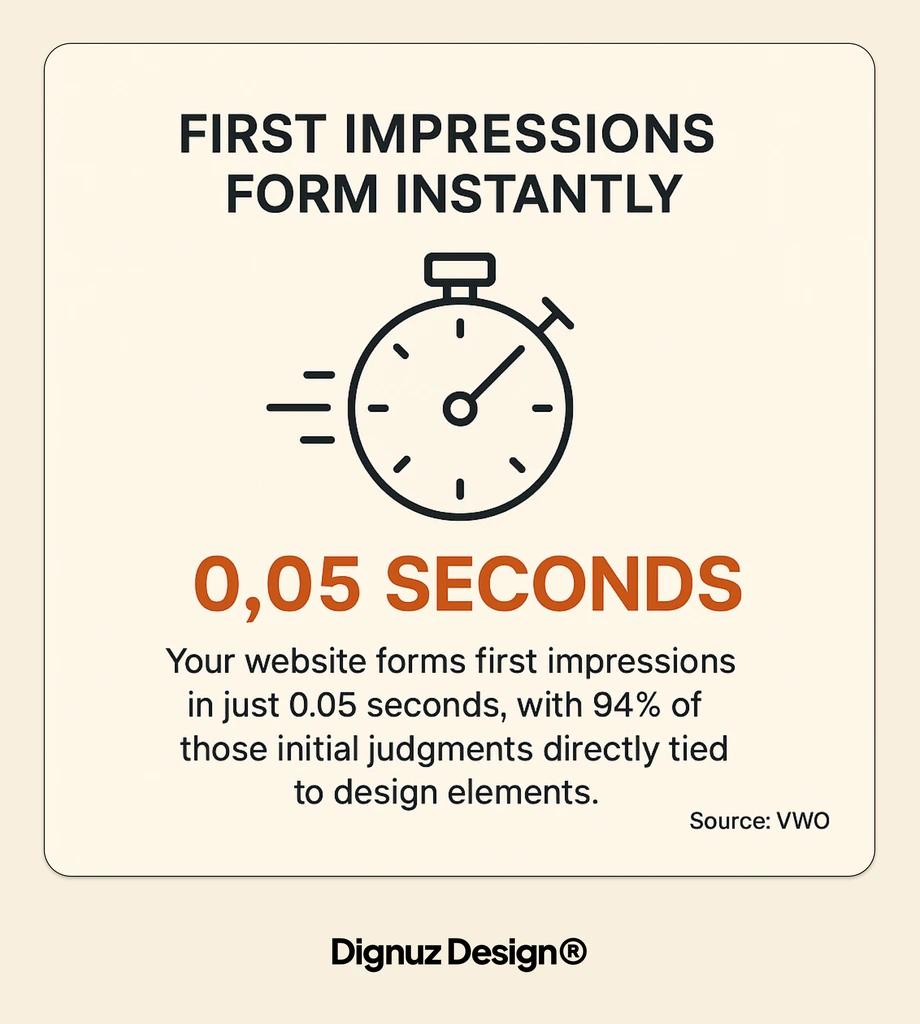
Beyond performance, look for editorial restraint. Did the agency build a listing page where each property gets the breathing room it needs, or did they cram fifteen tiles on a grid because the developer asked them to fit more in? Good property design knows when to leave space, and most agency portfolios reveal whether the team has that instinct or not. The Nielsen Norman Group's research on first impressions and automatic visual processing is consistent here: the cues that signal competence are not loud, they are quiet.
You also want to see how the agency handled visual assets on heavy media projects. If you are a property developer with hundreds of renders, photos, and floor plans coming in over the next year, the website needs to swallow that volume without collapsing. Ask the agency what their image pipeline looks like. Ask how they generate responsive sizes. Ask whether they use a CDN, whether they convert to AVIF or WebP, and how lazy loading is set up. The agency that can describe their pipeline in two sentences is the agency that has shipped these sites before. The one that talks vaguely about optimization is the one that hands the problem to a plugin and hopes.
The Tech Stack Question You Should Actually Ask
I want to be careful here because the tech stack is not the brief. The brief is the business. But the stack determines whether the business gets what it needs, and the stack is the question most property companies do not know how to ask.
There is a real difference between a WordPress build on a heavy real estate theme, a Webflow build with a CMS for listings, and a custom build on Astro or Svelte with a headless CMS. Each is correct for someone, and the agency should be able to tell you why their choice fits your situation. I have moved most of my own client work to Jamstack architectures for property developer websites because, when you have hundreds of listings, an interactive viewer or two, and a buyer base browsing on phones, an edge-rendered static site outperforms a database-backed CMS by a wide margin. But there are still good reasons to choose Webflow for a small agent site, and good reasons to stay on WordPress if your team already operates it well.
The wrong answer to the stack question is "we always use X." The right answer explains the tradeoffs. If you ask the agency about performance, they should be able to tell you what their target Largest Contentful Paint is on a mid-range mobile device, and they should be able to back it up with one of their live projects. If they answer with "yes it loads fast" and nothing else, you are looking at a content-shop, not an engineering-aware agency.
You also want to ask how the agency plans to handle the listings as data. The worst case is each listing being a custom-built page in the CMS, which means your team is doing layout work every time a unit comes online. The better case is a typed schema with structured fields, a single template that renders any listing, and an export path so the same data can flow to portals or print materials when needed. Custom builds outperform template solutions here because the schema can be designed around how your specific business actually sells, not around how some generic theme guessed.
The 3D and Interactive Visualization Question
This is where my biggest professional bias shows, and I will own it. Most web design agencies have no opinion about 3D embeds, virtual tours, or interactive property viewers, because most agencies do not produce them. They will build whatever container you give them and bolt the third-party widget in. That works for a small agent. For a developer selling off-plan, it is rarely good enough.
A 3D walkthrough embedded into a listing page changes the load profile of that page significantly. The viewer scripts can run into a couple of megabytes, and if the agency does not understand how to defer their initialization until after the rest of the page is interactive, the page feels slow even when the design looks right. The agency that has never shipped a property site with a 3D tour will not know to ask these questions. I have rebuilt sites where the original developer dropped a heavy iframe straight into the listing template and broke their own Core Web Vitals scores in the process.
This is the gap AmplyViewer was built to close. It is our own interactive 3D property viewer designed specifically to embed into real estate websites without dragging performance down, because I needed something that integrated with the kind of sites I build at DignuzDesign rather than fighting against them. If your agency has no opinion on how 3D or interactive viewers should sit inside the listing page, you will be the one writing the integration spec, and that is rarely how the best results happen.
Off-plan developers in particular underestimate how much of their early sales argument lives in the visualization. The site can be exquisitely designed, but if the renders are slow to load or the walkthrough stutters on a phone, the buyer's confidence in the development drops. The agency you pick should treat the 3D layer with the same engineering seriousness as the listing template, not as a feature to slot in two weeks before launch.
Buyer Behavior Has Already Decided What Your Site Needs to Do
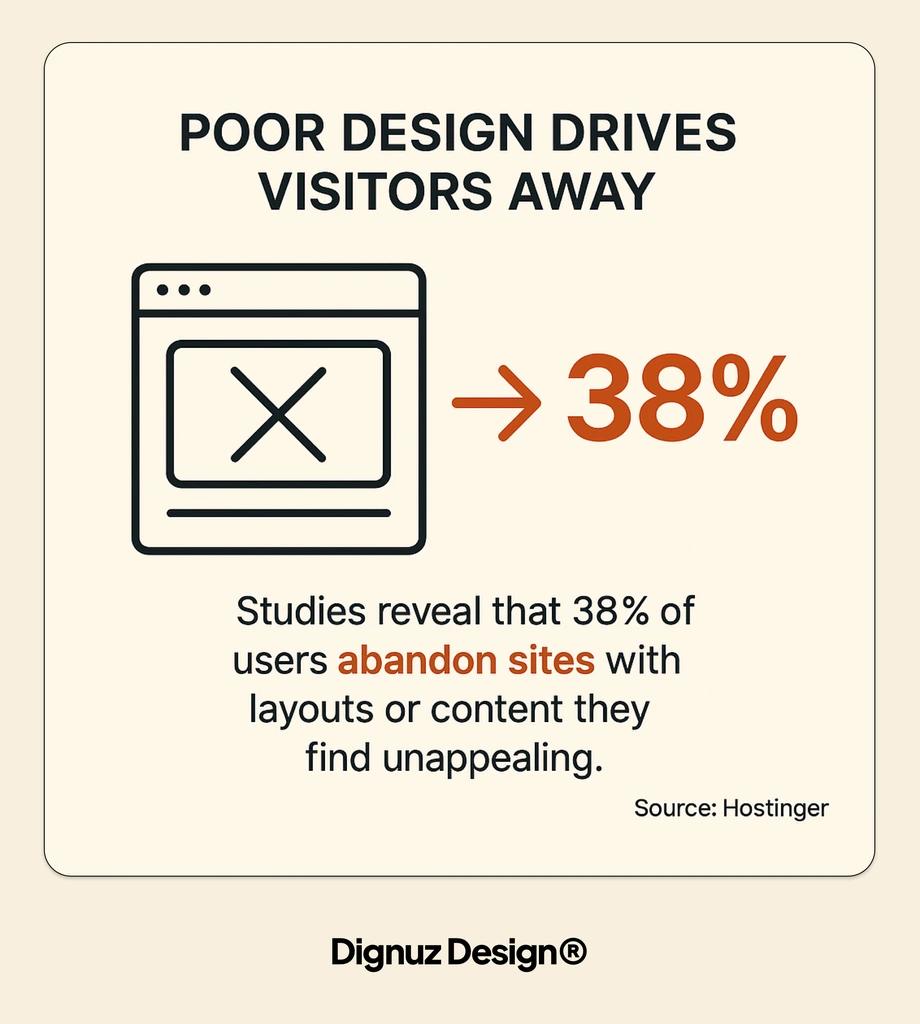
It is worth stepping back from agency criteria for a moment to think about the customer. The National Association of Realtors research on home buyer behavior has shown consistently that the overwhelming majority of buyers start their search online, on mobile devices, and that the time they spend on individual property sites is significant. They are not glancing. They are reading, comparing, opening multiple tabs, returning over the course of days, sometimes weeks.
That behavior pattern has implications for the agency selection. A site that performs well in a one-minute demo can perform terribly in the kind of multi-session, multi-device journey a real buyer takes. State persistence, decent search history, saved listings, easy sharing to a partner, all of these matter more in the buyer experience than the homepage hero. The agency that has thought about the journey across sessions, not just the landing visit, is the agency that will build a site your buyers actually return to.
Red Flags That Show Up Specifically on Property Briefs
There are general red flags worth watching for, like vague pricing, no contracts, or no proof of past results. There is also a more specific set that I have learned to watch for on property briefs in particular. These are the patterns that predict an unhappy project six months after launch.
- The agency has never asked about your listing volume, your CRM, or where the property data currently lives. Listings are the heart of the site, and an agency that does not ask about them is treating the project like a brochure.
- The agency wants to design the homepage first and figure out the listing template later. That is the order generalists work in. The order property sites should be built in is the opposite, because the listing template is where business is won and it deserves the first design pass.
- The agency cannot show you a property site they built that is still live and still loved by the client. Agencies churn through clients on this work, so a two-year-old reference is a strong signal and a six-month-old reference is fine if the client confirms they are still happy.
- The proposal is silent on performance. If the agency does not commit to a Lighthouse target or a Core Web Vitals threshold somewhere in the contract, performance will be the thing they quietly cut when deadline pressure hits.
- The agency uses identical case studies for property and non-property clients. Property briefs have specific demands, and agencies that do not differentiate their approach by industry are unlikely to differentiate the work either.
- The agency does not have an opinion about visual asset pipelines. On property work you will be feeding hundreds of images through the site, and the agency that has no answer for how those images get served at the right size and format will leave you with a slow gallery and an unhappy buyer.
What Your Budget Actually Buys
This is the question every property company wants answered and most agencies hedge on. Here is the honest version.
At the bottom end, say a few thousand to ten thousand for a small agent site, you can get a clean Webflow build with a basic listing CMS, a sensible template, and a contact flow. That is a reasonable outcome for a small operation. What you should not expect at that price is a custom CMS schema, a bespoke listing layout, an integrated 3D viewer, or any meaningful performance engineering. The agency will use what they have used before, which is fine if your needs fit the standard mold.
In the middle range, you are buying a custom design system, a thought-through listing template, a proper image pipeline, basic SEO foundations, and an agency relationship that survives launch. This is where most healthy property businesses should be sitting. A custom website at this price point can outperform a much more expensive build if the agency knows the audience.
At the higher end, you are paying for engineering. Custom integrations with portal APIs, multilingual content trees, automation pipelines, edge rendering on a global CDN, interactive viewers built into the listing template, and an agency that will hold the platform together as your portfolio grows. Worth it for developers with serious unit volume or agents at the very top of the market. Wasted on small operations that do not need the surface area.
The mistake is misallocating between these brackets. Spending bottom-end money on a brief that requires middle-bracket execution produces the kind of site that gets rebuilt eighteen months later. Spending top-end money on a brief that fits a Webflow template is how property companies end up with the worst kind of agency lock-in.
The Working Relationship Matters as Much as the Pitch
Almost every agency looks good in a sales meeting. The interesting question is what working with them is like at week eight, when scope is shifting and someone is sick. The proxies for this are surprisingly simple. Look at how quickly they respond to your messages during the sales process, because that will be roughly how they respond afterward. Ask to meet the person who will actually do the work, because in some agencies that is not the person pitching. Ask how they handle changes and bug reports after launch, because everything has bugs after launch.
It is also worth asking how the agency works week to week. My own studio workflow is fairly transparent on this for a reason: property clients tend to want to know what the cadence looks like, what decisions land when, and how feedback gets handled. An agency that cannot articulate their process clearly will discover their process under stress, and that is not where you want them experimenting.
The other working-relationship signal is whether the agency is honest about what they will not do. A small studio that openly tells you they do not do paid advertising, or that they will refer you elsewhere for a specific need, is more trustworthy than a one-stop shop that claims to do everything. Specialists know their limits. Generalists pretend they have none.

Frequently Asked Questions
How long should building a property website take?
For a real estate or developer site of moderate complexity, expect somewhere between eight and sixteen weeks from kickoff to launch. Smaller agent sites can launch in four to six weeks. Bigger developments with custom integrations, multilingual content, and 3D embeds will land toward sixteen to twenty weeks. Anything quicker than four weeks usually means a template-only build, which is fine for some businesses but will not scale.
Should I choose a local agency or a remote one?
Less important than most people assume. Remote work has matured to the point where the agency's location matters far less than the agency's specific experience with property briefs. I work with developers in several different countries from a single studio. What matters is whether the team can show real results in your kind of property work, not where they file their taxes.
Is Webflow good enough for a real estate website?
For most agent sites and many small developer sites, yes. Webflow handles listings reasonably well, the CMS is workable, and the visual design fidelity is high. Where Webflow starts to creak is when you have very high listing volume, complex multilingual content, deep portal integrations, or interactive viewers that need to coexist with strong Core Web Vitals scores. At that point an Astro or Svelte build on a headless CMS gives you a higher performance ceiling.
How much should we expect to budget for ongoing maintenance?
Plan for somewhere between ten and twenty percent of the build cost annually for content updates, framework upgrades, security patches, and small feature additions. Skipping maintenance is the most common mistake property companies make, and it is also why so many real estate sites look five years older than they are within two years of launch.
What should I avoid asking the agency in the pitch meeting?
Avoid spending most of the meeting on visual taste. Most agencies can show you ten different homepage moodboards and one will appeal. The questions that actually predict success are about how the agency handles data, performance, and the listing template, not whether they will use a serif or sans-serif headline. Save the aesthetic conversation for after you have validated the engineering.
How do I know if the agency is right for my specific brand?
Look at the agency's portfolio of real estate and property work and ask whether the projects in it look like work you would be proud of three years from now. Property branding ages differently from other industries because the asset itself is permanent, the marketing materials sit on real estate portals for years, and the visual identity needs to feel current without dating. An agency that has shown editorial restraint and consistency across a property portfolio is more likely to do the same on your project.
Final Thought
Most of the bad property websites I audit were not built by bad agencies. They were built by reasonable agencies given a brief they were not equipped to handle. Choosing the agency is most of the project, and the question to ask is not "who is the best web design agency" but "who is the best agency for this specific property business." Those are very different questions, and the second one is the only one that matters.
If you frame the search around the outcomes that matter, read the portfolio the way a buyer would, ask the harder tech-stack and performance questions, and stay honest about budget brackets, you will end up with the agency that fits. The work that follows is still work. But you will have removed the most expensive failure mode, which is finding out three months in that you and the agency were never building the same thing.