How Real Estate Developers Should Market Off-Plan Projects

There is a problem at the heart of real estate developer marketing that most marketing guides quietly ignore: you are not selling a home. You are selling a promise.
The buyers you need to reach are being asked to make one of the largest financial decisions of their lives based on floor plans, CGI renders, and a brochure. They cannot walk through the kitchen. They cannot stand at the living room window and decide whether the view justifies the asking price. They cannot feel whether the main bedroom catches morning light. Everything in your marketing has to do the work the physical property cannot do yet - and that single reality should reshape almost every decision you make about how you present your development online.
I build websites and produce 3D architectural visualization for property developers across Northern Europe, and I've watched nearly identical projects succeed or fail based almost entirely on how well their digital presence bridges that imagination gap. This is what the data shows, and what I've observed working directly with developers on launch campaigns.
The Difference Between Selling a Property and Selling a Development
Most marketing advice written for real estate is written for agents - people representing existing homes to local buyers. The tools, channels, and conversion logic for that audience are genuinely different from what works for a developer selling 40 apartments in a building that won't be completed for 18 months.
An agent needs breadth: many listings, many buyer types, constant lead volume. A developer needs depth: sustained engagement from a specific pool of buyers over a long sales cycle, often across geographies, with a product that exists only in renderings and documents.
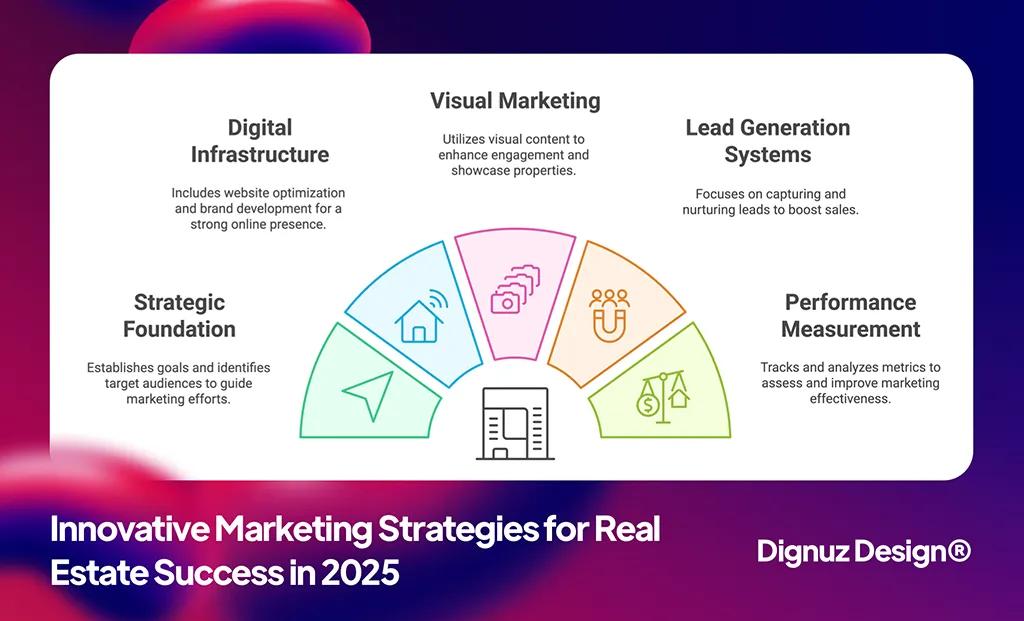
The strategic foundations of developer marketing begin from this recognition. If you borrow your strategy from agent-focused playbooks, you will optimise for the wrong outcomes - lead volume over lead quality, platform presence over sustained engagement, speed over trust-building.
Off-plan buyers are making a different kind of decision. They are not choosing between two kitchens they've both stood in. They are deciding whether to trust a developer's vision, competence, and timeline with a significant deposit. Your marketing needs to earn that trust over weeks or months, not capture it in a single visit.
Your Website Is the Sales Floor
For most businesses, a website supports the sales process. For an off-plan developer, the website is the sales process - particularly for buyers who are not local.
A buyer in Helsinki or Stockholm considering an apartment in Tallinn may make their go/no-go decision entirely based on what they find online. They will not visit until they are already largely convinced. Which means the single most important question for your marketing is not "which channels are we on" but "what happens when a qualified buyer lands on our project page."
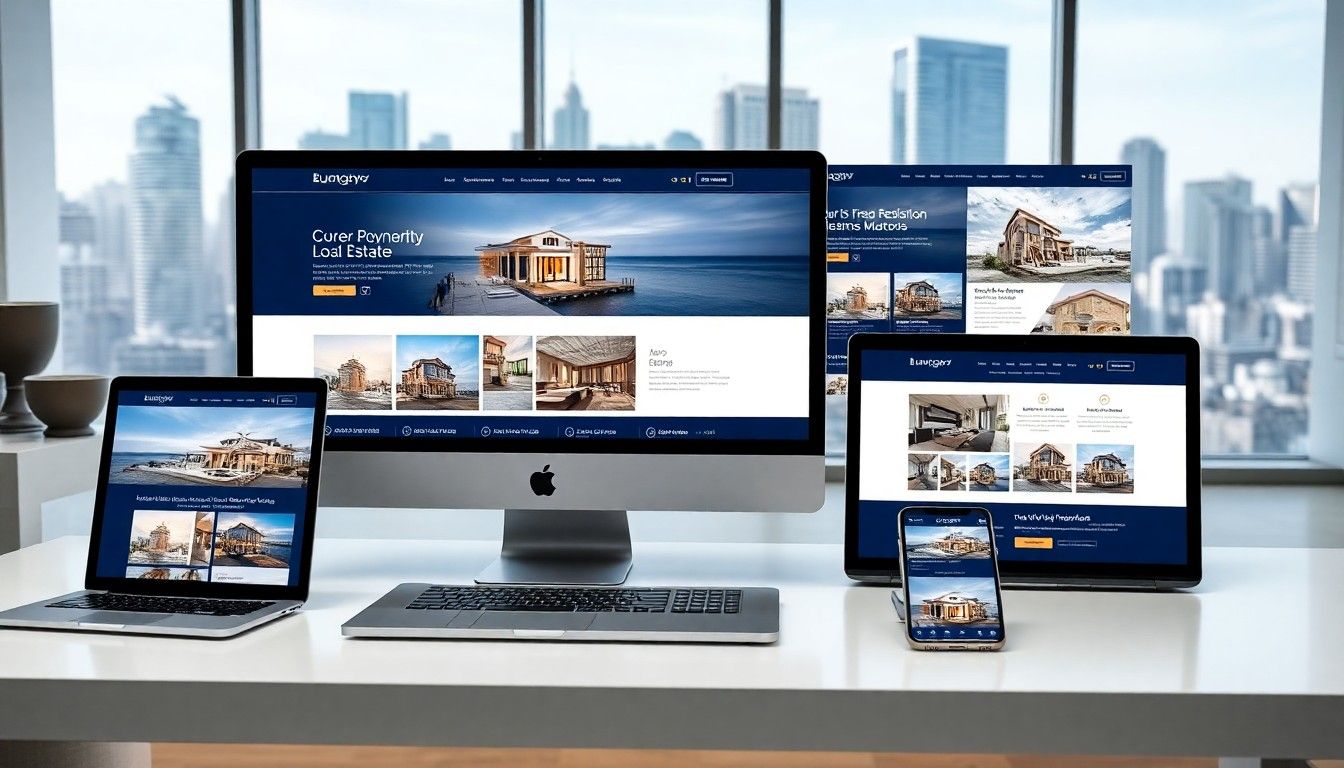
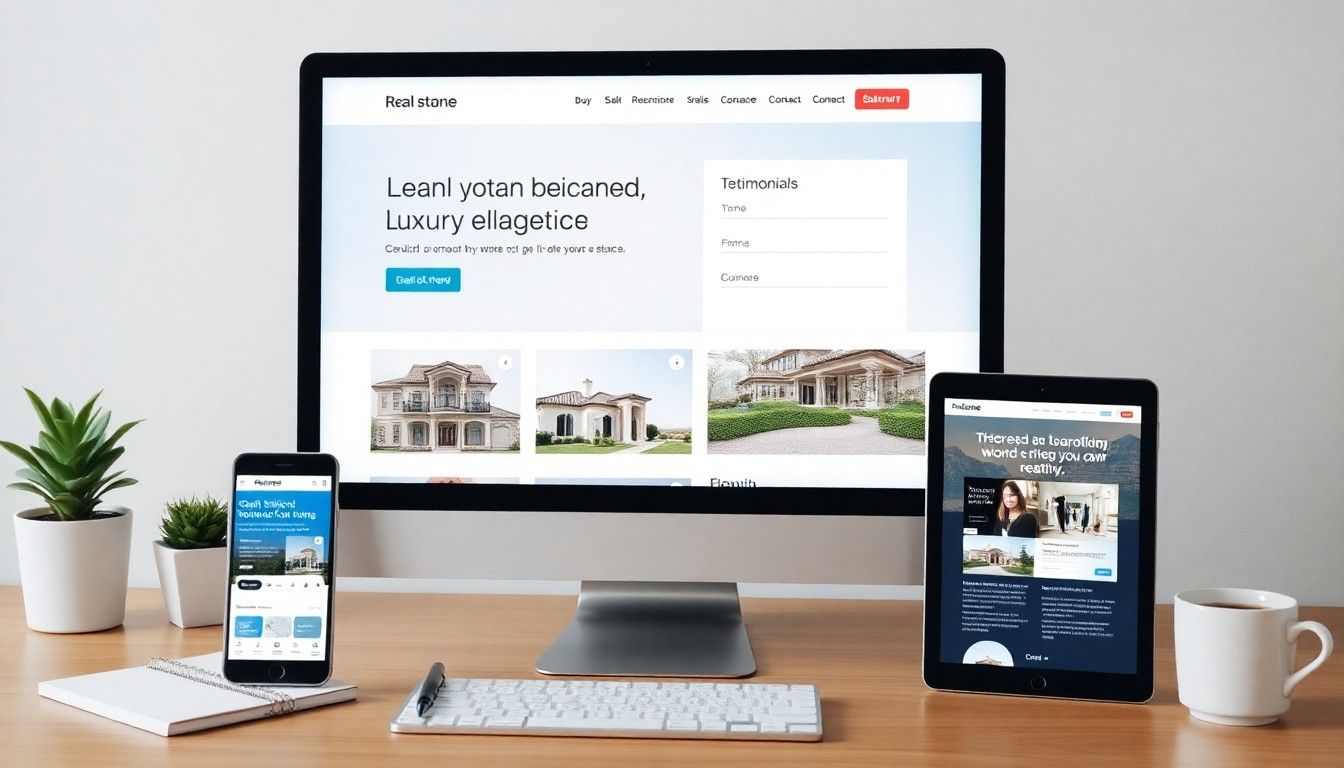
The answer, for most developer websites I see, is disappointing. A gallery of good renders, a PDF brochure, a contact form, and a footer. That is a brochure dressed as a website. A brochure delivers information and stops. A website should be doing active work: answering buyer questions through its structure, presenting the project in ways that build spatial understanding, and creating natural next steps that move buyers forward without forcing them to fill in a form before they are ready.
According to the National Association of Realtors' 2024 Profile of Home Buyers and Sellers, 43% of buyers now begin their property search online - and among the website content they value most, floor plans ranked third overall at 31%, behind only photos and detailed property information. For off-plan buyers who cannot visit in person, floor plans and spatial visualization are not supplementary features. They are the primary decision-making tool.
Building a website that works as a sales floor means thinking about the buyer journey in phases. In the first visit, most buyers are orienting themselves - understanding the location, the product type, the price range. The website should serve that efficiently without demanding anything in return. On the second and third visit, buyers are moving toward a decision - they want specifics about units, layouts, finishes, views. Interactive tools serve this phase far better than PDFs. The inquiry form belongs at the end of that journey, not the beginning. Leads from buyers who have spent 12 minutes exploring a project convert at a dramatically higher rate than leads from buyers who hit a wall and filled in a form because they couldn't find what they were looking for.
If you want to understand where your current website is failing buyers, look at your page-level engagement data and bounce patterns - they will tell you exactly where the journey breaks down.
The Visualization Gap Is Not About Quality
Most developers I work with have already invested seriously in CGI before we meet. The renders are often genuinely impressive - photorealistic exteriors, beautifully lit interiors, carefully styled lifestyle shots. The problem is not the quality of the visualization. The problem is the delivery mechanism.
High-quality renders uploaded to a standard WordPress gallery, compressed to half their resolution, displayed in a 700-pixel lightbox that doesn't work properly on mobile - that is where thousands of euros of visualization investment goes to die. The renders did their job. The presentation didn't.
This matters because of how buyers actually use visual content. They are not passively admiring renders. They are trying to answer specific questions: How big does this space actually feel? Where does the light come from in the living room? What is the relationship between the bedroom and the terrace? Static images, however beautiful, answer these questions imperfectly. Interactive visualization answers them directly.
Research published by Harvard Business School's Working Knowledge, examining over 75,000 home sales, found that virtual tours function primarily as a filtering mechanism - they help buyers who would not ultimately purchase remove themselves earlier, allowing developers and agents to focus time on genuinely interested prospects. For off-plan sales, where the cost of an unnecessary site visit or unqualified sales meeting is significant, this filtering effect is exactly what you want.
Separate research from Matterport, conducted in partnership with researchers at Texas Tech University, found that properties marketed with 3D virtual tours sold 20% faster than comparable properties without them. For a developer managing cash flow against a construction timeline, faster sales velocity is not a cosmetic benefit.
This is the gap our AmplyViewer product was built to close - not just producing better renders, but delivering them in a format that gives buyers the spatial understanding they need to make a decision with confidence. An interactive property viewer embedded in your project website allows buyers to navigate the floor plan, understand unit positions within the building, and explore the spaces on their own terms, at their own pace, on whatever device they are using. The difference in dwell time between a static gallery and an interactive viewer is not incremental. It is substantial. And dwell time in the context of an off-plan buyer is a meaningful proxy for purchase intent.
You can read more about how immersive 3D experiences affect property sales specifically in the context of pre-construction marketing, and about interactive ways to present properties that go beyond static image galleries.
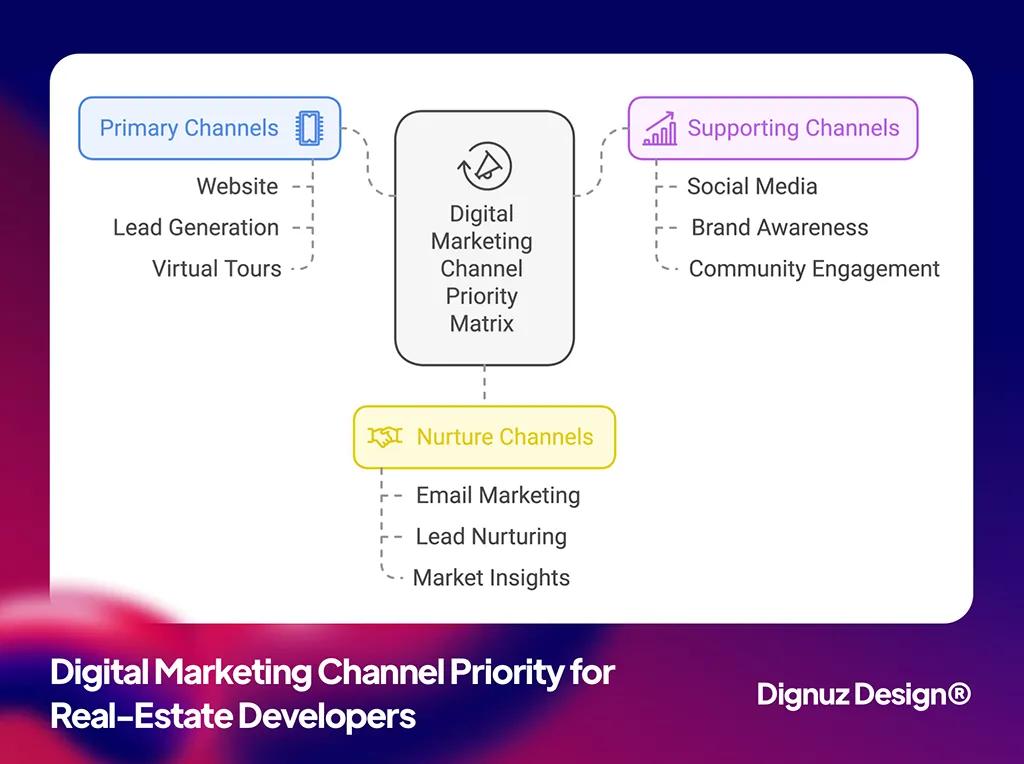
How to Choose and Use Digital Channels as a Developer
The channel advice in most real estate marketing guides is written for agent businesses that need constant high-volume lead flow from multiple sources. A developer launching a single project with 60 units has a different problem: you need sustained qualified interest from a defined buyer pool over an 18-24 month sales cycle. That changes the channel math considerably.
Google Search remains the highest-intent channel available. When someone searches "new development Tallinn city centre 2025" or "off-plan apartment [neighbourhood]", they have already made a series of pre-decisions - city, property type, timeline. Capturing that traffic puts you in front of buyers who are actively looking. The mistake developers make is expecting this channel to work without content that supports it. A single project landing page will not rank. Useful, specific content about the location, the neighbourhood, the development decisions you made and why - this is what earns visibility over time and positions you as someone with genuine knowledge of the market, not just something to sell. Our guide to real estate digital marketing ROI covers how to track which content efforts are actually paying off.
Meta advertising - Instagram and Facebook - works well for off-plan specifically because the purchasing decision is aspirational and the targeting options are unusually precise. You can reach people by income band, by demonstrated interest in property investment, by life stage. The goal here is rarely a direct conversion; it is getting buyers into your awareness and retargeting pools, then driving them to the project website where the real work of persuasion happens. Short video content showing the development vision, the construction site, the team behind the project - this type of content performs consistently better than polished lifestyle photography in paid social, because it feels real rather than produced.
LinkedIn is under-used by residential developers but genuinely valuable for investment-oriented buyers and for projects with commercial components. Decision-makers considering property investment, business relocation, or portfolio diversification are reachable here in a way they are not on Instagram. A developer in the Baltic region with projects that attract investment buyers from Scandinavia and Western Europe should be using LinkedIn as a primary channel, not an afterthought.
Property portals are table stakes but not where differentiation happens. Everyone in your market is on the same portals. Your listing there starts the journey; your website is where it continues or ends.
What to Write for SEO as a Developer
Developers should not try to compete for the same search terms as property portals. You will not outrank Rightmove or city-specific property listing aggregators for broad terms. What you can own is the specific territory around where you build.
The most valuable SEO work for a developer is content about places. Not marketing copy dressed as content - genuine information about the neighbourhood your project is in, why it is changing, what is being built nearby, what the infrastructure looks like over the next five years, why you chose this location. This kind of content answers real questions buyers are asking at the research stage of their journey, and it signals to Google that your site has genuine knowledge of this market rather than generic property content.
Technical performance matters here too, in a way that often gets overlooked. Property websites carry a lot of image weight by necessity, and Google's Core Web Vitals scoring increasingly connects site speed with search visibility. Website speed optimization for real estate is not just a UX issue - it is an SEO issue. A slow project website is a double penalty: buyers leave and Google downgrades it. Getting the performance fundamentals right before investing in content is the correct order of operations.
The property listing design choices you make on individual pages also affect how Google understands your content. Clean heading structure, properly optimised images with descriptive alt text, structured data markup for properties - these are not dramatic SEO interventions but they compound over time.
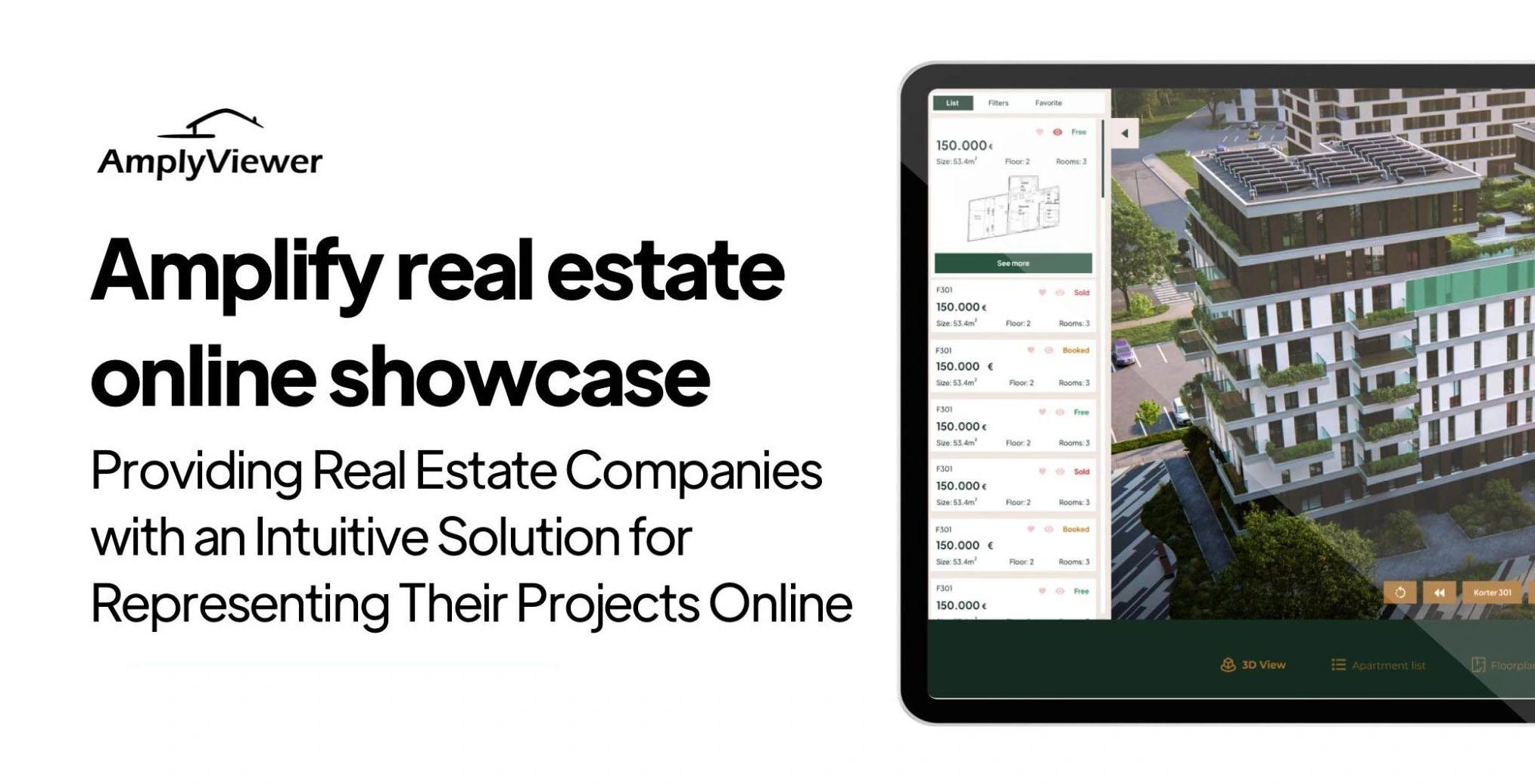
💻 Let us help you create a stunning online showcase for your projects that works seamlessly across all devices. Ready to amplify your real estate business? 👉 Explore AmplyViewer now
What Property Developers Get Wrong Most Often
Enough projects and patterns emerge. These are the mistakes I see repeatedly.
The website goes live after the renders are done. The correct order is the opposite. The website should be the first thing built - or at least designed and architected - so that when the visualization package is produced, it is produced for a presentation environment that is ready to show it properly. Launching with a placeholder page and adding visuals later means missing the momentum of a project announcement, and retrofitting interactive elements into a site that wasn't designed for them rarely works cleanly.
Treating the inquiry form as the primary call to action. A buyer who has been on your website for 30 seconds has not made any decision. Pushing them immediately toward a contact form produces volume without quality. The developers who get the best lead quality give buyers multiple ways to go deeper - a virtual tour, a unit availability grid, a specification document, a neighbourhood guide - before asking for contact details. The leads that come after genuine engagement convert.
Underestimating international buyer interest. In Estonia and across the Baltics, a meaningful share of buyers for new developments are not local - they are diaspora, investment buyers from Scandinavia or Finland, or remote workers making relocation decisions. A project website that exists only in Estonian, or only in English without local-language options for the developer's key foreign markets, is already cutting off a significant portion of the relevant buyer pool. This affects not just language but the legal and financial information the site needs to provide.
Not capturing buyer testimonials from completed phases. Buyers who have recently moved into a finished phase of your development are the most powerful marketing asset you have for selling the next phase. Their honest account of what it is like to live in the building - unscripted, specific, real - is more persuasive than any render. Most developers systematically fail to collect this content at the moment when buyers are most enthusiastic, which is immediately after handover. A simple process for gathering this - a follow-up email at 30 days, a request for a short video or written testimonial, permission to use it in marketing - costs almost nothing and produces professional marketing material that no amount of CGI budget can replicate.
Skipping brand identity work before launching a project. Every project is a brand - it has a name, a visual language, a set of values that should be consistent across every touchpoint. Developers who treat branding as a logo exercise miss the opportunity to build recognition and trust across a multi-year sales cycle. A strong, coherent project brand makes every piece of marketing more effective because it is instantly recognisable and reinforces a consistent promise.
FAQ: Property Developer Marketing Questions
What is the difference between marketing a new development and marketing an existing property?
The core difference is certainty. A buyer purchasing an existing home can visit, inspect, and decide based on the physical reality of the property. A buyer purchasing off-plan is deciding based on representations - renders, floor plans, specifications, and the developer's credibility. This means developer marketing needs to do far more work building trust and reducing uncertainty, and that the visual and interactive tools you use are not supplementary but central to the conversion process.
How early in a project should marketing begin?
Earlier than most developers start. The period before construction begins is when you can generate a waitlist of interested buyers, build organic search visibility through location-based content, and establish the project's brand before competitors enter the same area. Developers who launch marketing only when they have completed renders and a show apartment are leaving 6-12 months of pipeline-building on the table.
How do you generate leads for off-plan property without a physical show home?
Interactive 3D visualization - virtual tours, interactive floor plan explorers, walkthrough animations - does the spatial work that a show home does. Combined with specific, detailed content about the units, finishes, and location, this gives buyers enough to make an initial decision to inquire. The goal is not to replace the eventual site visit but to pre-qualify buyers enough that the visits you facilitate are with serious prospects.
Which digital channels deliver the best ROI for property developers?
It depends on the buyer profile for your specific project. As a general pattern: Google Search captures the highest intent (buyers actively looking in your area), Meta advertising is most efficient for building awareness and retargeting, and LinkedIn is underused but valuable for investment-buyer audiences. Property portals generate volume but not differentiation. The channel that most developers underinvest in relative to its returns is their own website - improving the quality and conversion performance of what happens when a qualified buyer arrives delivers returns across every traffic source.
How important is mobile optimization for a developer website?
Critical - and more developers fail here than you would expect. Property websites are image-heavy by nature, which creates real performance challenges on mobile connections. A website that loads slowly or displays images poorly on a phone is not just a UX problem; it loses buyers who made an initial decision to look based on a portal listing or social media ad, and then had a poor experience on arrival. Given that a significant portion of initial property research happens on mobile - on a phone during a commute, or on an evening when a buyer is showing their partner something they found - mobile performance is a prerequisite for everything else.
Where to Start if Your Current Marketing Isn't Working
Look at your website on your phone first. Not on your desktop, not on a fast connection - on a real mobile device on a regular connection. If the experience is slow, if images don't display well, if the floor plans open as unreadable PDFs, if the contact form is the most prominent thing on the page - that is the starting point. Everything else you spend on marketing is traffic going to something that isn't converting.
Then look at how your visualization assets are being used. Good renders in a poor delivery format are a missed opportunity. Interactive presentation of your 3D content consistently outperforms static galleries for the specific task of converting off-plan buyers - not because the technology is impressive, but because it answers the spatial questions that buyers actually have, and gives them a way to engage with the project on their own terms before they are ready to speak to anyone.
The developers who market off-plan projects effectively are not necessarily spending more. They are spending in the right order: website and visualization delivery first, then traffic. That sequence matters more than any individual tactic.
Take Action Today
Transform your property development marketing with strategic digital solutions. Contact our team to discuss your specific marketing needs and objectives. Schedule a consultation to begin your marketing optimization journey.