Is TypeScript Frontend or Backend? A Practitioner's Answer

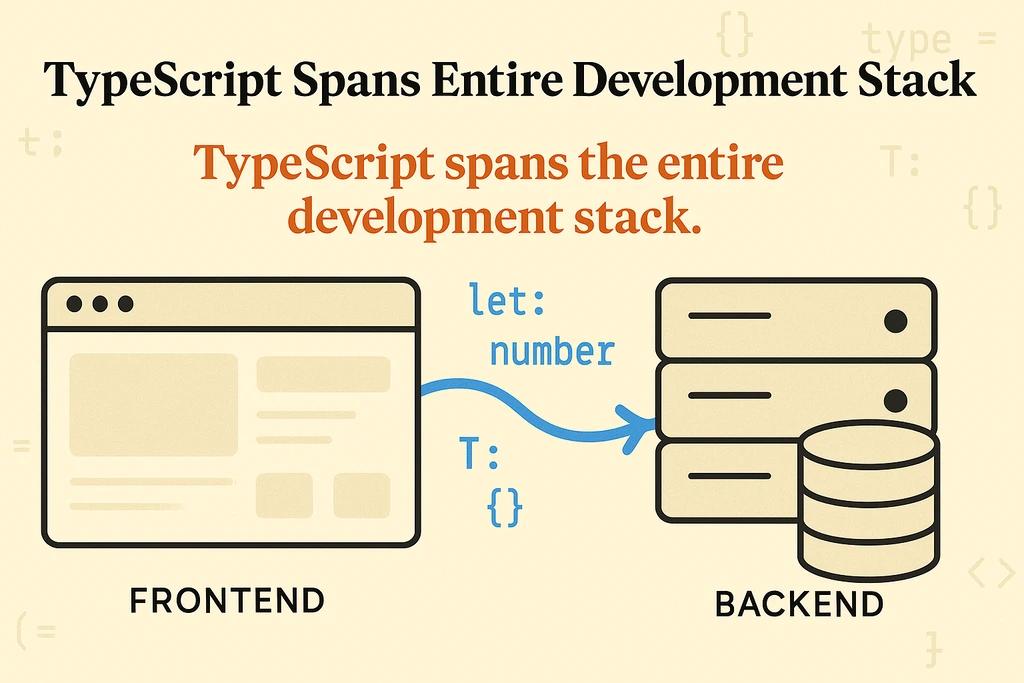
The question sounds like it should have a clean answer. It does not, and the reason it does not is more useful than either of the obvious replies. TypeScript is neither frontend nor backend. It is a type system layered onto JavaScript, and it runs wherever JavaScript runs. That includes the browser, a Node server, a Bun process, a Deno edge function, and a Cloudflare Worker sitting on the nearest point of presence to your user. Anywhere you can ship a .js file, you can ship what TypeScript compiles down to.
I am Dimitri. I run DignuzDesign, a studio that builds custom websites for real estate developers, architects and property marketing teams. I also ship two products written end-to-end in TypeScript: AmplyViewer, an interactive 3D property viewer embedded into client sites, and AmplyDigest, a service that summarises newsletters and videos into a single morning email. Both of these products run the same language on both sides of the network. That is where the "frontend or backend" question starts to fall apart, and where the interesting part of the answer actually lives.
Where TypeScript Actually Runs
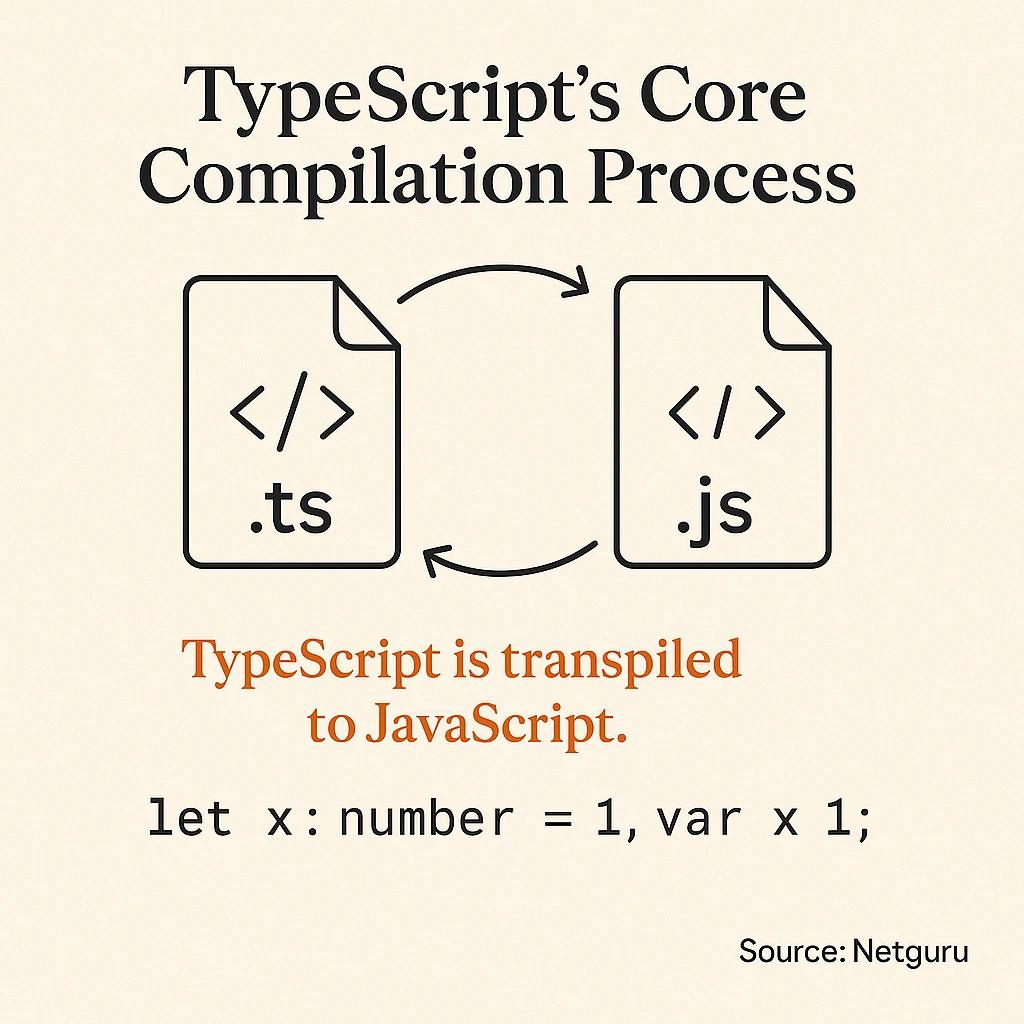
TypeScript is a superset of JavaScript. The compiler reads your .ts files, checks the types, then strips them out and emits plain JavaScript. The official TypeScript documentation is blunt about this: types do not exist at runtime. Nothing you write in TypeScript executes any differently from the JavaScript it compiles to. The engine running your code, whether that is V8 in Chrome, V8 in Node, JavaScriptCore in Bun, or the isolates that power Cloudflare Workers, never sees a single type annotation. It sees the same JavaScript it would have seen if you had written the file in plain JS to begin with.
That is the first thing to internalise, because it dissolves the entire frontend-or-backend framing. TypeScript does not care where the code runs. It cares whether the shape of your data lines up with the shape your code is trying to read. For a fuller walkthrough of what TypeScript actually adds on top of JavaScript, I have covered the ground in a separate piece on TypeScript versus JavaScript.
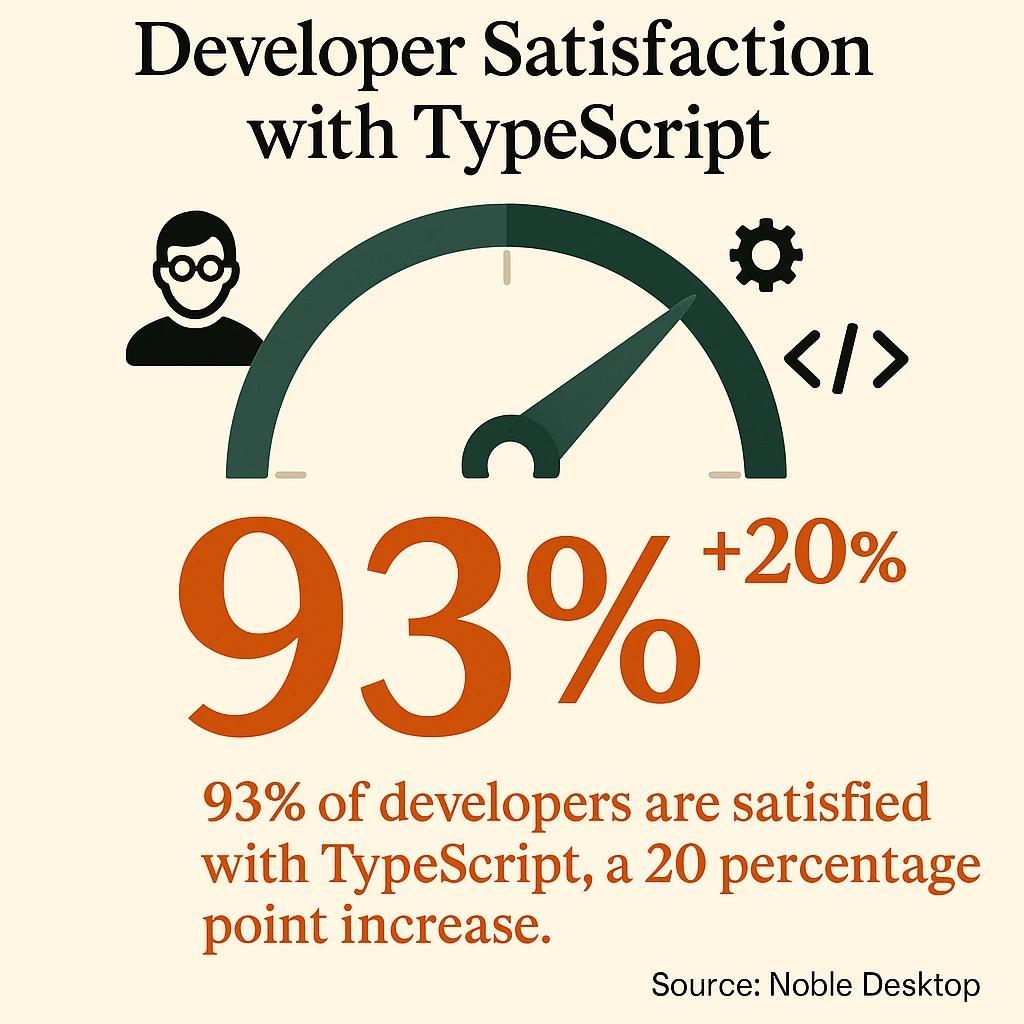
If you want the adoption numbers, the latest State of JavaScript survey shows TypeScript usage has climbed steadily to the point where a majority of respondents now write more TypeScript than JavaScript. Lack of static typing is still the single most complained-about language pain point among those who have not adopted it yet. The trend is not interesting by itself. What is interesting is that the adoption looks roughly the same on the client and the server side, which is another hint that the frontend-backend split is not the right way to think about the language.
The Real Value Lives At The Boundary
Here is the observation that is hard to get from a tutorial. Most of the time, when people ask whether TypeScript is a frontend or a backend language, they are trying to decide where to introduce it first. That is the wrong question. The payoff from TypeScript on one side of the network is real but modest. The payoff when types span both sides is substantially larger, and it is the single best reason to pick TypeScript for a full-stack project.
Think about what happens at an API boundary in a mixed-language stack. Your backend returns JSON. Your frontend receives it. Somewhere, someone has written down what the shape of that JSON is supposed to be. In a Python-and-JavaScript shop, that "somewhere" is usually a README, a Swagger file that drifted out of sync three sprints ago, or the institutional memory of whoever wrote the endpoint. Every frontend developer who touches the response writes their own mental model of the shape, and that mental model is wrong exactly often enough to ship bugs.
When the backend and the frontend both speak TypeScript, you can skip the whole shadow-documentation loop. The type that describes the response on the server is the same type the client imports. Rename a column, the client stops compiling. Add a nullable field, the client is forced to handle the null. This is not a theoretical benefit. It is the single most reliable bug-prevention tool I have on a full-stack project, and it only exists because one language is used on both sides.
What This Looks Like In A Real Stack
AmplyViewer is the product I use to show this concretely. The architecture is:
- An Astro site for marketing and docs
- A Svelte frontend for the interactive 3D viewer embedded into client sites
- A Hono API running on Cloudflare Workers
- Cloudflare D1 for the metadata database and R2 for the 3D asset storage
Every layer is TypeScript. The D1 schema is defined in a migrations file with typed queries written against Drizzle. Drizzle infers the row type for each table directly from the schema definition. The Hono worker imports those types and uses them to describe the response of every endpoint. The Svelte client imports Hono's client helper, which reads the server's route definitions at compile time and gives the frontend fully typed fetch calls, with autocomplete on the request body and the response.
When I add a column to the properties table, a single pnpm typecheck tells me every place in the frontend that now needs to handle the new field. When I change a response shape on the worker, the Svelte code fails to compile until I update the UI. I have never once had a production bug from a frontend-backend shape mismatch on that project. That is not because I am careful. It is because the compiler is making the mismatch impossible to ignore.
This pattern is not exclusive to Hono. tRPC is the better-known example, oRPC is the newer entrant, and the Astro team has been building in the same direction with server actions. The common thread is that one language - TypeScript - lets the type definitions themselves serve as the contract, without a codegen step and without a separate schema file to keep in sync. The Hono RPC guide walks through the specific mechanism if you want to see how it is wired together.
Where TypeScript Earns Its Keep On The Frontend
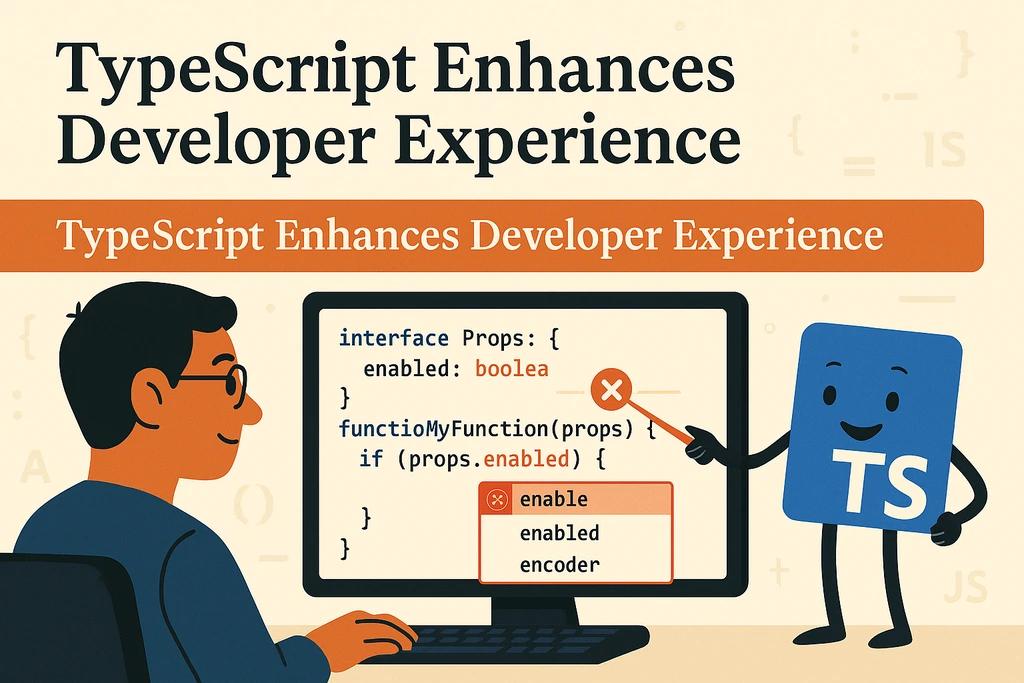
Independent of the full-stack story, TypeScript pulls its weight in the browser. The frontend is where data shapes change most often, where component props multiply fastest, and where refactors are most dangerous because the compiler is the only thing standing between you and a silent runtime error in production.
Component prop types catch the majority of the regressions I would otherwise ship. In Svelte, generic components become genuinely safe - a <List items={...} /> knows the type of each item, and the slot that renders each item is typed accordingly. In React or Vue the story is similar. For a real estate listing grid rendering a hundred property cards, that means the card component cannot accidentally read a field that the listing API stopped returning last week. The worst a React app without TypeScript can do to you on a change like that is render undefined and hope nobody notices.
The other frontend win is refactoring confidence. When I rename a prop on a deeply nested component, the compiler walks the tree for me. This is a boring benefit, and it is the one I miss the most when I work in a plain JavaScript codebase.
Where It Earns Its Keep On The Backend
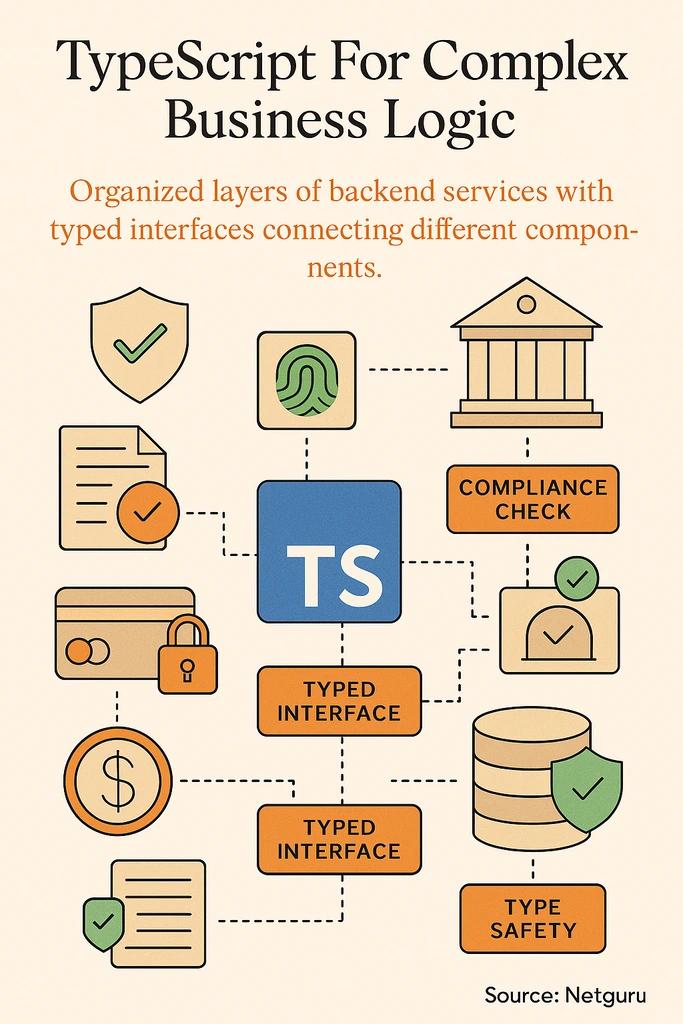
On the server the wins are different. The frontend deals mostly with rendering; the backend deals mostly with data. That makes the database and the API surface the two areas where typing pays off the most.
For the database, pairing TypeScript with a type-safe query builder like Drizzle or Prisma is the thing that actually changes how you work. The query you write against the properties table returns a row whose shape is inferred from the schema, not hand-written. SELECT the wrong column, the type narrows to exclude it. Add a .where() on a field that does not exist, the code refuses to compile. For more on the broader landscape of options, I have a separate piece on JavaScript backend frameworks that covers the runtime choices in detail.
For the API surface, the combination of a typed router (Hono, tRPC, Elysia, or the newer oRPC) with a runtime validator (Zod or Valibot) gives you two things at once. The validator guarantees the request body actually matches the type at runtime, since TypeScript cannot police untrusted input from the network. The router then propagates that validated type into the handler, so by the time your business logic runs, the input has been both type-checked and shape-checked. This is the setup I use for AmplyDigest, where malformed payloads from third-party newsletter APIs are a genuine and recurring threat.
What Happens When You Skip It On One Side
The temptation on smaller projects is to adopt TypeScript on the frontend because the frameworks push you there, and to stay on plain JavaScript or a different language on the backend. I have done this on older projects, including a couple of early Astro real estate sites that talked to a Python service. It is a reasonable choice and it is also the configuration where TypeScript feels weakest, because you are paying the setup cost without getting the full-stack payoff.
What you lose is the shared contract. Every API response becomes a Record<string, unknown> that you have to parse into a real type. You end up writing runtime parsers (Zod, io-ts, Valibot) not to validate, but to recreate on the client the type information you already had on the server. That is honest work and it is the right pattern when your backend is not TypeScript. Just understand that you have re-introduced a sync problem the full-stack TypeScript setup eliminated.
The inverse - TypeScript on the backend, JavaScript on the frontend - is rarer but also weakens the case. Most of the bugs that typing catches on the server are schema and query errors, which a typed ORM already handles. Leaving the frontend untyped means you are still shipping the class of bug TypeScript is best at preventing: the silent breakage when a UI reads data it does not actually get.
The Honest Tradeoffs
TypeScript is not free. Three costs are worth acknowledging before you commit.
Build times grow. The compiler is fast compared to what it used to be, but a large project with strict settings will have a noticeable type-check pass in CI. On AmplyViewer, a clean type-check is around 8 seconds. That is tolerable. On a larger monorepo it can climb into the minute range, and incremental builds become worth configuring properly.
Type complexity can run away from you. Advanced conditional and mapped types are genuinely powerful. They are also a tar pit if you start writing library-grade generics for application code that does not need them. I have a general rule that if a type takes more than 30 seconds to read, it is too clever and should be refactored into simpler pieces. More on that in my notes on TypeScript best practices.
Onboarding takes longer. A developer fluent in JavaScript but new to TypeScript will be productive in a day, but they will hit the type system's harder corners (generics, infer, utility types) in the second or third week, and those are the moments where impatient teams give up and start writing any everywhere. Setting up a linter rule that disallows implicit and explicit any outside narrow escape hatches is the single most useful hygiene rule I know.
So Which Side Is It On?
It is on whichever side you ship the JavaScript. That is the literal answer. The more useful answer is that TypeScript is most valuable when both sides of your application speak it, because that is when the language stops being a local productivity aid and starts being a contract that travels with your data. On a site I build for a real estate developer with Astro on the edge and a Hono API behind it, the code I write on Monday on the server dictates the shape of the UI I write on Tuesday in Svelte, and if I get the shape wrong on either side, the compiler tells me before a user ever sees it. That is the thing the question is usually trying to ask about. The answer is not "frontend" or "backend". It is "yes, both, and that is the point".

Frequently Asked Questions
Do I need to learn Node.js to use TypeScript on the backend?
Not exclusively. Node is still the most common runtime, but Bun, Deno and Cloudflare Workers all run TypeScript-targeted code without Node. For most of the real estate and property sites I build, Cloudflare Workers is the backend runtime, because it gives you a globally distributed server with no cold-start penalty. You write TypeScript the same way. The differences are mostly in the standard library and in how you handle long-running work.
Is TypeScript harder to learn than JavaScript?
It is additive. Every valid JavaScript program is a valid TypeScript program, so you can start by renaming a file to .ts and adding types only where you want them. The parts that feel hard - generics, conditional types, discriminated unions - are the parts you reach for once you have a problem they solve. The learning curve is genuinely gentler than it looks from outside.
Can I use TypeScript with Astro or Webflow?
Astro has first-class TypeScript support out of the box, including typed frontmatter and typed content collections. I use it that way on almost every project. A beginner's overview of the framework sits in my article on what the Astro framework is. Webflow is the opposite - you do not write TypeScript in the Webflow editor itself, since the framework generates its own JavaScript. What you can do is wire a TypeScript-based backend or worker into a Webflow site through its API, which is how I handle most custom functionality on Webflow projects.
Does TypeScript slow down my website?
No. The output is plain JavaScript. The browser has no idea the code was ever TypeScript. Performance is governed by the same factors as any other JS-based site: bundle size, code splitting, image delivery, server response time. TypeScript neither helps nor hurts at runtime.
When is it not worth introducing TypeScript?
On a throwaway script or a single-file utility, the setup overhead outweighs the benefit. On a full site or an application with more than a few hundred lines of code, the calculus flips fast. My rule is that anything with a database, an API, or more than one developer touching it is a TypeScript project.
Should a beginner learn JavaScript first or start with TypeScript?
Learn the JavaScript fundamentals first. The runtime behaviour, async model, and prototype system are still JavaScript's, and no amount of type annotations changes that. Once you are comfortable reading a callback, a promise chain, and a closure, TypeScript is a sensible next step, not a parallel track.