Immersive 3D Real Estate Experiences: What Drives Sales
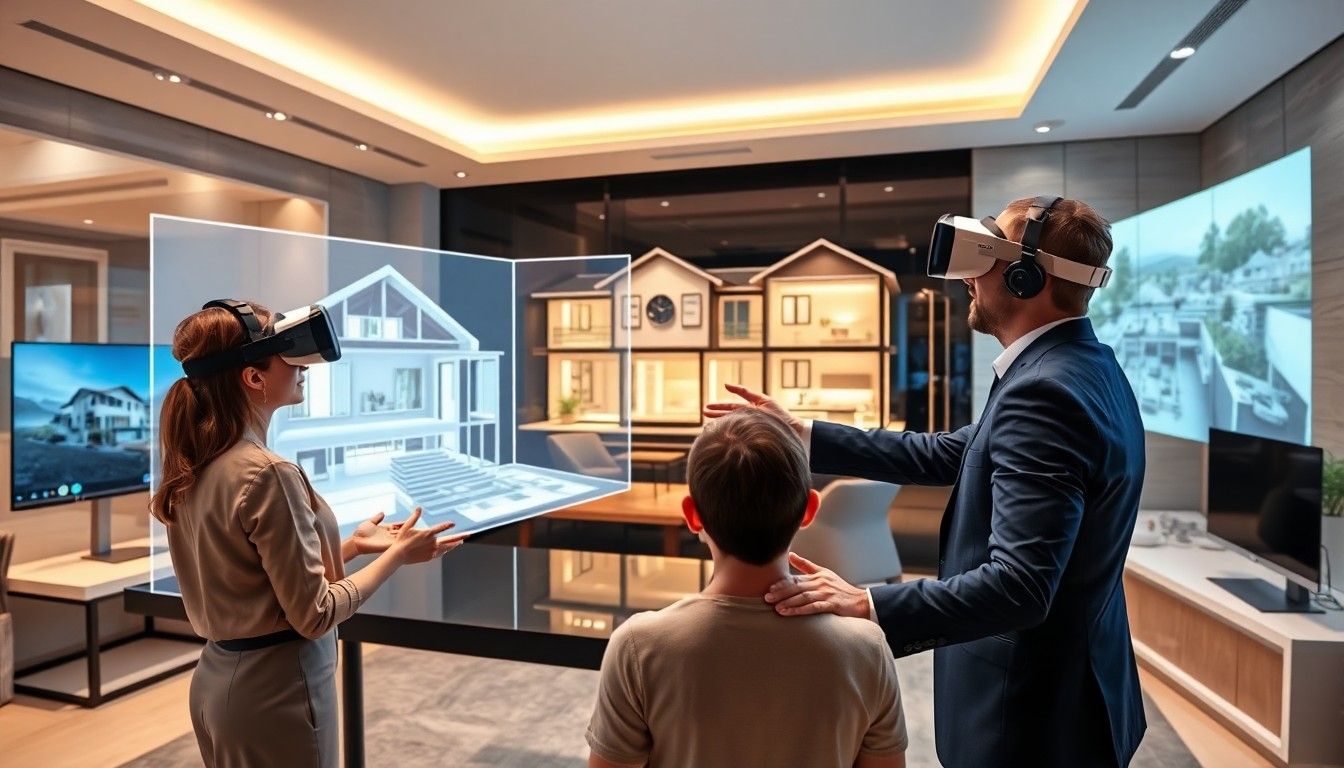
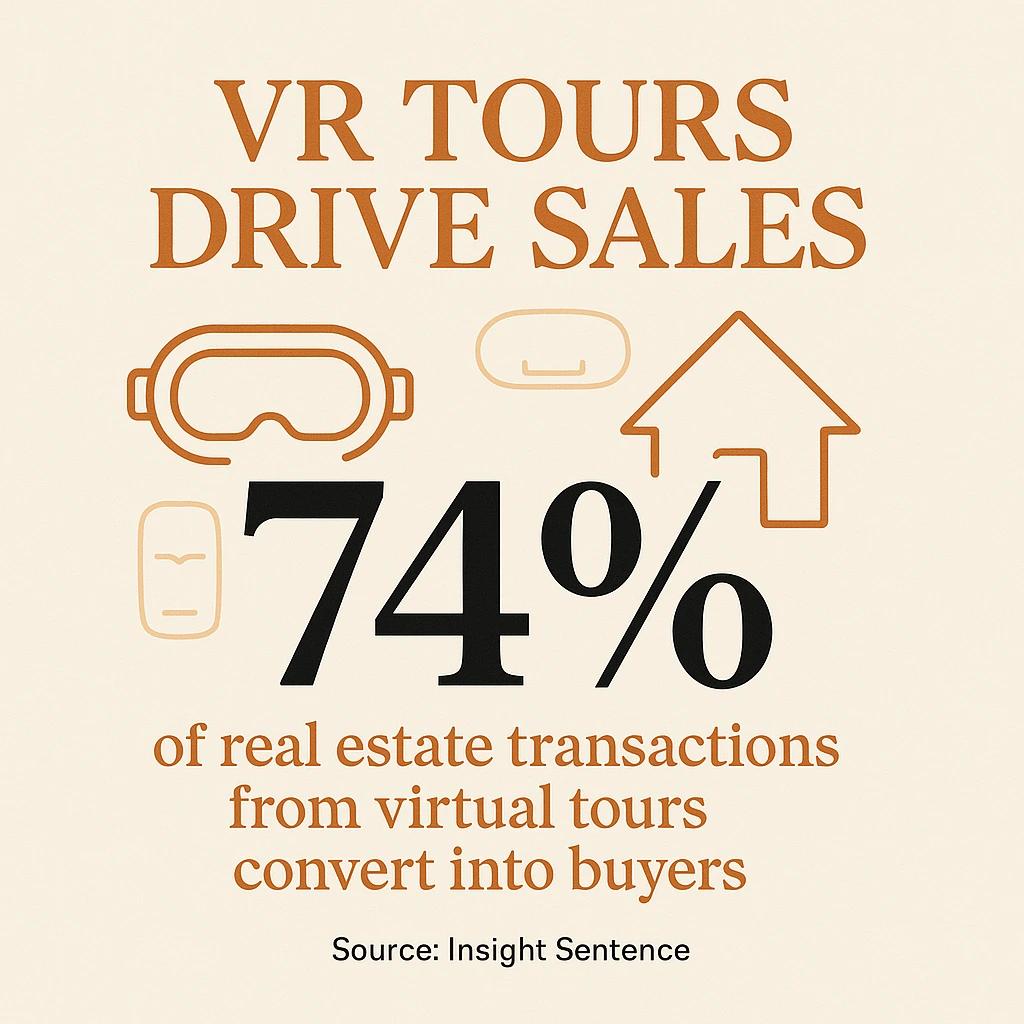
Buyer demand for immersive 3D content in property listings is no longer in dispute. The National Association of Realtors' recent reporting notes that around 41% of buyers rank a virtual tour as "very useful" in their home search, yet only roughly 6% of listings actually include one. That gap is where most of the noise in this category lives. Vendors selling 3D tours point to the gap as untapped demand. Agents and developers staring at their last invoice point to the same gap as evidence that buyers want something the technology has not quite delivered yet. Both are right, and both are missing the point.
I am Dimitri, and I sit on three sides of this question. I run DignuzDesign, a studio that builds custom websites for property developers, agents, and architects. I also co-run Faraday3D, a visualisation studio producing renders and interactive scenes for unbuilt and built properties. And we built AmplyViewer, our own embeddable 3D property viewer, because the off-the-shelf options kept failing the developers we worked with. So I see what gets commissioned, what gets embedded, what the analytics actually show, and where buyers drop off. This piece is an honest account of which immersive experiences move contracts and which ones just decorate websites.
Why most 3D real estate experiences underperform
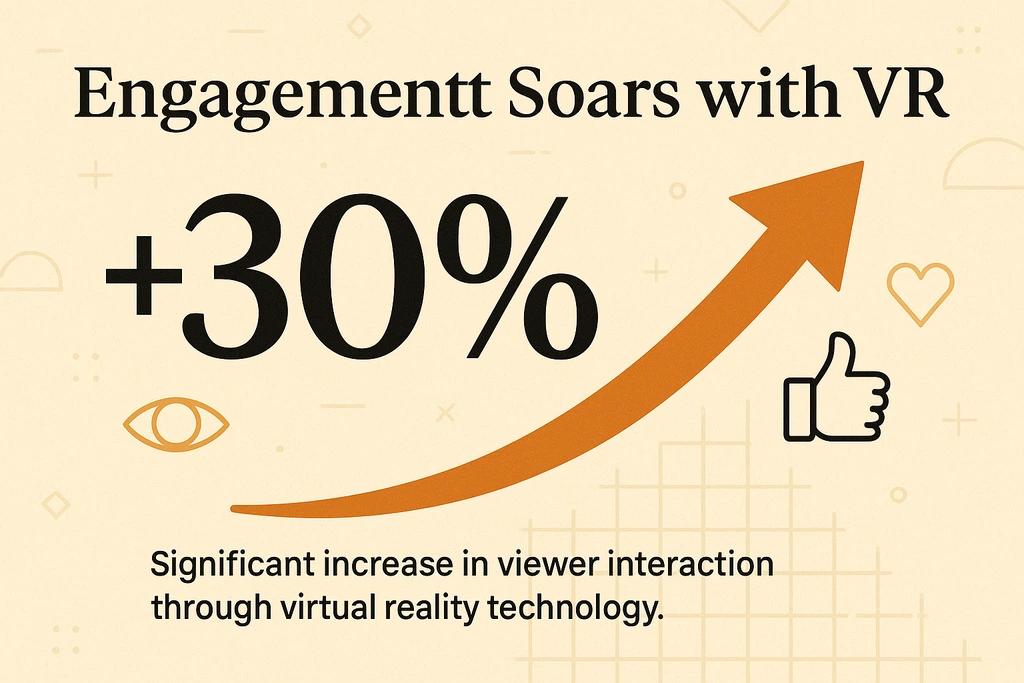
The story almost every article tells about 3D tours is one of inevitable adoption: buyers love it, listings sell faster, every agent is going to need it. The numbers behind that story are usually real but mostly mistaken about cause and effect. Zillow's own research has shown that listings with a 3D Home tour can receive substantially more views and saves than listings without one. That is true. It is also true that listings with 3D tours tend to be on the more expensive end, marketed by more active agents, and shot by photographers who also took better still photos. The 3D tour did not cause the better outcome by itself. It signalled that someone cared about the listing.
This matters because if you commission a 3D tour expecting it to do all the work, you will be disappointed. A 3D tour grafted onto a listing with weak photos, a slow website, and an unclear call to action does not lift performance. It just sits there, occasionally clicked, never finished. The buyer who would have booked the viewing books it anyway. The buyer who would have scrolled past scrolls past. The question is not whether to add 3D. The question is what kind of 3D experience earns its place in a specific listing's job to be done.
What buyers are actually doing inside a 3D tour
The vendor pitch frames the user inside a 3D tour as someone "exploring" the property, drifting from room to room with curiosity. The analytics tell a different story. Most buyers entering a 3D tour are doing two things: a fast spatial sanity check and a private viewing rehearsal.
The spatial sanity check is short, usually under sixty seconds. The buyer wants to confirm that the floor plan they half-read matches the photos they liked. They are looking for the relationship between rooms - whether the kitchen opens onto the living room, where the second bathroom sits, how far the principal bedroom is from the front door. A 3D tour that lets them answer those questions quickly does its job. A tour that drops them into a hallway with no orientation, no floor-plan toggle, and a sticky cursor fails it.
The viewing rehearsal is longer and rarer. It happens when a buyer is already serious and either cannot easily visit (relocation, overseas, second home) or wants to reduce the awkwardness of an in-person tour. They are walking the property the way they would walk it physically, noting questions to ask. This buyer is the one who closes from a 3D tour. They were already going to inquire. The tour just shortens the time from inquiry to offer.
Once you separate those two jobs, the design decisions for the tour stop being aesthetic and start being functional. The fast sanity-checker needs a clear floor plan with hotspots and a way to skim. The viewing rehearser needs accurate measurements, daylight that reflects reality, and high enough fidelity that nothing breaks the illusion. A single tour usually has to serve both, which is why the better platforms layer a measured floor plan view over the immersive view rather than treating them as separate features.
The three tiers of immersive 3D content
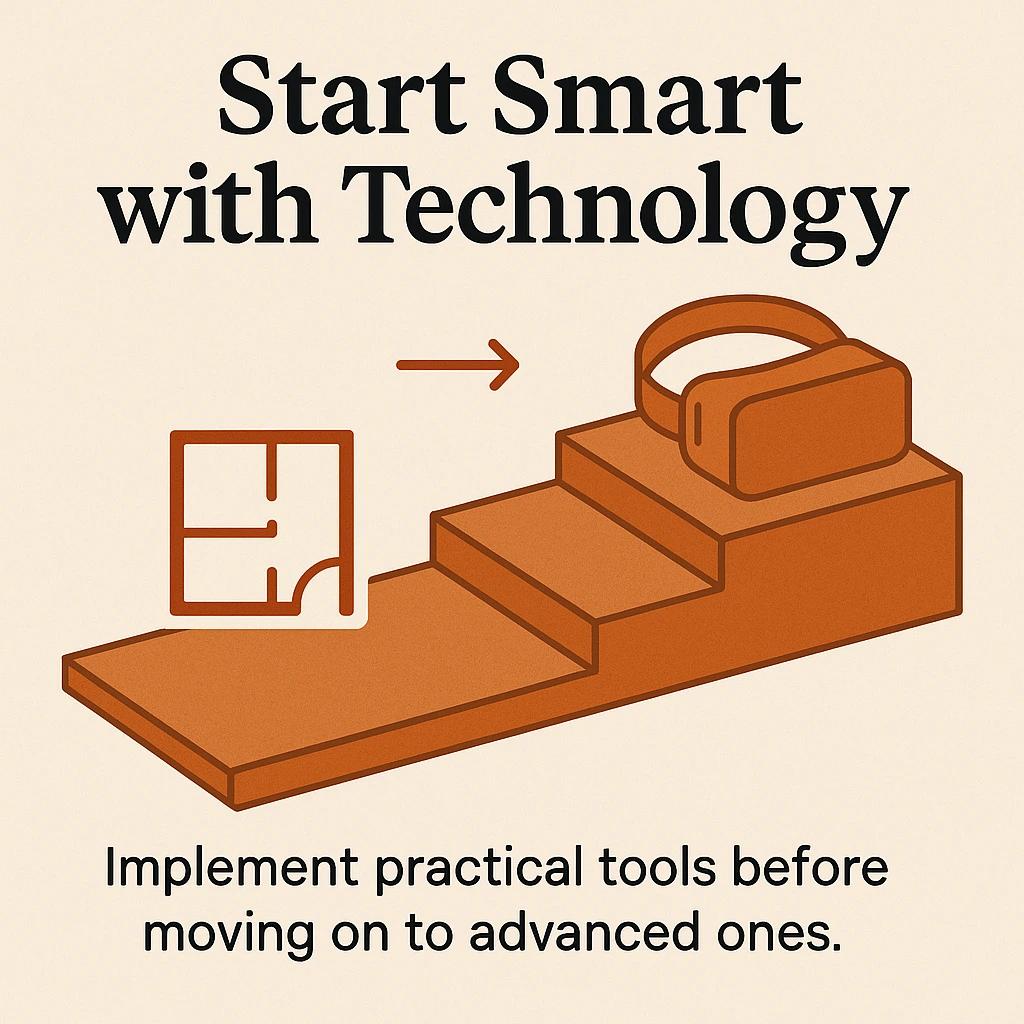
It helps to stop talking about "3D tours" as one product. In practice, the experiences that get commissioned fall into three distinct tiers, and confusing them is the most common reason budgets get spent badly.
Tier one: interactive floor plans and 360-degree panoramas. The lowest cost and the most consistently useful for everyday listings. A clickable floor plan with linked panoramic shots, often produced from a single visit with a 360 camera, gives a buyer the orientation they actually want before booking a viewing. It is not glamorous. It does not generate press. It is the workhorse of any agent who lists more than a handful of properties a month, and on most mid-market listings it produces a better engagement-per-dollar ratio than anything more ambitious.
Tier two: scanned 3D walkthroughs. The category most people mean when they say "3D tour" - the dollhouse view, the click-to-walk interface, automated floor plans from a single scan. The capture is heavier and the file sizes are larger, but the buyer gets a genuinely accurate three-dimensional model of a real space. This tier earns its keep on properties where the relationship between rooms is the selling point - period homes with unusual layouts, large family houses, anything where the floor plan alone undersells what the place feels like.
Tier three: CGI-driven interactive 3D. Computer-generated models, often built from architectural drawings or BIM data, rendered and made interactive. This is what we mostly build at Faraday3D for developers selling off-plan or pre-construction. There is no physical space to scan because the building does not exist yet, or the unit is being shown furnished and configured. This tier carries the highest production cost and the highest margin upside because it is the only way to sell something that has not been built. For more on this end of the pipeline, our piece on how 3D rendering services are scoped and priced goes into the production side in detail.
These tiers are not a hierarchy where tier three is best. They are jobs. A scanned tour of a finished show home and a CGI model of an unbuilt apartment are not competing. They answer different buyer questions at different stages of the funnel.
Matching the experience to the property stage
The single most useful framing I give developers and agency principals is to map the experience to the listing's stage, not to its price point. Luxury listings do not automatically need the most expensive 3D content. Pre-construction listings almost always do. A short list of how I tend to scope this in practice:
- Mid-market resale, ready to move in. Strong still photography in the right order, a clickable floor plan, and a tier-one 360 panorama or a basic tier-two scan if the layout is unusual. Anything more is usually budget that would buy better photographs.
- Premium resale or new-build show home. Tier-two scanned walkthrough with measured floor plan, integrated into the listing page rather than buried on a separate viewer URL. Pair it with a short cinematic video for the property and a longer one for the neighbourhood.
- Off-plan development, individual unit. Tier-three CGI interactive viewer showing the specific unit, ideally with options to change finishes and furniture layouts. This is the one place where 3D content directly drives reservations because the buyer literally cannot see the space any other way.
- Master-planned development at the marketing-suite stage. A tier-three model of the whole scheme - the site, the buildings, the unit mix - in an interactive viewer that lives both in the sales suite and on the developer's website. This is where AmplyViewer was originally built to solve a specific need, because the standard architectural model viewers were too slow on phones and too rigid to feed back into the developer's CRM.
- Architect or studio portfolio. Selected tier-three or tier-two pieces showcased as the work itself, not as listings. For architects in particular, the immersive content is part of the body of work and tends to live on a portfolio page rather than a property page. Our note on how architects structure their digital showcases covers this.
The reason I keep coming back to this mapping is that the most expensive mistakes I see come from getting the tier wrong. Developers commissioning a fancy CGI model for a ready-to-move-in resale property where the budget would have been better spent on photography. Agents adding scanned 3D tours to listings where the floor plan was the entire problem. The technology is not in question. The fit is.
Where the budget gets wasted
Almost every developer I have worked with has at least one expensive 3D asset on their hard drive that never made it onto the live site, or sat there for a while and was quietly removed. The patterns are consistent enough to name.
The first is the disconnected tour. A 3D tour hosted on the vendor's domain, opened in a new tab from a small link buried below the photographs. The vendor's analytics dashboard sees the visit. The developer's website analytics never know it happened. The lead form on the developer's site is not in the tour, and the lead form in the tour does not feed the developer's CRM. Every metric is misaligned. I see this constantly and it is almost always solvable, but it has to be designed for, not retrofitted. Our piece on real estate page design and conversion covers what the wiring should look like.
The second is the heavyweight embed. A WebGL viewer that loads thirty megabytes of geometry on a phone before the user has decided whether they care. Mobile users abandon the page before the first frame. The fix is on the engineering side, not the content side - lazy-loaded assets, progressive geometry, sensible default views. If you are building on a modern stack, the technical patterns are well understood. Our notes on real estate website speed and the Jamstack approach we use for developer sites get into the specifics. But the content team and the development team have to agree, before the asset is commissioned, on what the page weight budget actually is.
The third is the wrong fidelity. A CGI render that aims for photorealism but lands in the uncanny valley, or a scanned tour with stitching artefacts that the buyer cannot unsee. In both cases the asset draws attention to its production rather than to the property. The honest fix is either to spend more on production quality or to deliberately step back to a more stylised, lower-fidelity look that signals "this is a representation, not the photograph." Stylised renders, when done well, often outperform mediocre photoreal ones because the buyer's brain stops auditing them.
The fourth is the unsupervised demo. A 3D tour or interactive model that exists with no clear next step. No book-a-viewing button visible inside the experience. No reservation flow at the end of the viewer. The user is engaged for five minutes and then dropped onto a page with no obvious action. Engagement without conversion is the most expensive form of vanity metric in this category.
Pre-construction is where 3D earns its biggest margin
If I had to point to the single use case where immersive 3D consistently produces measurable sales outcomes rather than soft engagement uplift, it is off-plan and pre-construction sales. The reason is structural. There is no physical property to photograph. There is no walk-through to record. Without a CGI-driven 3D experience, the developer is selling a floor plan and a brochure. With one, the buyer can stand inside the unit, change the kitchen finish, look out of the window at the actual view, and form the same kind of attachment they would form on a viewing.
The pre-construction buyer is also making a high-commitment, deferred-gratification decision. They are paying a reservation fee or a deposit on something they will not occupy for months or years. The job of the marketing materials is to compress the imagination gap. A good interactive 3D viewer does that work directly. A printed brochure asks the buyer to do it themselves. The brochures still get printed because property sales is a relationship business, but the contracts increasingly close on the viewer.
This is also the use case where the developer's website becomes the sales tool rather than a brochure for the sales suite. A buyer in a different time zone, on a phone, late in the evening, can walk through a unit, save the configuration they like, and book an appointment with the on-site team. Our broader notes on interactive ways to showcase properties cover the patterns that work and the ones that look impressive but never get used.
Embedding the experience into the buying journey
The viewer is half the job. The embed is the other half. A common pattern I see, and almost always recommend fixing, is the 3D experience treated as a feature rather than as part of the listing's primary flow. The listing page reads as a stack of independent modules: photographs, description, floor plan, virtual tour, contact form. The buyer is expected to assemble the story themselves.
The version that works better treats the 3D experience as the spine. The page opens with the immersive content above the fold, with photographs and details surfacing around it as the user scrolls. The call to action stays anchored regardless of how the user moves through the content. The same lead form is reachable from inside the tour and from the page itself. The CRM gets a single event stream rather than two competing dashboards. This is a website design decision more than a 3D technology decision, and it is where most of the difference between a tour that converts and a tour that decorates actually lives.
The flip side is for agents and brokerages running listings at volume across many properties. They do not need a custom embed per listing. They need a templated pattern that produces a consistent experience across every property, integrates with the MLS or listing feed, and degrades gracefully when the 3D content is not available. Our work on property listing design goes into the templating side, which is where most of the engineering effort actually pays off at scale.
Measuring honestly
The metrics that matter for immersive content are different from the metrics that matter for photography. Time on listing, on its own, is a misleading signal. A buyer who spent eight minutes in a tour and never booked a viewing is not more valuable than a buyer who spent ninety seconds and booked. The categories I tell clients to actually watch:
Completion rate inside the viewer matters more than time. A tour where most visitors finish their session within the first room is failing its job. A tour where a meaningful share of visitors walk every room and consult the floor plan is doing the spatial sanity check well. Inquiry quality matters more than inquiry volume. Buyers who have spent real time in a tour ask better questions, name specific rooms, reference the floor plan. That signal shows up in the inbox before it shows up in conversion rate, but it correlates with closing. Time to viewing or reservation matters more than tour-specific engagement. The honest test of whether the immersive content is earning its keep is whether the gap between first contact and first viewing, or between first viewing and reservation, has shortened compared to listings without the content.
Pre-construction adds its own measurements. Reservation rate per qualified lead, drop-off points inside the unit configurator, and the share of reservations that come from international or out-of-region buyers are the three I find most useful. The last one is often the cleanest evidence that the 3D content is doing work the brochure could not.
What good looks like, in one sentence
An immersive 3D real estate experience earns its budget when a buyer who would not otherwise have inquired does inquire, or when a buyer who would have needed three viewings to commit needs one. Anything else, no matter how high-resolution or how interactive, is decoration. The technology is mature enough now that the question is not whether to use it. The question is whether each specific listing has the kind of decision problem that 3D can actually solve, and whether the embed, the website, and the lead flow are built to capture the value when the buyer engages.

Frequently asked questions
Are virtual tours and 3D tours the same thing?
In casual usage they get treated as synonyms, but inside the industry they refer to slightly different things. A "virtual tour" historically meant a sequence of 360-degree panoramic images linked together. A "3D tour" usually means a scanned or modelled three-dimensional space the user can walk through continuously. Most modern platforms blur the line, offering a combined experience. When commissioning, the question to ask the vendor is not what they call the product but what the user actually does inside it: click between fixed viewpoints, walk through a continuous space, or both.
How much does an immersive 3D experience cost for a single property?
For a tier-one interactive floor plan with 360 panoramas, costs are modest enough that they make sense on most mid-market listings. A tier-two scanned walkthrough of a typical home is a higher per-property cost but still routine for premium listings. A tier-three CGI interactive viewer for a single unit is a meaningful production commission, and it is almost always justified by the project rather than the unit, because the model is reused across every unit in a development. The honest answer is that the variance is enormous and depends more on fidelity, integration, and scope than on the underlying technology.
Do 3D tours actually help properties sell faster?
The headline statistics from platform vendors tend to overstate the causal effect, because the listings that get 3D tours are not randomly selected. They are usually the listings that also get better photography, better copy, and more attentive agents. That said, the directional finding is consistent: listings with immersive content do tend to attract more views and saves, and on pre-construction projects the effect on reservations is direct and substantial. For ready-to-move-in resale, the effect is real but smaller and only shows up when the rest of the listing is also doing its job.
Should every property listing have a 3D tour?
No. The economics do not work for every listing, and on properties where the spatial story is simple and well-conveyed by good photographs, the marginal value of a 3D tour over a sequenced photo set is small. The places where 3D content is close to mandatory are pre-construction units, properties marketed to long-distance buyers, properties with unusual layouts that floor plans struggle to communicate, and developments where multiple units share a design pattern that benefits from a configurable model.
What is the difference between a Matterport-style scan and a CGI-rendered model?
A Matterport-style scan, or any tier-two scanned product, captures a real existing space. The advantage is fidelity to reality - actual furniture, actual light, actual measurements. The disadvantage is that you can only show what is there. A CGI-rendered model is built from drawings or 3D files and rendered in software. The advantage is total flexibility - unbuilt spaces, alternate furnishings, optional finishes, even daytime versus evening light. The disadvantage is that it costs more to produce and has to be honest about being a representation. Most serious developers end up using both at different stages of the same project.
Where should the 3D viewer sit on the listing page?
Above the fold on the listing page, paired with the primary call to action, and reachable from inside the lead flow rather than as a separate page on a vendor's domain. The most common failure mode is hosting the viewer on the vendor's URL and linking out to it, which fragments analytics and breaks the conversion path. The viewer should feel like part of the listing, not like a detour from it.