Luxury Real Estate Visual Marketing Strategies
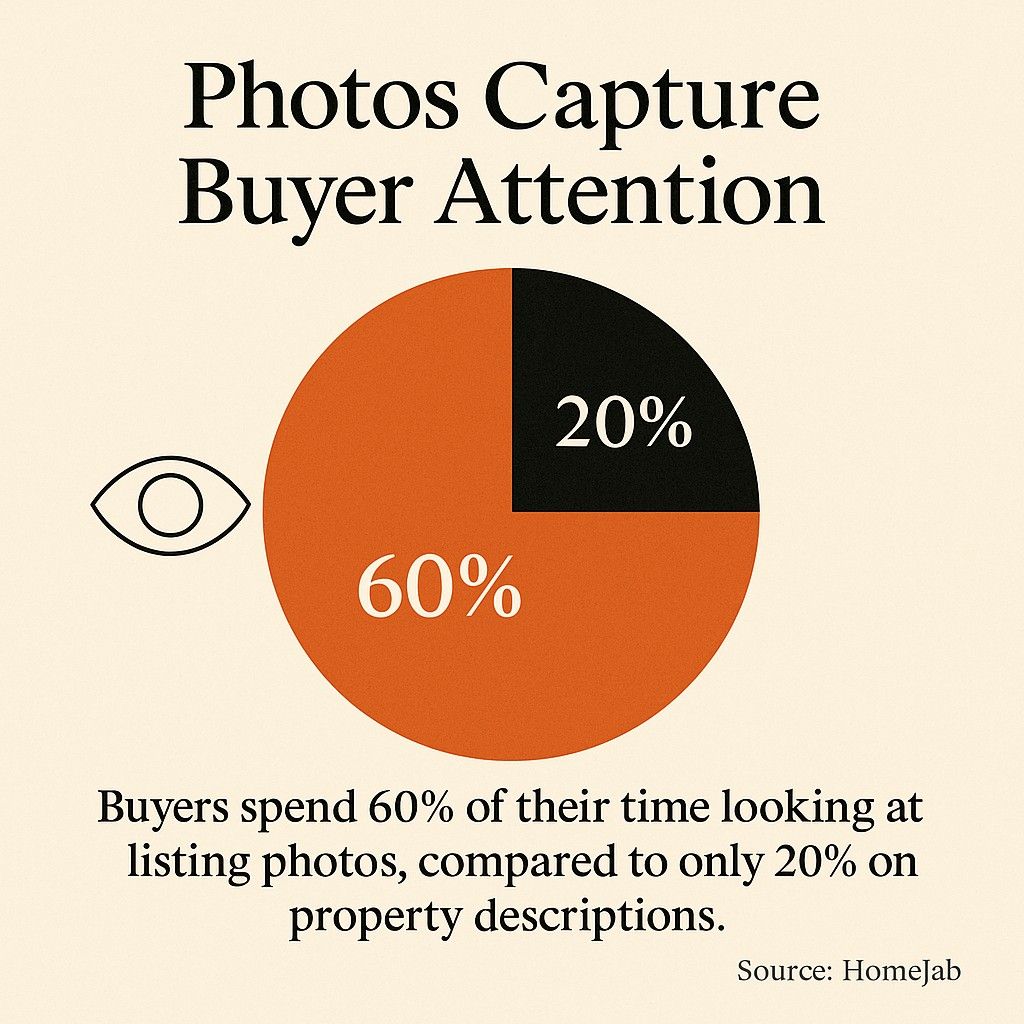
Visual marketing can make or break a luxury property listing. Buyers spend 60% of their time looking at listing photos, compared to only 20% on property descriptions. That's huge.
Buyers spend 60% of their time looking at listing photos, compared to only 20% on property descriptions.
When you're working with million-dollar properties, amateur snapshots won't cut it. High-net-worth buyers expect a visual experience that matches the property's prestige.
The good news? You don't need an unlimited budget to create stunning visual marketing. You need the right strategy, the right tools, and a clear understanding of what luxury buyers actually want.
This guide covers everything you need. Professional photography techniques that drive results. Drone imagery that showcases estates properly. Virtual tours that bring properties to life. Virtual staging solutions that work on tight budgets. Video storytelling that sells lifestyle, not just square footage. Social media strategies that reach affluent clients. And how to tie it all together into a cohesive brand identity.
By the end, you'll know exactly how to create visual marketing that makes high-end properties stand out. Let's get started.
Why Visual Marketing Matters for Luxury Properties
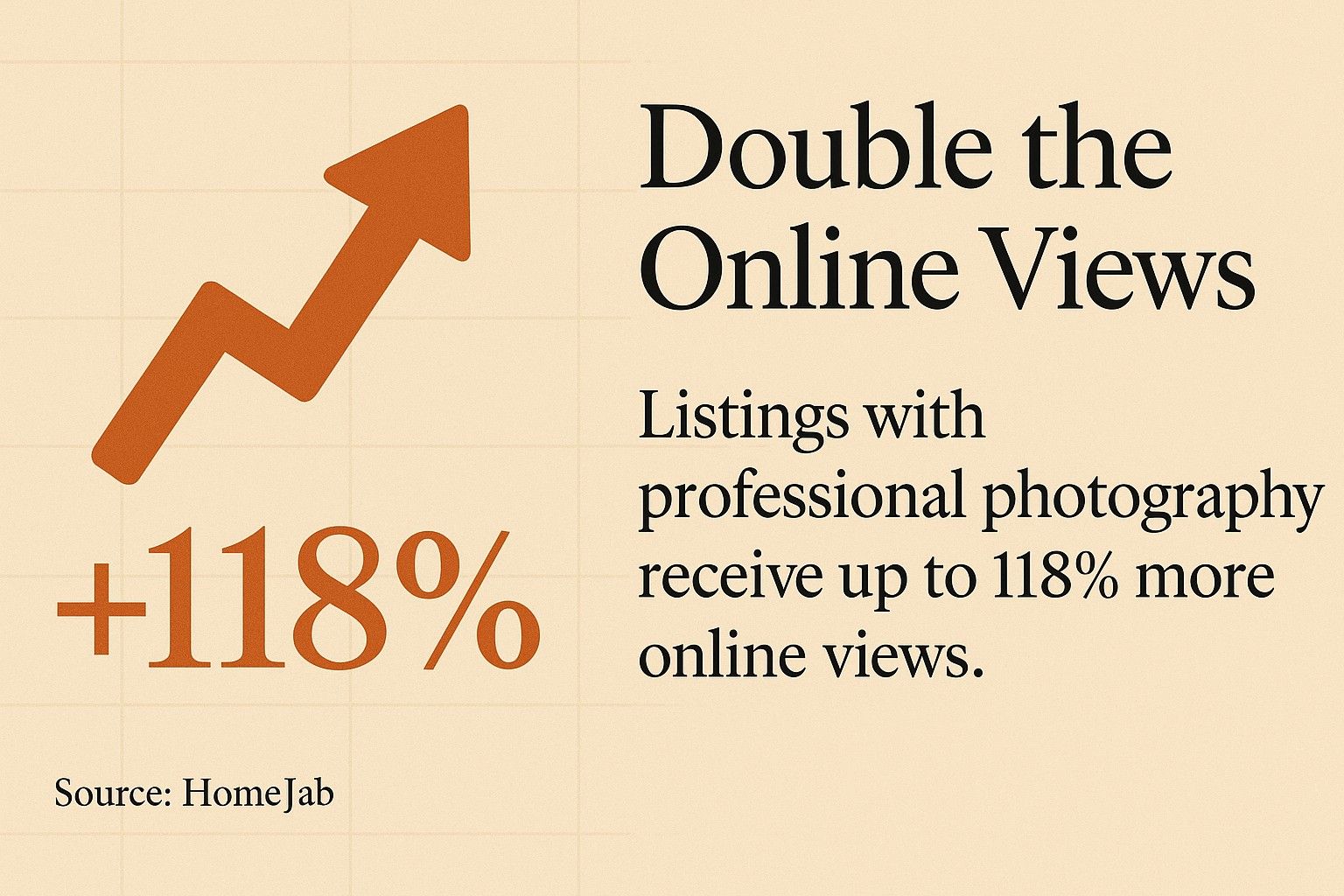
The numbers tell the story. Listings with professional photography receive up to 118% more online views. That's more than double the exposure from quality visuals alone.
Listings with professional photography receive up to 118% more online views.
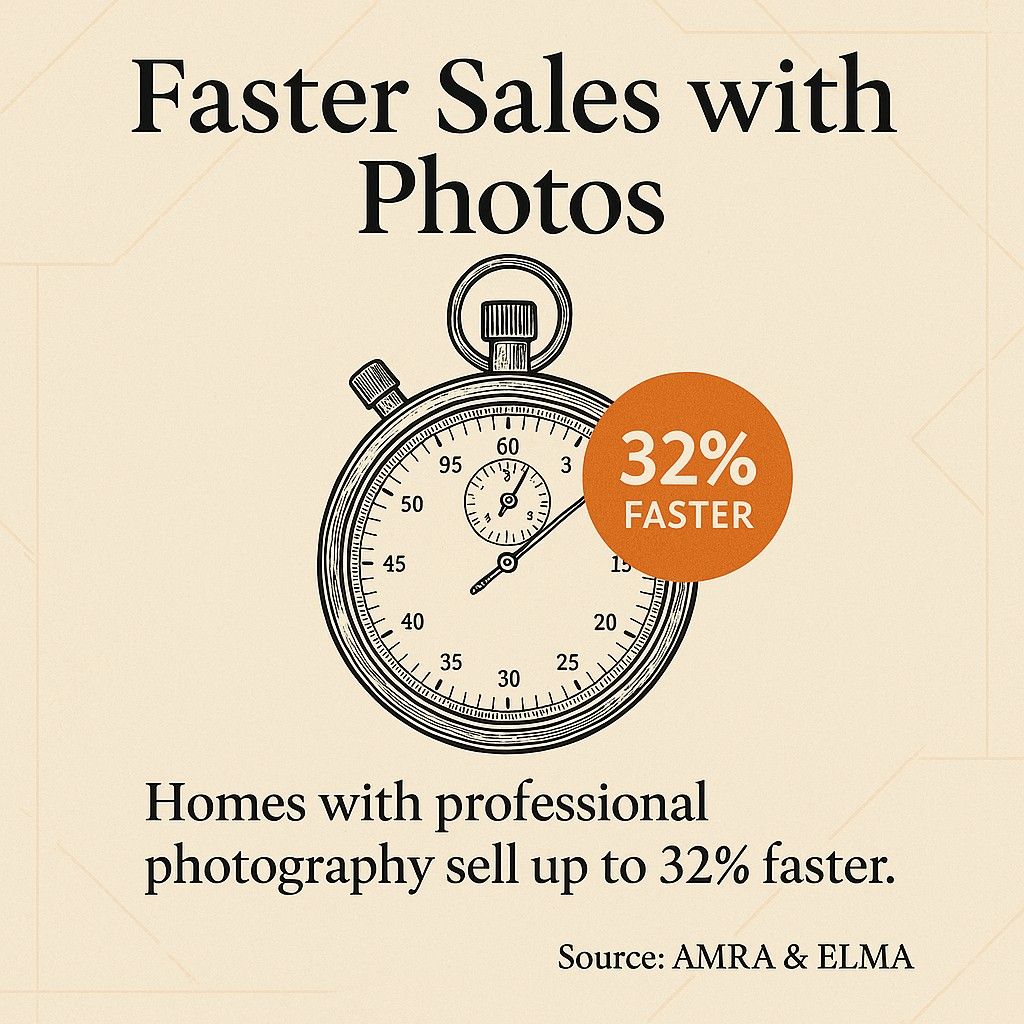
But it gets better. Homes with professional photography sell up to 32% faster. In the luxury market, that speed advantage translates directly to saved holding costs and reduced price negotiations.
Homes with professional photography sell up to 32% faster.
Here's the reality: 97% of homebuyers begin their search online. Your visual content is the first impression. Often the only impression before a buyer decides to move on.
The High-End Buyer's Expectations
Luxury property buyers aren't browsing casually. They're evaluating whether a property matches their lifestyle aspirations. Your visual marketing needs to communicate status, quality, and exclusivity instantly.
Think about what affluent clients see daily. High-end fashion campaigns. Luxury car advertisements. Premium hotel photography. Your property listings compete with that visual standard.
When your listing photos look amateur, buyers assume the property isn't worth their time. Fair or not, that's the reality.
ROI of Professional Visual Marketing
Homes often sell for $3,400 to $11,200 more depending on the price range when professional photography is used. For luxury properties, that premium scales even higher.
Consider the math. Professional photography costs $300-$800. Drone footage adds another $150-$400. Virtual staging runs $50-$150 per room. Total investment: $500-$1,500 for most luxury listings.
That investment returns multiples through faster sales, higher prices, and increased buyer interest. The potential buyers viewing your listing online make their decision in seconds. Make those seconds count.
Now that you understand why visual marketing matters, let's look at the foundation: professional property photography.
Professional Photography: The Foundation of Luxury Property Marketing
Professional photography isn't optional for luxury real estate. It's the baseline expectation. But not all professional photography is created equal.
What Makes Luxury Property Photography Different
Standard real estate photography captures rooms. Luxury property photography captures experiences. The difference shows in every frame.
High-quality luxury photography requires specialized equipment. Full-frame cameras with wide-angle lenses. Professional lighting setups. HDR processing to balance bright windows with interior spaces. Twilight shots that showcase architectural lighting.
More importantly, it requires an eye for composition. The best photographers understand how to frame spaces to emphasize luxury features. Grand entrances. Sweeping staircases. Designer kitchens with premium appliances.
Essential Photography Elements
Start with clean, decluttered spaces. Nothing ruins a luxury listing photo faster than personal items or clutter. Stage each room before the photographer arrives.
Natural light timing matters. Schedule photography for late morning or early afternoon when natural light fills spaces. Supplement with professional lighting to eliminate shadows.
Capture hero shots. Every luxury property has signature features. The infinity pool overlooking the valley. The custom wine cellar. The primary suite with panoramic views. These shots lead your visual story.
Include detail shots. Luxury buyers care about craftsmanship. Photograph custom millwork, designer fixtures, premium materials. These details justify the property's value.
Working With Professional Photographers
Find photographers who specialize in luxury real estate. Review their portfolios. Look for consistent lighting, sharp focus, and compelling composition.
Communicate your vision before the shoot. Share which features to emphasize. Discuss the property's target buyer and what would appeal to them. The more context you provide, the better the results.
Plan for 2-3 hours per property. Rushing produces mediocre results. Great photography takes time.
Professional photography establishes credibility. But to showcase the full scope of luxury estates, you need aerial perspectives.
Drone Photography and Aerial Imagery: Showcasing Properties From Above
Drone photography changed luxury real estate marketing. Suddenly, you can show the entire property, the surrounding landscape, and the neighborhood context in ways ground photography never could.
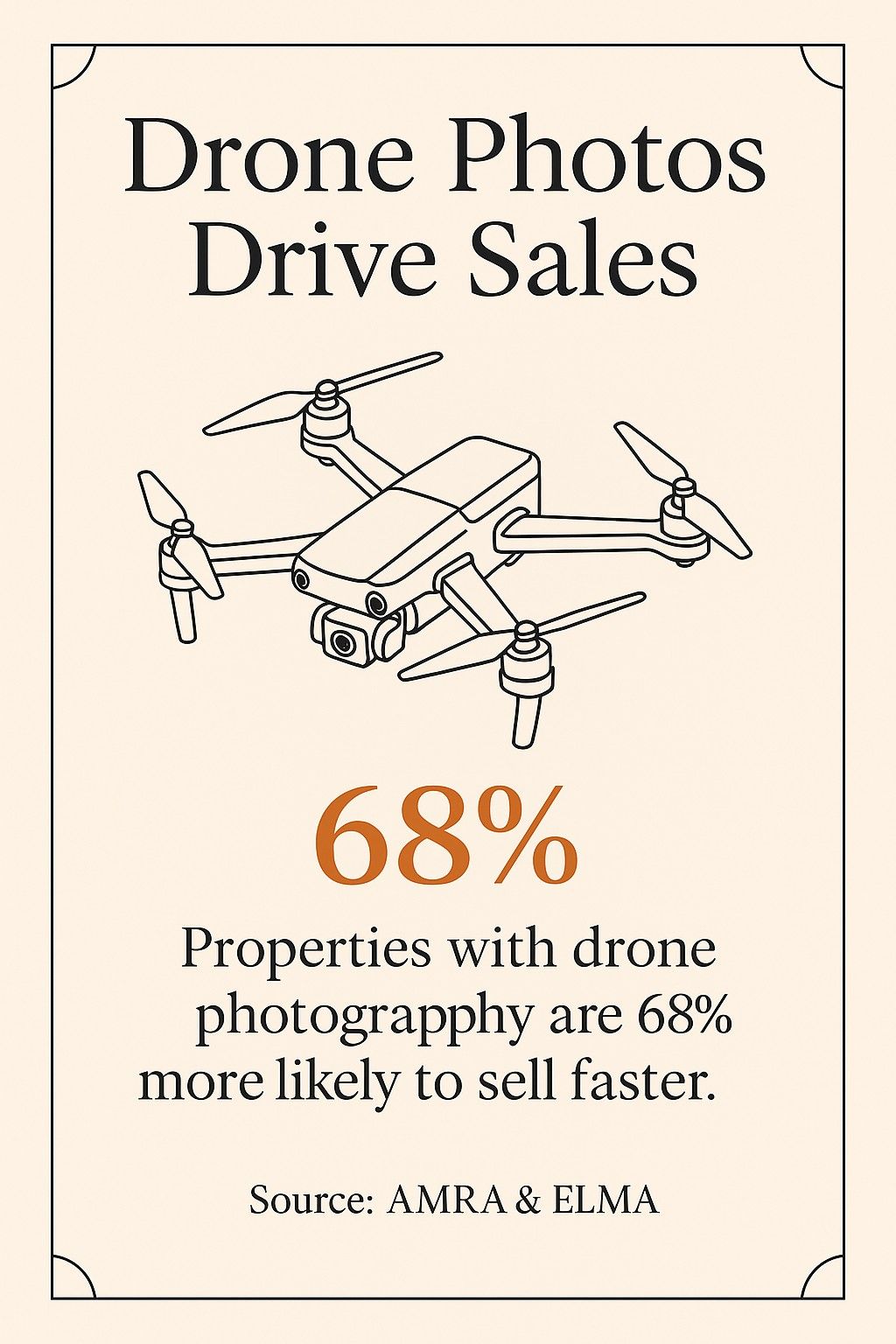
Properties with drone photography are 68% more likely to sell faster. The aerial perspective tells a story ground shots can't.
Properties with drone photography are 68% more likely to sell faster.
What Drone Photography Reveals
Aerial imagery showcases property scale. A luxury estate photographed from ground level looks nice. Photographed from above, you see the full compound. The main house. The guest house. The pool complex. The manicured grounds.
Location context matters for high-end properties. Drone shots show proximity to coastlines, mountains, golf courses, or other premium amenities. They prove the exclusive neighborhood claim.
Architectural design looks different from above. Unique rooflines. Outdoor living spaces. Landscape design patterns. These elements often sell luxury properties.
Planning Effective Drone Shoots
Timing affects aerial photography dramatically. Golden hour (early morning or late evening) produces the most stunning aerial shots. Harsh midday sun creates unflattering shadows.
Weather planning is crucial. Schedule drone photography for clear days with minimal wind. Clouds can work beautifully for dramatic shots, but avoid overcast gray days.
Identify key angles before the shoot. Walk the property and visualize which aerial perspectives tell the best story. Front approach showing the grand entrance? Rear elevation capturing mountain views? Pool area with surrounding landscape?
Legal and Safety Considerations
Hire licensed drone operators. FAA regulations require commercial drone pilots to hold Part 107 certification. Don't risk legal issues with unlicensed operators.
Check local restrictions. Some municipalities restrict drone flights. High-end neighborhoods may have additional privacy regulations.
Respect neighbor privacy. Luxury property owners value discretion. Frame shots to focus on your listing, not neighboring estates.
Aerial imagery provides context and scale. But to let potential buyers truly explore properties remotely, virtual tours take marketing to the next level.
Virtual Tours and 3D Walkthroughs: Creating Immersive Experiences
3D virtual tours get 87% more views than regular photo listings. That's not surprising when you consider what they offer.
Virtual tours let buyers explore properties on their schedule. They can "walk through" every room. Study layouts. Get a feel for flow and space. All from anywhere in the world.
Types of Virtual Tour Technology
Basic 360-degree photos offer simple room-to-room navigation. These work fine for standard properties but fall short for luxury estates.
3D tour platforms create fully immersive experiences. Matterport leads this space, capturing detailed 3D models of entire properties. Viewers navigate freely, viewing properties from any angle.
For real estate projects still under development, tools like AmplyViewer provide interactive 3D visualizations of property plans. These let potential buyers experience spaces before construction completes.
Best Practices for Virtual Tours
Prepare spaces meticulously. Virtual tours reveal everything. Ensure properties are immaculately staged and cleaned before capture.
Add informational hotspots. Tag key features with pop-up descriptions. Highlight custom finishes, smart home technology, or architectural details. This guided experience helps buyers understand value.
Keep tours reasonably sized. While you want to show everything, 30-40 scan points usually suffice for most luxury properties. More than that becomes overwhelming.
Optimize loading speed. High-quality 3D tours require significant data. Test tours on various internet speeds to ensure smooth experiences.
Integrating Virtual Tours Into Marketing
Feature virtual tour links prominently on listing pages. Make them the first thing visitors see after hero images.
Promote virtual tours on social media. Create teaser videos showing snippets of the 3D experience. Include direct links for full tours.
Use virtual tours for pre-qualification. Serious buyers spend time exploring detailed virtual tours. Track tour engagement to identify genuinely interested prospects.
Share virtual tours with out-of-area buyers. Luxury real estate attracts international buyers who can't easily visit in person. Virtual tours serve these buyers exceptionally well.
Virtual tours bring properties to life digitally. For vacant properties, virtual staging offers another powerful visual solution.
Virtual Staging: Cost-Effective Solutions for Vacant Properties
Vacant properties photograph poorly. Empty rooms look small. Buyers struggle to visualize how spaces work. Virtual staging solves these problems affordably.
Traditional physical staging costs $2,000-$10,000+ per month. Virtual staging runs $50-$150 per room. The math works beautifully for properties that might sit vacant for months.
How Virtual Staging Works
Virtual staging uses digital technology to add furniture and decor to empty room photos. Professional editors place realistic furniture, art, rugs, and accessories into photographs.
The results look convincing. High-quality virtual staging is nearly indistinguishable from physical staging in photos. Buyers see furnished, livable spaces instead of empty boxes.
Services like BoxBrownie and PhotoUp specialize in virtual staging for real estate. Turnaround times run 24-48 hours.
Virtual Staging Best Practices
Always disclose virtual staging. Ethics and regulations require transparency. Label virtually staged photos clearly in listings.
Match staging to target buyers. Stage a family home with different furniture than a bachelor pad. Consider your buyer persona when selecting staging styles.
Focus on key rooms. You don't need to stage every space. Prioritize living areas, primary bedrooms, and dining rooms. These rooms drive buying decisions.
Maintain consistency. Use similar style aesthetics across all staged rooms. Mixing modern staging in one room with traditional in another looks disjointed.
When to Use Virtual Staging
Virtual staging works brilliantly for vacant properties between owners. It's also perfect for new construction before buyers move in.
Use virtual staging for difficult-to-furnish spaces. That massive great room that would cost $15,000 to stage physically? Virtually stage it for $100.
Consider creating multiple staging versions. Show the same room staged for different uses. A flex space staged as both a home office and a gym. This helps buyers see possibilities.
Limitations to Consider
Virtual staging only works for photographs. You can't use it for virtual tours or in-person showings. Have a plan for when buyers visit.
Some buyers react negatively to virtual staging. They feel deceived, even when properly disclosed. Weigh this risk against the benefits.
Virtual staging won't fix bad photography. Start with professional, well-lit photos. Virtual staging enhances good photography, it doesn't salvage bad shots.
While virtual staging helps buyers visualize spaces, video marketing takes storytelling to the next level.
Video Marketing and Storytelling: Selling the Lifestyle
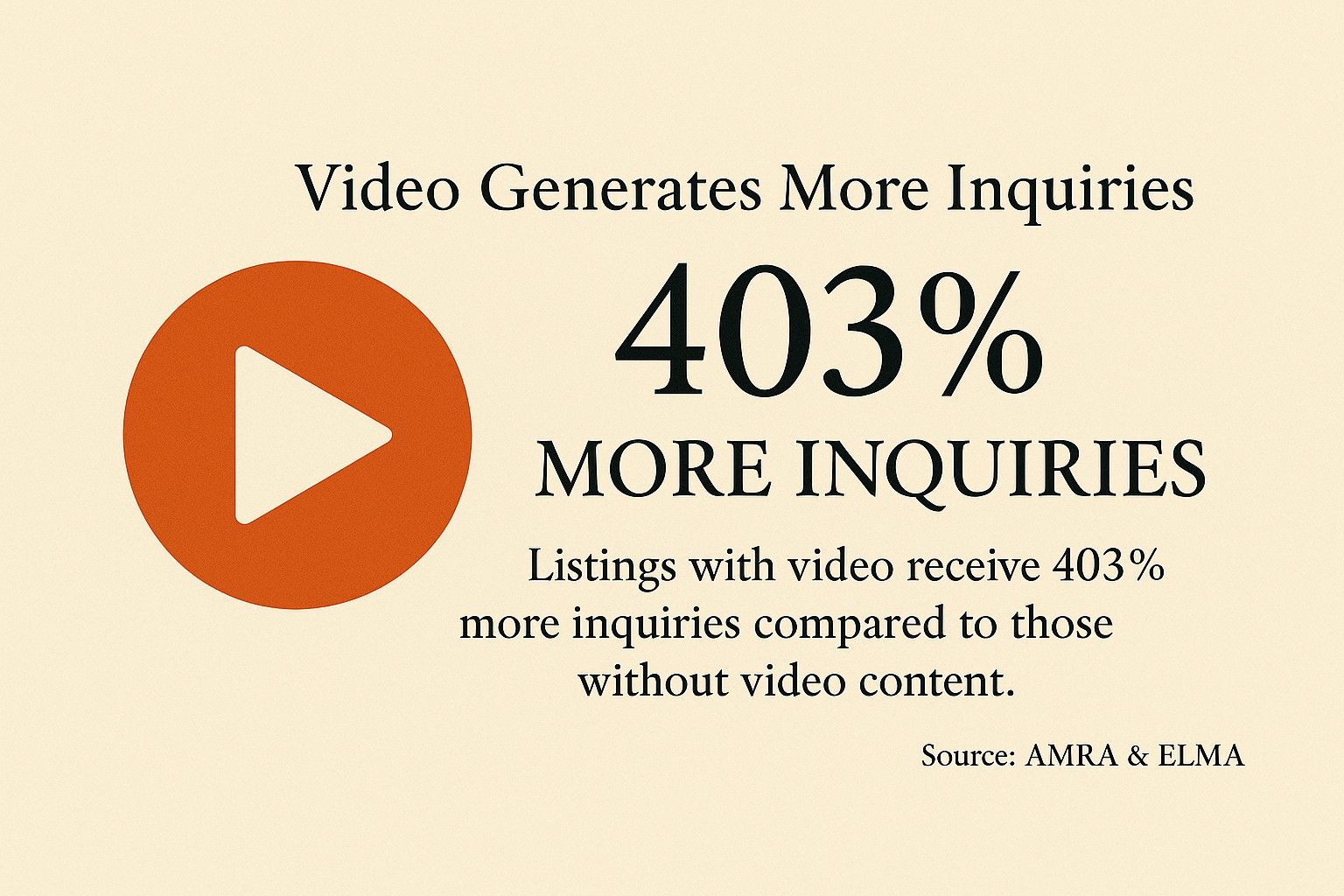
Listings with video receive 403% more inquiries compared to those without video content. That's game-changing ROI.
Listings with video receive 403% more inquiries compared to those without video content.
Video marketing succeeds because it sells lifestyle, not just property. Photos show what a home looks like. Video shows what living there feels like.
Types of Property Videos
Walkthrough videos provide simple property tours. A smooth camera follows a logical path through the home. Add music and title cards highlighting key features. These videos work well for basic property documentation.
Lifestyle videos tell emotional stories. Show morning coffee on the terrace overlooking the city. An evening gathering around the outdoor fireplace. A workout in the home gym. These videos sell the dream.
Neighborhood showcase videos extend beyond the property. Film nearby restaurants, shopping, parks, and amenities. Show why the location matters. Luxury buyers purchase neighborhoods as much as homes.
Agent introduction videos add personal connection. Record a short greeting explaining what makes the property special. This builds trust and gives your listing personality.
Creating Effective Property Videos
Keep videos concise. Aim for 2-3 minutes for walkthrough videos, 60-90 seconds for social media clips. Attention spans are short.
Invest in stabilization. Shaky handheld footage looks amateurish. Use gimbals or steady cam equipment for smooth movement.
Choose music carefully. Music sets emotional tone. Upbeat modern tracks for contemporary properties. Classical or jazz for traditional estates. Ensure you have proper licensing for commercial use.
Show the property at its best time. Film during golden hour for beautiful natural lighting. Capture twilight shots with interior and exterior lighting glowing.
Video Distribution Strategy
Upload videos to YouTube. Optimize titles and descriptions with relevant keywords. YouTube is the second-largest search engine.
Share on social media platforms. Instagram and Facebook prioritize video content. Create shorter teaser clips for Instagram Reels and Stories.
Embed videos on listing pages. Make them prominent. Many buyers watch videos before scrolling through photos.
Use video in email marketing. Send video tours to your contact list and qualified leads. Video in email increases click-through rates significantly.
Working With Video Professionals
Professional videographers understand cinematic techniques that elevate property videos. They know how to frame shots, transition between rooms, and create compelling narratives.
Brief videographers thoroughly. Share the property's unique selling points. Discuss the target buyer. Explain what lifestyle you're selling, not just what property you're showing.
For luxury properties, consider hiring videographers with real estate specialization. General videographers may miss real estate-specific angles and features.
Video marketing creates emotional connections with properties. To maximize reach, you need smart social media distribution.
Leveraging Social Media for Luxury Property Visibility
Social media puts luxury properties in front of potential buyers where they already spend time. But social media marketing for high-end real estate requires strategy.
Platform Selection for Luxury Real Estate
Instagram dominates luxury real estate social media. The visual platform perfectly showcases high-end properties. Stories, Reels, and feed posts all drive engagement.
Facebook still reaches affluent buyers, particularly in older demographics. Facebook ads offer sophisticated targeting options for high-net-worth individuals.
LinkedIn works for luxury real estate targeting business executives and professionals. Share market insights and luxury property highlights.
TikTok is emerging for real estate. While it skews younger, luxury property videos perform surprisingly well. Short-form video tours and behind-the-scenes content gain traction.
Content Strategy for Social Media
Mix property showcases with lifestyle content. Don't just post listings. Share luxury lifestyle content that resonates with your target audience. Design inspiration, architecture features, luxury travel connections.
Tell property stories. Share the history of historic estates. Highlight custom features and the craftsmanship behind them. Explain architectural styles. This content positions you as an expert.
Show behind-the-scenes content. Photoshoot preparation. Staging process. Drone footage capture. This content humanizes your brand and builds interest.
Leverage user-generated content. Repost content from luxury brands, architects, and designers. Tag partners and collaborators. This expands your reach.
Paid Social Media Advertising
Facebook and Instagram ads allow precise targeting. Target by income level, job titles, interests, and behaviors. Create lookalike audiences based on previous luxury buyers.
Use video ads for maximum engagement. Property tour videos and lifestyle content outperform static images in paid campaigns.
Retarget website visitors. Anyone who viewed your listing pages or virtual tours should see follow-up ads. Retargeting keeps properties top-of-mind.
Test different ad formats. Carousel ads work well for showcasing multiple property features. Collection ads let users browse listings directly within social platforms.
Building Social Media Following
Consistency matters more than frequency. Post 3-5 times per week on Instagram. Daily Stories keep you visible without overwhelming followers.
Engage with your audience. Respond to comments and direct messages promptly. Answer questions about properties and the market.
Collaborate with luxury brands. Partner with interior designers, architects, and luxury service providers. Cross-promotion expands your audience.
Use relevant hashtags strategically. Mix popular luxury real estate hashtags with location-specific tags. Create a branded hashtag for your agency or personal brand.
Measuring Social Media Success
Track engagement rates, not just follower counts. Comments, shares, and saves indicate genuine interest.
Monitor click-through rates to listing pages. Social media should drive traffic to your website and virtual tours.
Track lead generation from social channels. Use UTM parameters to identify which posts drive qualified inquiries.
Pay attention to which content performs best. Double down on successful formats and topics. Drop what doesn't resonate.
Social media amplifies your visual marketing efforts. But for all these elements to work together effectively, you need cohesive brand identity.

Building a Cohesive Visual Brand Identity
Individual marketing pieces might look great. But luxury buyers notice when visual marketing lacks cohesion. Your brand identity ties everything together.
Elements of Visual Brand Identity
Color palette consistency matters. Choose 2-3 primary brand colors. Use them consistently across all marketing materials, website design, and social media graphics.
Typography creates recognition. Select one or two fonts for your brand. Use them consistently in all written materials, from property flyers to website headers.
Logo placement should be subtle but present. Watermark property photos discreetly. Include your logo on video lower thirds. Brand everything without being overbearing.
Photography style should be consistent. Work with the same photographers when possible. Develop a style guide covering lighting, composition, and editing preferences.
Creating Brand Guidelines
Document your visual brand standards. Create a simple brand guide covering color codes, font specifications, logo usage, and photography style.
Share guidelines with everyone creating content. Photographers, videographers, graphic designers, and marketing partners should all have access.
Include examples of correct and incorrect usage. Show what follows brand standards and what doesn't. Visual examples prevent misinterpretation.
Update guidelines as your brand evolves. Review annually and adjust as needed to stay current while maintaining recognition.
Website Design and Visual Marketing
Your website is your visual marketing hub. Everything you create should ultimately drive traffic to your site where buyers can explore further.
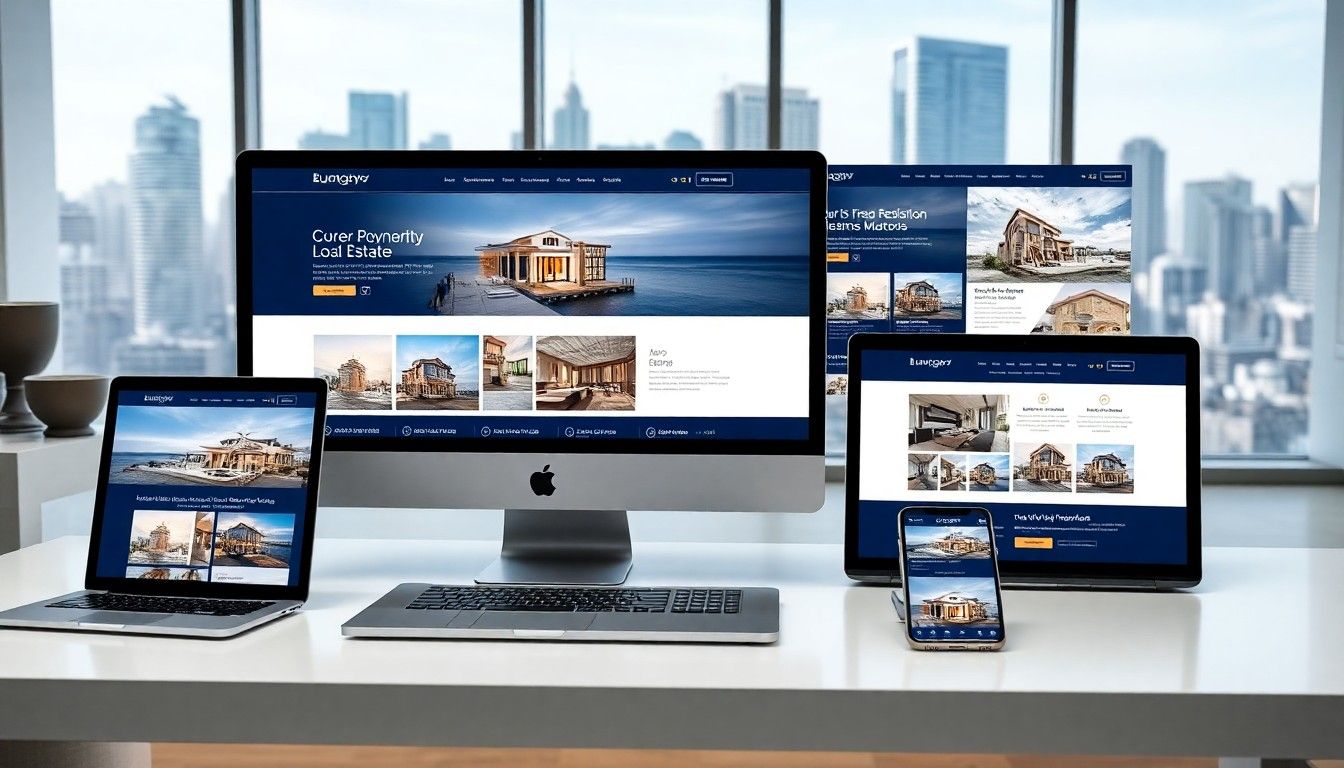
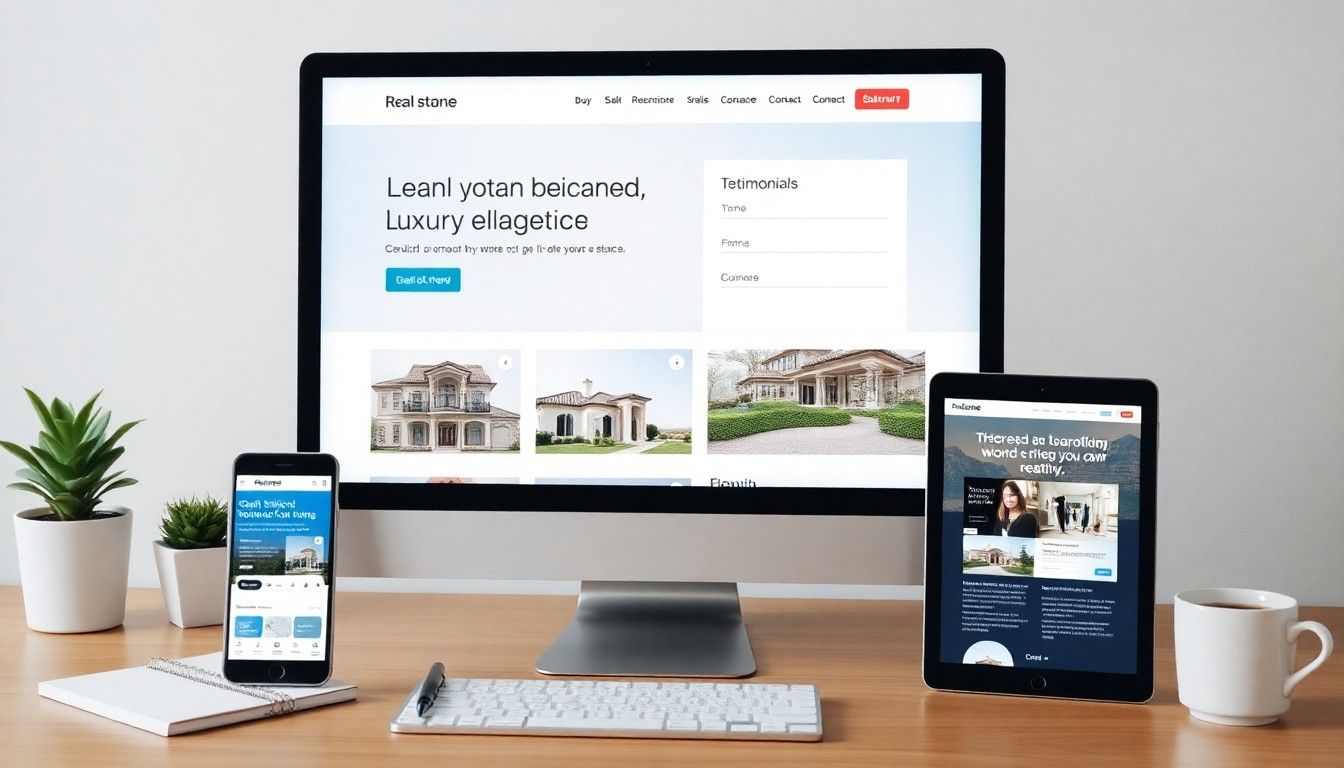
Design websites with visual impact in mind. Large, high-quality images. Prominent video integration. Easy access to virtual tours. Mobile optimization is non-negotiable. More than half of luxury property searches happen on mobile devices.
For real estate projects, custom website design can showcase properties uniquely. Strong visual brand identity differentiates your projects from competitors.
Loading speed matters. Compress images without sacrificing quality. Optimize video embeds. Slow websites lose impatient luxury buyers.
Print Materials and Brand Cohesion
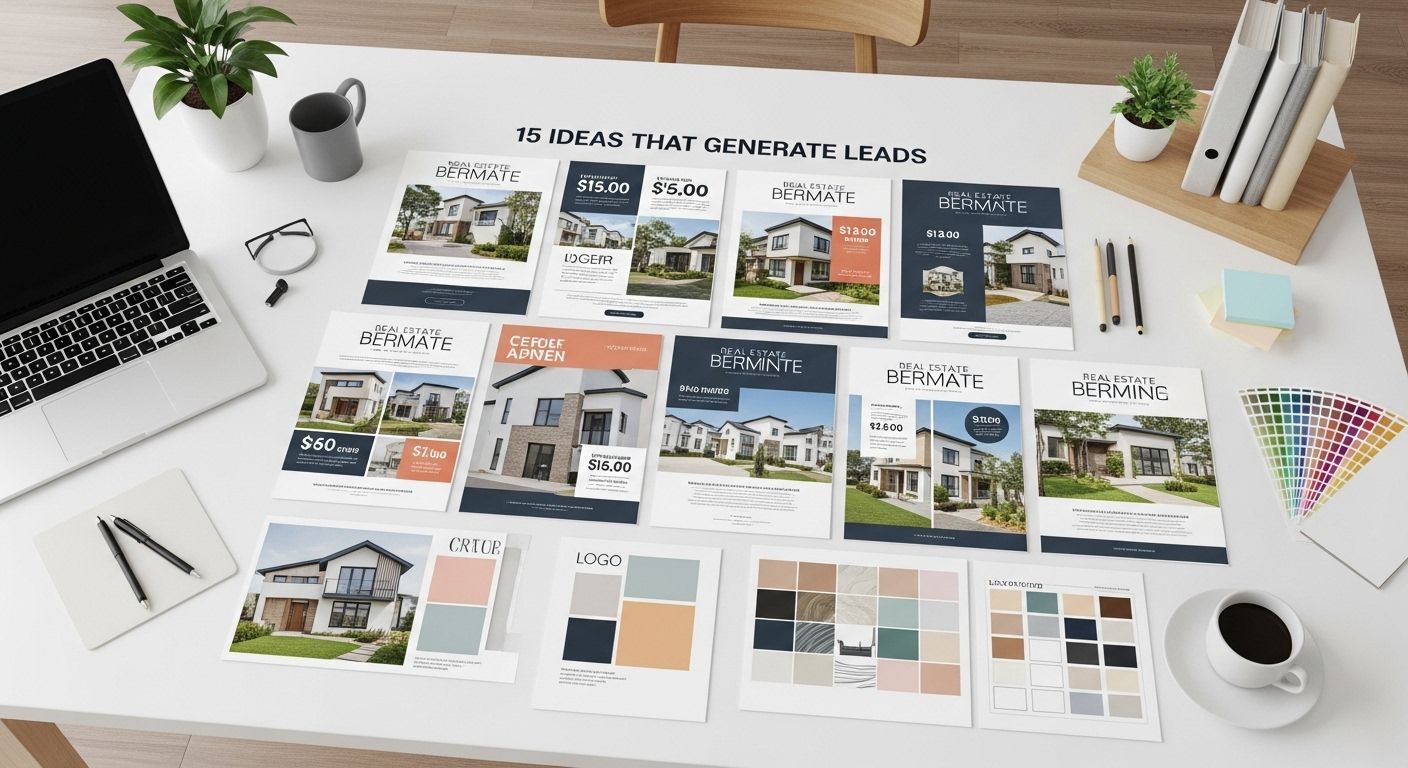
Even in a digital world, print materials still matter for luxury real estate. Property brochures, postcards, and signage need brand consistency.
Use the same visual elements from digital marketing. Colors, fonts, logo placement, and photography style should match perfectly.
Quality materials reflect property quality. Premium paper stock, professional printing, and excellent finishing details communicate luxury.
Coordinate print and digital campaigns. Direct mail postcards should match the digital campaign aesthetic. This reinforces brand recognition.
Standing Out While Maintaining Consistency
Brand consistency doesn't mean boring. Within your brand guidelines, create variety through different property types, seasonal campaigns, and storytelling approaches.
Develop property-specific sub-brands for major listings. Use the property's unique character while maintaining your overall brand framework.
Test new visual approaches within brand parameters. Try different photography angles, video styles, or social media formats. Keep what works, refine what doesn't.
Let your brand evolve gradually. Luxury real estate marketing trends change. Stay current while maintaining enough consistency for recognition.
Quick Answers: Common Visual Marketing Questions
How much should I budget for luxury property visual marketing?
Budget $2,000-$5,000 for comprehensive visual marketing per luxury listing. This covers professional photography, drone footage, virtual tour creation, and video production. Virtual staging costs less at $50-$150 per room.
Can I use smartphone photography for luxury listings?
No. Smartphone photography doesn't meet luxury buyer expectations. The quality gap shows immediately. Professional equipment and expertise are essential for high-end properties.
How long does visual content production take?
Plan 2-3 weeks from scheduling to final delivery. Photography and drone shoots take one day. Editing requires 3-5 business days. Virtual tour processing takes 1-2 days. Video production adds another week.
Which visual marketing element delivers the best ROI?
Professional photography delivers the highest ROI because it's required for every listing. Drone photography and virtual tours provide the next-best returns. Video offers excellent engagement but requires larger investment.
How do I find qualified visual marketing professionals?
Ask for referrals from successful luxury agents. Review portfolios carefully, focusing on luxury property experience. Check reviews and testimonials. Request references from previous clients.
Wrapping Up: Your Visual Marketing Action Plan
Visual marketing isn't optional for luxury real estate anymore. It's the price of entry.
Start with professional photography and drone footage. These foundational elements transform how potential buyers perceive properties. Then layer in virtual tours for immersive experiences. Add virtual staging for vacant spaces. Create video content that sells lifestyle. Distribute everything strategically across social media.
Tie it all together with cohesive brand identity that makes your marketing instantly recognizable.
You don't need to implement everything at once. Start with professional photography for your next listing. Add one new element with each property. Build your visual marketing capabilities over time.
The luxury buyers are out there, searching online right now. Make sure your visual marketing stops them mid-scroll. Check out our luxury real estate marketing strategies for more ways to elevate your approach.
High-quality visuals tell property stories that words can't capture. They create emotional connections that drive buying decisions. And they position you as a luxury real estate professional who understands what high-end buyers expect.
Your next luxury listing deserves visual marketing that matches its quality. Now you know exactly how to deliver it.