Mastering Real Estate Brand Guidelines for Success

Hey there! If you've landed on this page, chances are you're a real estate professional who's tired of blending into the crowd. Maybe you're scrolling through your competitors' websites and thinking, "How do I make my brand stand out without breaking the bank?" Trust me, I've been working with real estate pros for years, and this question comes up more often than you'd think.
Here's the thing about real estate branding: it's not just about having a pretty logo (though that helps!). It's about creating a complete visual and messaging system that makes potential clients think, "This is exactly who I want to work with." And the best part? You don't need a massive budget to get started, you just need the right approach.
In this guide, we're going to break down exactly how to create brand guidelines that actually work for your real estate business. You'll discover how to define your brand foundation, develop a visual identity that converts, and implement your brand across all your digital touchpoints. By the end, you'll have a clear roadmap to build a brand that attracts your ideal clients and sets you apart from the competition.
Building Your Brand Foundation
Before we start picking colors or fonts, we need to get crystal clear on what your brand actually represents. Think of this as the foundation of your house, if it's wobbly, everything else will be too. The good news is that once you nail this part, all your design decisions become so much easier.
Start with your Mission, Vision, and Values (MVV). These aren't just fancy corporate buzzwords, they're the backbone of everything you'll do. Research shows that clearly defining your business's purpose, goals, and guiding principles is foundational for brand consistency and trust. Your mission is why you get up in the morning, your vision is where you're headed, and your values are how you operate along the way.
Next up is your Unique Value Proposition (UVP). This is where you answer the million-dollar question: "Why should someone choose you over the agent down the street?" Don't just say you're "experienced" or "dedicated," everyone says that. Maybe you specialize in first-time homebuyers and walk them through every single step, or perhaps you're the go-to person for luxury waterfront properties. Articulating what sets your agency apart from competitors is critical, as this forms the backbone of your brand and should address your target audience's needs.
Here's a simple exercise to nail down your UVP: grab a piece of paper and write down three things you do better than anyone else in your area. Then, for each one, write down how that specific benefit helps your clients. That's your UVP right there.
Mission Statement
- Purpose: Defines your "why"
- Action Step: Complete in one sentence: "I help [who] achieve [what] by [how]"
Unique Value Proposition
- Purpose: Sets you apart from competitors
- Action Step: List 3 unique benefits you provide that others don't
Client Avatar
- Purpose: Focuses your messaging
- Action Step: Create detailed profile of your ideal client
Brand Personality
- Purpose: Guides your communication style
- Action Step: Choose 3-5 personality traits that represent your brand
Now let's talk about your Client Avatar. Developing a detailed profile of your ideal client ensures branding and marketing efforts are targeted and relevant. Are you targeting young professionals buying their first condo, or empty nesters looking to downsize to a luxury retirement community? The more specific you get, the better your branding will resonate.
Designing Your Visual Identity System
Alright, now for the fun part! This is where your brand foundation starts to come to life visually. But here's what I've learned after years of designing for real estate professionals: your visual identity needs to work hard for you, especially when budgets are tight.
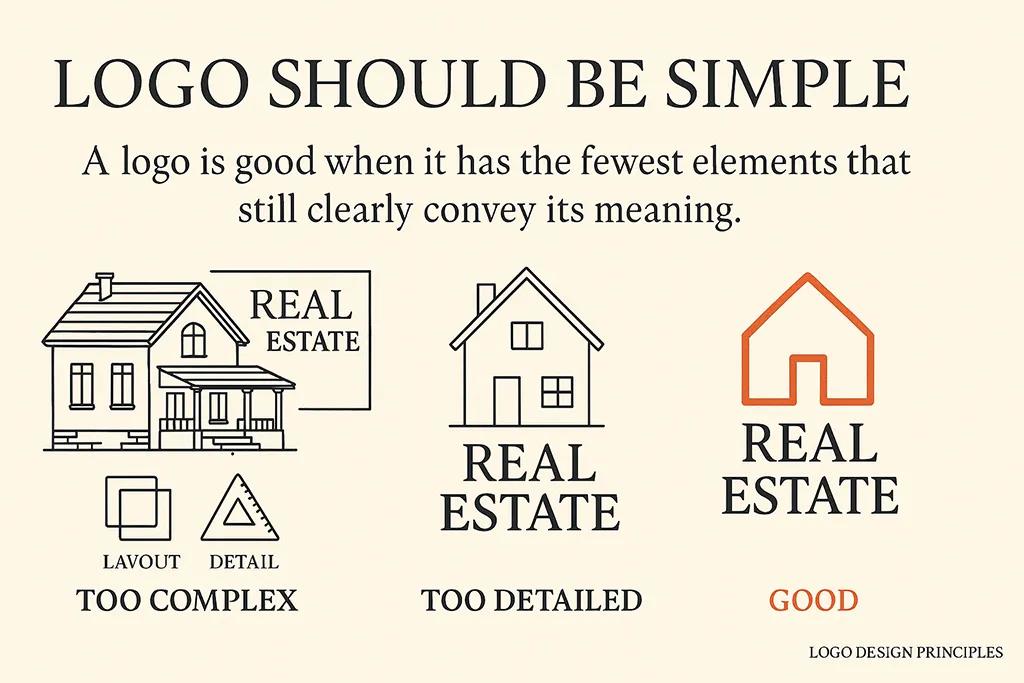
Your logo is obviously important, but it's not everything. A logo should be simple, memorable, and reflect your brand's core values and market focus. Think about iconic real estate brands like RE/MAX with their hot air balloon, it's instantly recognizable and communicates "we'll help you soar." Your logo doesn't need to be complex to be effective.
A logo that’s simple and memorable reflects your core values and scales across signs, cards, and your website.
Color psychology plays a huge role in real estate branding. Blue is a common color in real estate branding due to its association with trust and professionalism. But don't feel like you have to stick with blue just because everyone else does. If your brand personality is more energetic and modern, maybe a bold teal or deep green would work better. Just make sure your colors align with the emotions you want to evoke.
- Primary Color: Your main brand color that appears in your logo and major elements
- Secondary Colors: 2-3 supporting colors that complement your primary
- Neutral Colors: Grays, whites, or beiges for backgrounds and text
- Accent Color: A bright color for call-to-action buttons and highlights
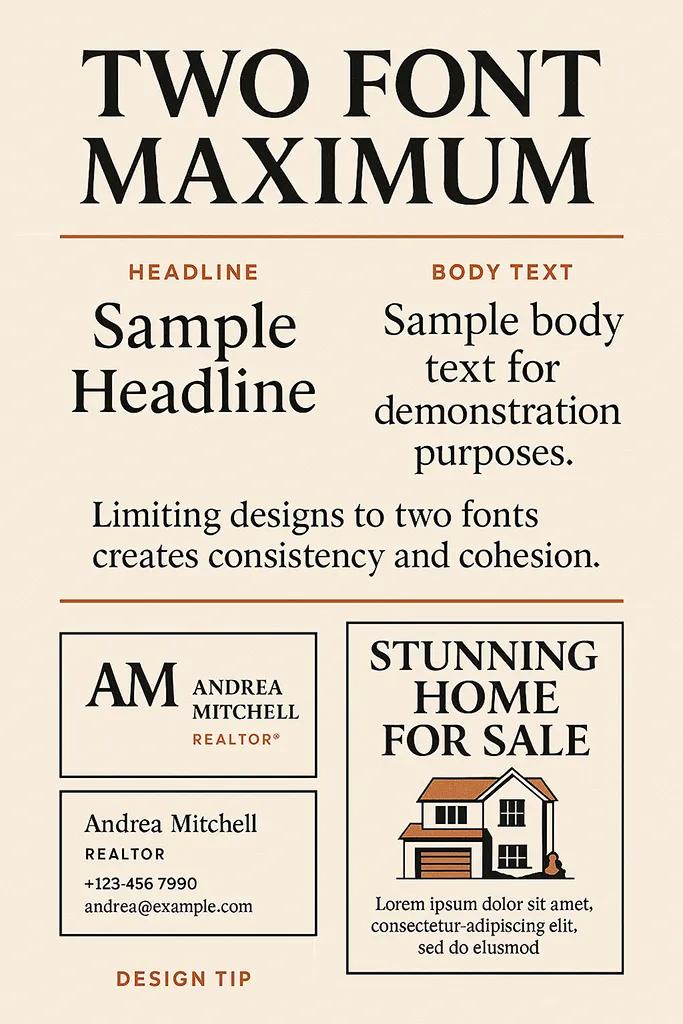
Typography is where a lot of real estate brands miss the mark. Consistent, readable fonts that reinforce your brand's personality and remain legible across all mediums are essential. You'll want to choose a primary font for headlines (this can be more stylized) and a secondary font for body text (this needs to be super readable). Stick with these two fonts across everything, and I mean everything.
Stick to two fonts—one for headlines and one for body text—to keep everything legible and consistent.
Here's where we often help our clients at Dignuz Design: creating a visual system that works seamlessly across all your digital touchpoints. Your brand needs to look just as good on your website as it does on your business cards and social media posts. This consistency is what builds recognition and trust over time.
Logo Design
- Best Practice: Simple, scalable, memorable
- Real Estate Application: Works on yard signs, business cards, and websites
Color Palette
- Best Practice: 3-5 colors maximum
- Real Estate Application: Use consistently across all marketing materials
Typography
- Best Practice: 2 fonts maximum
- Real Estate Application: One for headlines, one for body text
Photography Style
- Best Practice: Consistent editing and composition
- Real Estate Application: Same filter/style for all property and headshot photos
Creating Your Brand Guidelines Document
You know what separates the pros from the amateurs? Documentation. I've seen too many real estate agents start with great brand intentions, only to have everything fall apart six months later because they didn't write anything down. Your brand guidelines document is like having a GPS for all your design decisions.
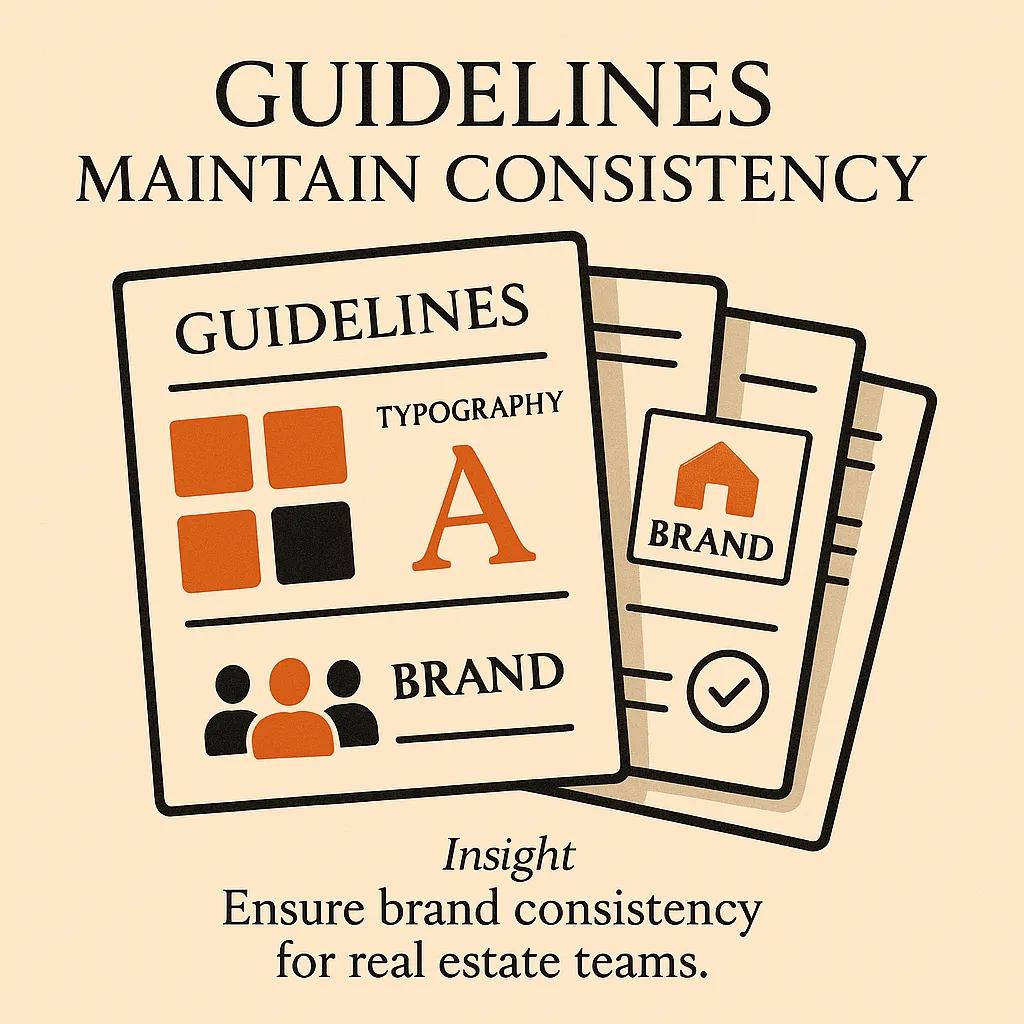
Think of your brand guidelines as a reference manual that you (and anyone you work with) can turn to whenever you're creating marketing materials. A detailed document containing all visual and messaging guidelines helps team members and partners maintain consistency. This becomes especially important when you're working with different vendors for various projects.
Documented brand guidelines keep teams and vendors aligned, ensuring consistent visuals and voice.
Start with the basics: include your logo files in different formats (PNG for web, vector files for print), your exact color codes (both hex codes for digital and CMYK for print), and font specifications. But don't stop there. Include examples of how your brand should look in different applications: email signatures, social media posts, yard signs, and business cards.
Your tone of voice section is just as important as the visual stuff. Specifying the voice and personality your brand should convey in all communications helps build a recognizable and relatable brand. Are you friendly and approachable, or sophisticated and exclusive? Do you use industry jargon, or do you explain things in simple terms? Write this down with specific examples.
- Logo Usage: Correct and incorrect ways to display your logo
- Color Specifications: Hex codes, RGB, CMYK, and Pantone numbers
- Typography Rules: Font names, sizes, and spacing guidelines
- Photography Standards: Style, composition, and editing guidelines
- Voice and Tone: How your brand should sound in writing
Here's a pro tip: create a simple one-page brand summary that hits the highlights. This is what you'll share with photographers, web designers, or anyone else who needs to understand your brand quickly. Save the full detailed version for yourself and your core team.
Implementing Your Brand Across Digital Channels
This is where the rubber meets the road. You've got your beautiful brand guidelines, now it's time to roll them out across every single touchpoint where potential clients might encounter your business. And trust me, there are more touchpoints than you think.
Your website is obviously the big one. This is where prospects will spend the most time evaluating whether they want to work with you. Every element, from your color scheme to your overall digital experience, should reinforce your brand personality. If you position yourself as the luxury expert, your website better look the part.
Social media is where consistency really gets tested. Outlining how your brand should appear across digital channels, including social media, email, and video content, ensures consistency and maximizes reach. Create templates for your most common posts: new listings, market updates, client testimonials. This way, even when you're posting quickly, everything looks cohesive.
Don't forget about your email marketing. Your email signature, newsletter templates, and automated sequences should all feel like they're coming from the same brand. I've seen agents spend thousands on a beautiful website, then send emails that look like they were designed in 1995. That's a missed opportunity.
Website
- Brand Implementation: Full brand experience
- Key Focus Areas: Colors, fonts, imagery, messaging consistency
Social Media
- Brand Implementation: Profile consistency
- Key Focus Areas: Profile photos, cover images, post templates
Email Marketing
- Brand Implementation: Template design
- Key Focus Areas: Headers, signatures, newsletter layouts
Digital Advertising
- Brand Implementation: Ad creative alignment
- Key Focus Areas: Consistent visuals and messaging across platforms
Here's something most agents overlook: your digital marketing materials need to work together as a system. When someone sees your banner ads, then visits your website, then follows you on social media, it should feel like one cohesive brand experience. That's how you build recognition and trust.
If you're feeling overwhelmed by all the technical aspects of implementing your brand online, that's totally normal. This is exactly why we work with real estate professionals at Dignuz Design, we handle all the technical heavy lifting while you focus on what you do best: selling real estate. Our AmplyViewer platform is a perfect example of how we help agents showcase properties in a way that's both branded and engaging.
Measuring and Maintaining Brand Consistency
Here's what nobody tells you about branding: creating the guidelines is just the beginning. The real challenge is maintaining consistency over months and years, especially as your business grows and you start working with more vendors and team members.
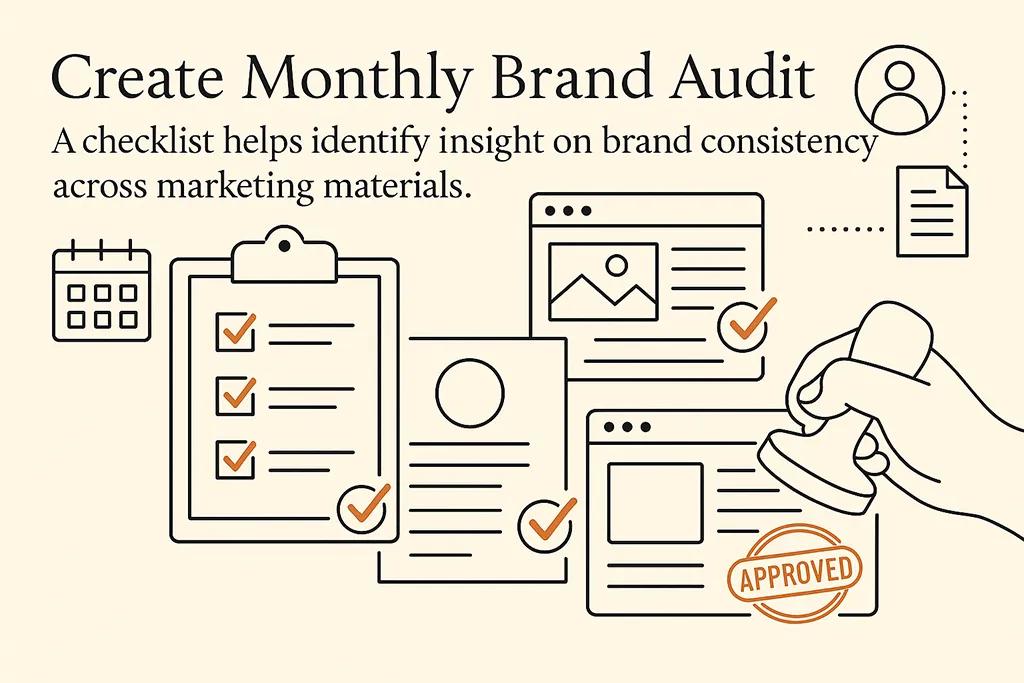
Set up a simple review process for all your marketing materials. Before anything goes live, whether it's a social media post or a new brochure, run it through a quick brand checklist. Are you using the right fonts? Are the colors on-brand? Does the tone match your guidelines? It takes two minutes, but it'll save you from diluting your brand over time.
Create a quick pre-launch brand checklist and monthly audit to keep everything on-brand.
Track your brand recognition over time. Pay attention to how often people comment on your marketing materials or mention specific elements of your brand. Are clients starting to recognize your posts in their social media feeds? Are other agents asking who designed your marketing materials? These are good signs that your brand is working.
- Monthly Brand Audit: Review all materials created in the past month
- Vendor Guidelines: Share brand standards with all contractors and service providers
- Template Updates: Refresh templates quarterly to keep content fresh while maintaining consistency
- Feedback Collection: Ask clients what they remember most about your brand presentation
Don't be afraid to evolve your brand guidelines as your business grows. Maybe you started focusing on first-time homebuyers but found your niche in luxury properties. Your brand should grow with you, but make changes thoughtfully and update all your guidelines documentation when you do.
The key is to think of your brand as a living system, not a set-it-and-forget-it design project. Standing out in real estate requires consistent effort and attention to detail, but the payoff in terms of client recognition and referrals makes it absolutely worth it.
Your Next Steps
Alright, we've covered a lot of ground here! If you're feeling a bit overwhelmed, that's totally normal. Building a strong brand doesn't happen overnight, but every step you take gets you closer to standing out in your market.
Start with your brand foundation this week. Spend some time really thinking about your mission, values, and what makes you different. Once you've got that nailed down, you can move on to the visual elements. And if you need help bringing it all together digitally, you know where to find us.
The real estate market is competitive, but a strong, consistent brand gives you a huge advantage. Your future clients are out there right now, scrolling through agent websites and social media profiles. Make sure when they find yours, they think, "This is exactly who I want to work with." That's the power of great brand guidelines, and it's absolutely within your reach.
Ready to get started? Pick one element from this guide and tackle it this week. Your brand (and your business) will thank you for it!