Luxury Real Estate Visual Marketing Strategies
There is a version of this conversation I have with property developers fairly often. They have commissioned photographs, put together a website, maybe even paid for a drone shoot. The visuals look professional. The listing has been live for weeks. Inquiries are thin, and the ones that do come in are from buyers who are clearly not the target. The developer wants to know what they are missing.
Usually, the answer is not any single tool or technique. It is that the visual marketing treats the property like a product and the buyer like a rational evaluator - when luxury buyers work the opposite way. They do not find a property and then assess whether it looks good. They filter first by feel, and only engage with specifics once the visual impression has passed an internal threshold. If the feeling does not land in the first few seconds, the listing is already gone.
I have worked on enough of these projects across Faraday3D and DignuzDesign to see where that threshold gets missed. And it rarely comes down to the quality of any individual asset.
How Luxury Buyers Actually Use Visuals
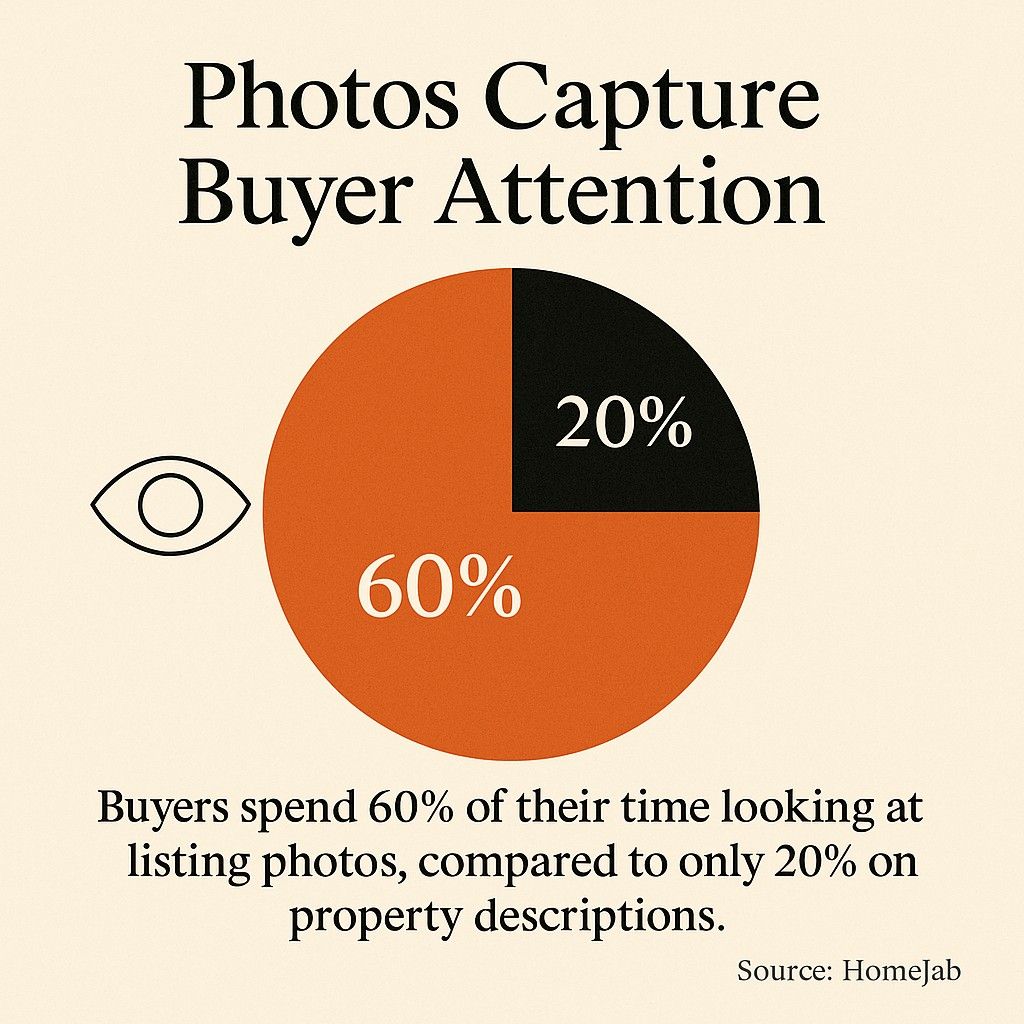
The National Association of REALTORS' 2024 Profile of Home Buyers and Sellers found that photos ranked as the single most valuable piece of content on a property website, cited by 41% of buyers - well ahead of detailed property information (39%) and floor plans (31%). All buyers used the internet to search, and visual content was the primary filter before any other information was engaged.
That finding mirrors what academic research into buyer behaviour has been tracking for over a decade. A 2012 eye-tracking study published in the Journal of Real Estate Research by Seiler, Madhavan, and Liechty tracked the actual eye movements of active homebuyers navigating online listings. The photo was the first place every buyer looked, and the time spent on the photo - total dwell time, in the study's terminology - significantly predicted their overall rating of the property and its perceived value. The agent's written remarks came a distant third.
This matters because it reframes what visual marketing actually is. It is not decoration applied to a listing that buyers will evaluate on other merits. For luxury properties especially, the visual content is the listing. Everything else - price, specification, location - is secondary information that a buyer only reads once the visual impression has told them it is worth their time.
That is a different design brief than "make it look good." It means every visual decision - from the lighting temperature in a photography brief to the loading speed of a 3D tour - affects whether a buyer enters or exits the consideration process.
The Luxury-Specific Standard
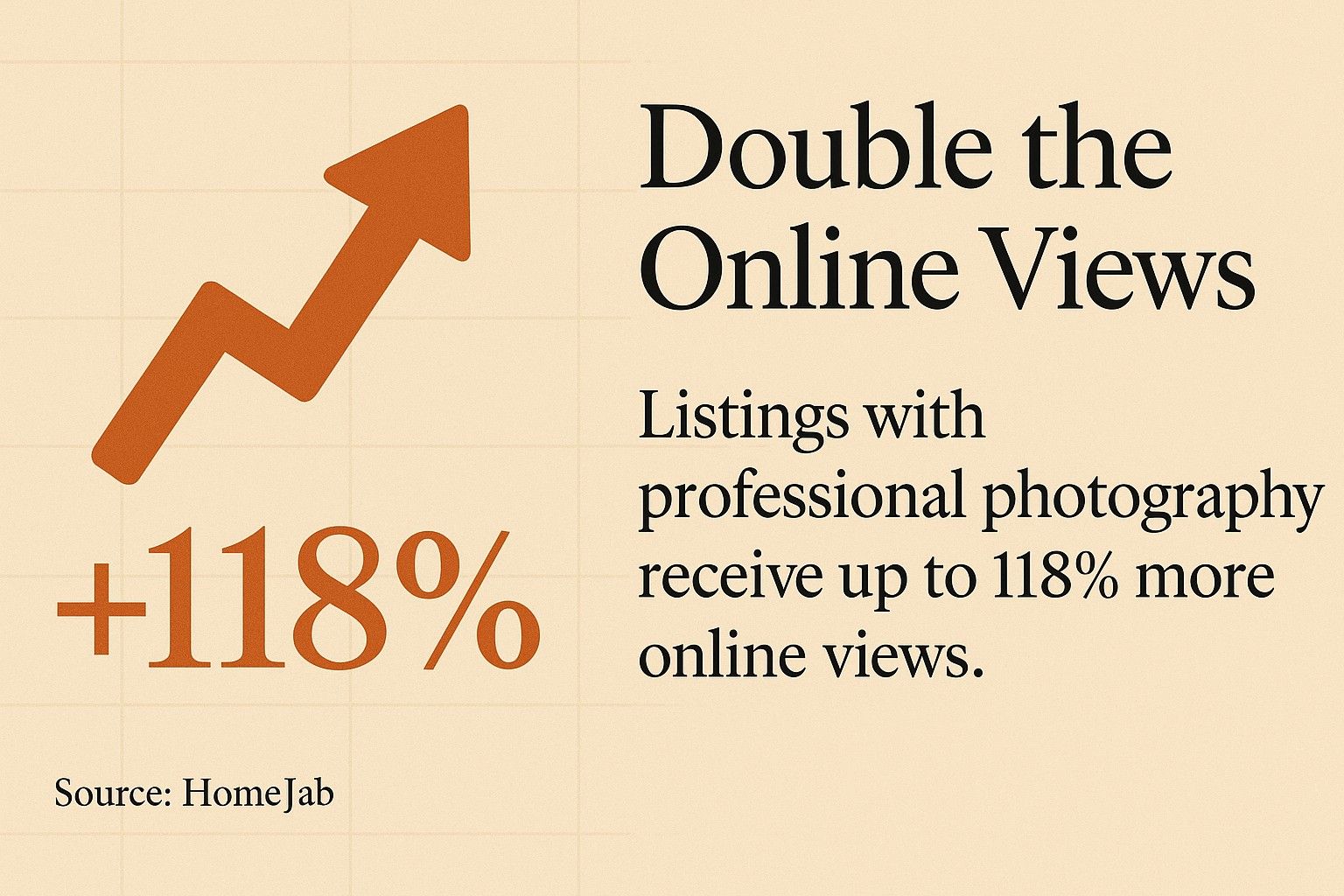
Standard property photography and luxury property photography share the same tools. They do not share the same standard, and the gap is immediately visible to the buyers you are trying to reach.
High-net-worth buyers navigate visually rich environments daily - premium architectural publications, high-end hotel photography, luxury brand campaigns. Their visual threshold for what reads as credible and valuable is calibrated against that standard. Amateur photography does not merely fail to impress them; it actively signals that the property does not merit serious attention. The visual quality becomes a proxy for the quality of the property itself, and that association happens before the buyer consciously forms an opinion.
Luxury-grade photography means several things in practice. It means scheduling the shoot around specific light conditions - late morning for interior fill light, golden hour for exteriors and twilight shots that show architectural lighting at its best. It means HDR processing that handles bright glazing without blowing out the windows. It means detail shots of the elements that justify the price: custom millwork, material finishes, hardware, integrated technology. And it means knowing which rooms lead the story. Every property has a visual hierarchy - the suite with the panoramic view, the kitchen island, the terrace - and the photographic sequence should follow that hierarchy, not just document the floor plan.
Finding photographers who understand this is harder than it sounds. Many excellent commercial photographers struggle with luxury residential work because they approach rooms as subjects rather than as experience spaces. When reviewing portfolios, look for evidence that the photographer understands how to make a room feel inhabited and aspirational rather than simply well-lit and geometrically correct.
Pre-Construction Properties Are a Different Problem Entirely
A significant share of luxury property marketing happens before anything exists to photograph. Developers selling off-plan or at early construction stages cannot rely on photography at all, and this is where the visual marketing challenge is most acute - and where generic advice breaks down entirely.
For this work, 3D architectural rendering and CGI is not a substitute for photography; it is the visual foundation from which everything else is built. A high-quality exterior render establishes the building's character. Interior CGI creates the lifestyle narrative. The marketing suite, the sales brochure, the website - they all draw from the same set of visualisations, which means the quality of those visualisations determines the quality of every downstream marketing asset.
The mistake developers consistently make is treating renders as a line item rather than as a strategic investment. Renders produced quickly and cheaply to meet a planning deadline are technically sufficient for that purpose but actively harmful as marketing assets. Buyers in the luxury segment can identify low-quality CGI immediately - flat lighting, unconvincing materials, generic furniture styling - and it undermines confidence in the project itself.
What distinguishes quality renders for marketing purposes is not primarily technical complexity. It is the same thing that distinguishes quality photography: compositional intelligence, lighting that reads as natural, material realism that holds up at high resolution, and human-scale staging that allows buyers to project themselves into the space. An exterior render that captures the building at golden hour with appropriate sky and landscape context tells a completely different story than the same building lit flat against a white background.
Interactive Exploration Changes What Buyers Do
There has been real academic work in recent years on whether virtual tours measurably affect sale outcomes. A 2024 NBER working paper by Soleymanian and Qian, From Novelty to Norm, found that virtual tours increase sale prices by an average of 1% - a modest but statistically significant effect - but noted that this effect had declined post-COVID as tours became standard practice rather than a differentiating feature. Their analysis also found that virtual tours are most effective as a quality signal in competitive markets and considerably less impactful for highly differentiated properties, because uniquely distinctive properties already communicate their value clearly through other means.
That finding deserves more attention than the inflated engagement statistics that get cited in most discussions of virtual tours. What it suggests is that a 3D tour of a generic apartment in a competitive urban market carries more incremental value than a tour of an extraordinary custom-built estate. For truly exceptional properties, the tour provides less added information because the differentiation is already obvious. For everything in between - and that is most of the luxury market - an interactive experience can meaningfully shift buyer engagement and lead quality.
The practical distinction I see in how buyers use these tools is between passive consumption and active exploration. A video walkthrough is watched once, in sequence, on someone else's terms. An interactive viewer lets the buyer move through the space on their own timeline, return to the kitchen three times, spend a long time understanding the relationship between the living room and the terrace. That self-directed exploration behaviour is associated with higher intent and more qualified inquiries. Buyers who have already spent time thoroughly exploring a property online arrive at viewings with questions rather than doubts.
For pre-construction properties, this distinction matters even more. An interactive 3D property viewer embedded directly in the project website allows potential buyers to explore apartments on an unbuilt floor, compare unit types, and understand the spatial logic of the development before a single brick has been laid. This is not the same experience as watching a rendered walkthrough video - the interactivity creates a sense of agency that video cannot replicate, and that sense of agency correlates with emotional investment in the property.
Drone Imagery: Context, Not Just Spectacle
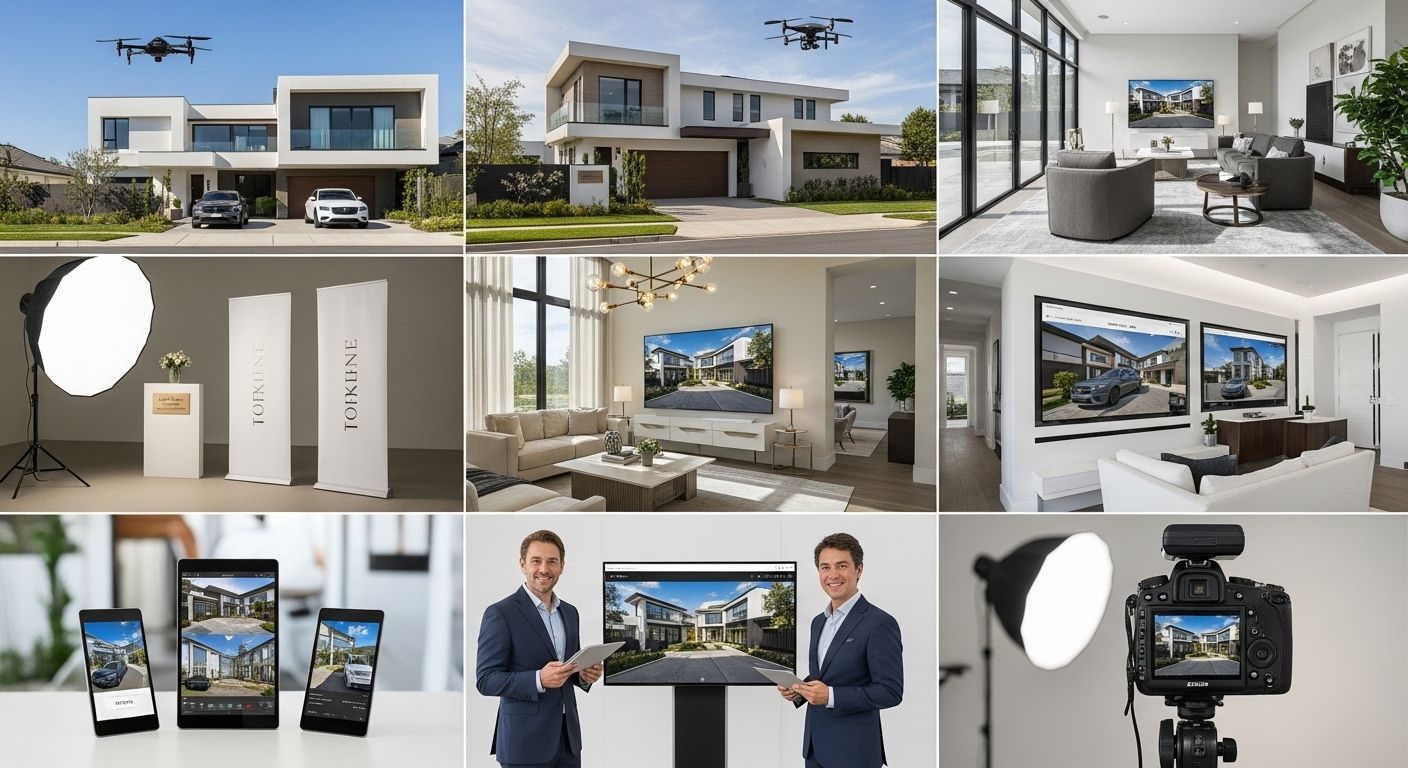
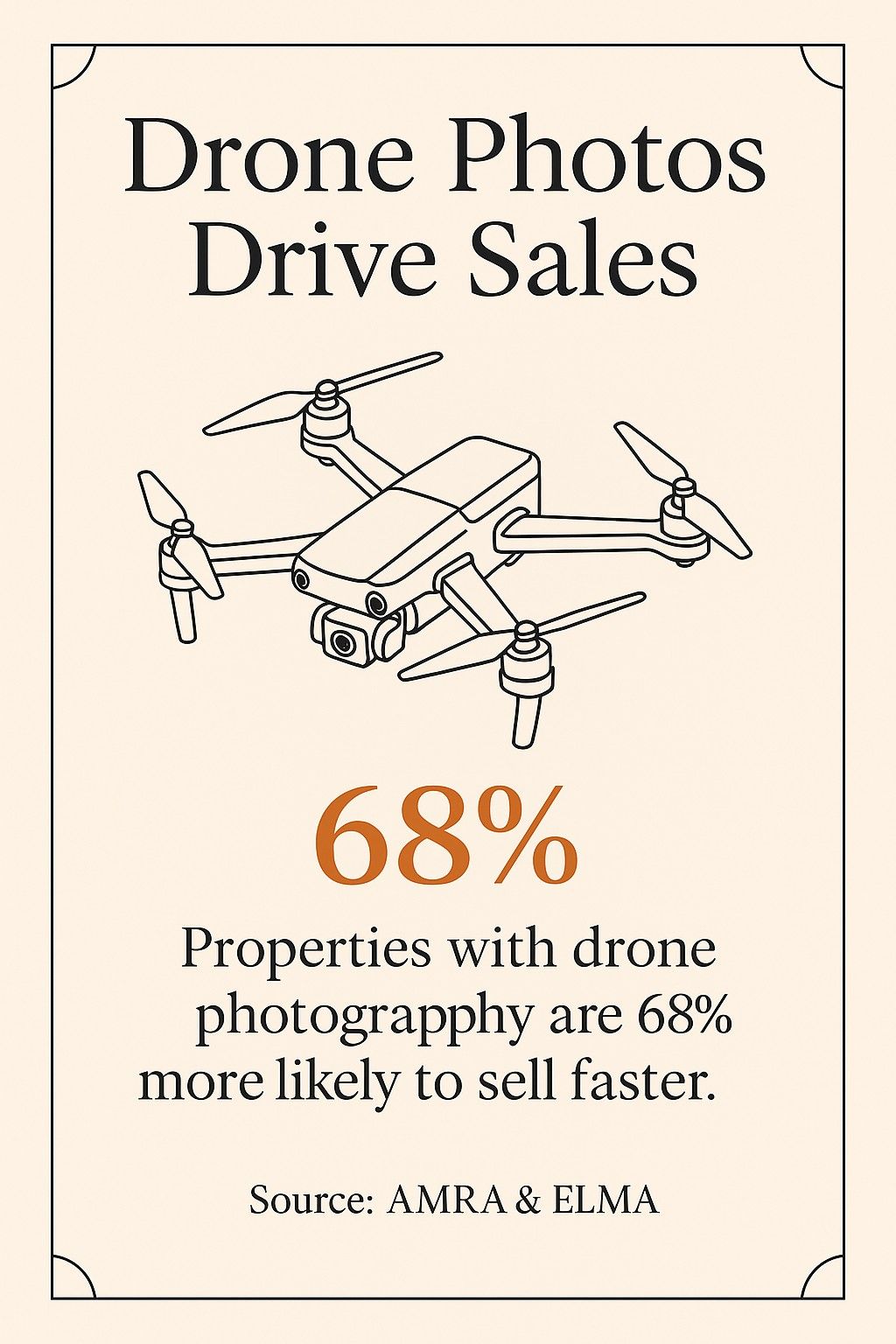
Aerial footage has become standard enough that its absence is more notable than its presence. But there is a difference between drone imagery used as a production convention - obligatory aerial sweep, property boundary shown from above - and aerial imagery used strategically to tell something about why this location matters.
For luxury properties, location is rarely incidental. The estate sits in a specific relationship to the coastline, the golf course, the mountains, the city. The aerial perspective is often the clearest way to make that relationship legible. A ground-level photograph of a house near the sea and a drone shot that shows the property sitting above a private beach cove tell entirely different stories about what the property actually is.
Timing and conditions matter significantly. Aerial shots taken in harsh midday light produce flat, shadowless images that fail to communicate topography or spatial quality. Golden-hour aerial photography - particularly at dusk with interior and exterior lighting engaged - produces the kind of image that reads as genuinely aspirational. It requires more coordination to achieve, but for a property at this price point, the difference in visual impact justifies the planning effort.
Video Sells Lifestyle, But Only If It Has a Point of View
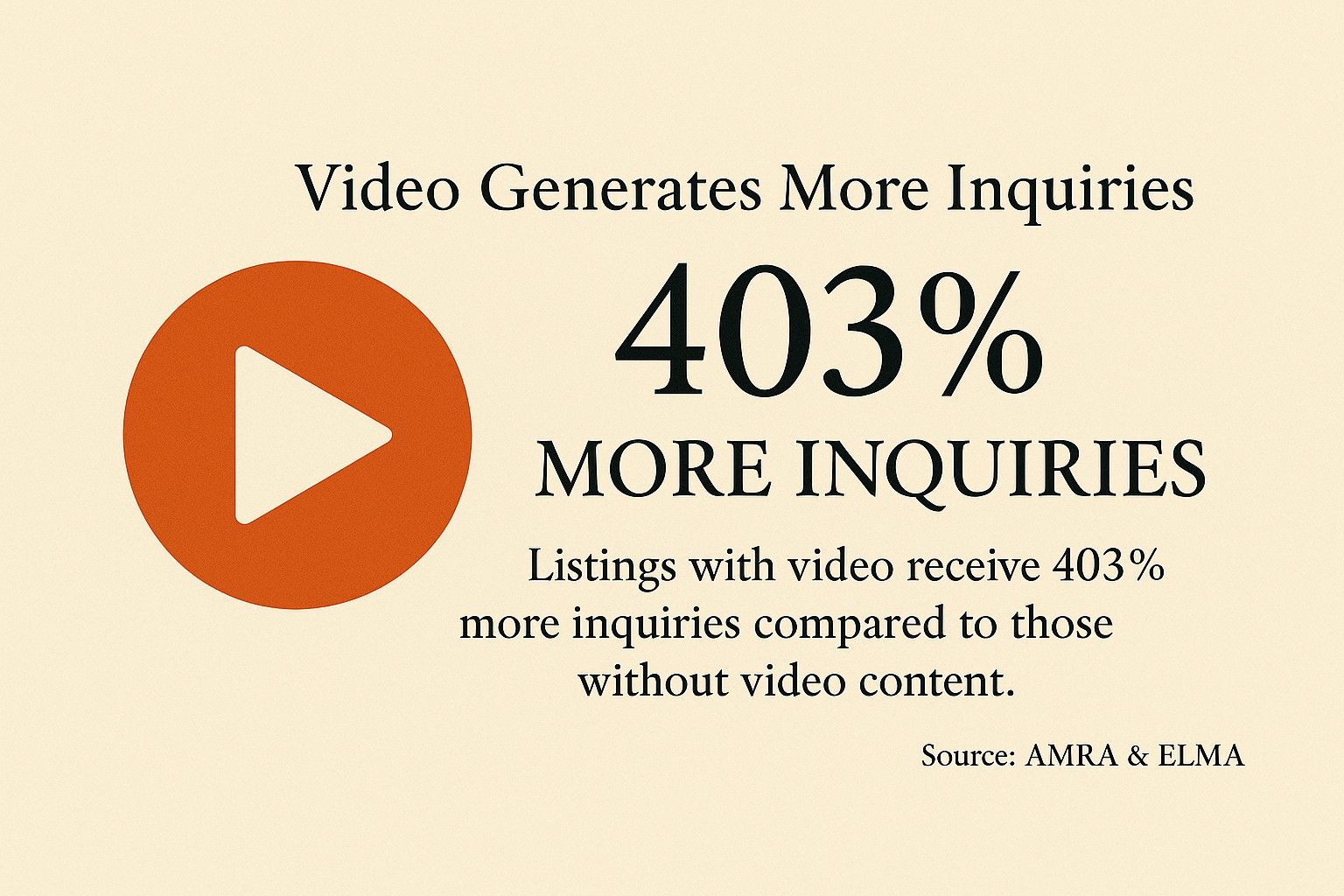
Video is the format that generates the most discussion and often the most disappointing results. The statistics are compelling - listings with video generate substantially more inquiries than those without - but the difference in quality between a formulaic walkthrough and a well-considered property film is enormous, and in the luxury segment, a mediocre video actively damages the impression the photography worked hard to create.
The failure mode is treating video as a faster version of the photo sequence. Camera moves through each room in order, slight background music, title cards with specifications. This documents the property without making any argument for it. It answers the question "what is in the property" rather than "why would you want to live here."
The more useful brief for a luxury property video is to start with the lifestyle and work backwards to the spaces. What does a morning at this property feel like? What does the property enable that a buyer's current home does not? That framing produces footage with a perspective - long exterior approach, intimate detail shots of materials, the specific view through the master bedroom glazing at dawn - rather than footage that simply catalogues rooms in sequence.
Keep durations short. Two to three minutes is the outer limit for a property film intended for website or social distribution. Longer than that and you are making content for buyers who are already committed, not buyers you are trying to capture.
Social Media for High-End Property: Platform Logic Matters
The real estate industry's use of social media tends to treat all platforms as interchangeable channels for distributing the same visual assets. For luxury property, platform selection and content strategy need to follow the logic of where your actual buyers spend time and what those platforms reward visually.
Instagram remains the strongest platform for the luxury property segment because its native culture of high-quality visual content aligns with the standard you should already be producing. Reels and carousel posts both perform well, but the underlying asset quality determines whether the algorithm amplifies the content. Low-quality photography fails on Instagram the same way it fails on a listing portal - the platform's competitive context makes it more conspicuous, not less.
LinkedIn deserves more attention than most property marketers give it, specifically for reaching the buyer segment most likely to be purchasing as an investment or as a second property. C-suite executives and senior professionals who are the core luxury buyer demographic are active on LinkedIn in ways they may not be on Instagram, and property content framed around investment rationale, neighbourhood value trends, or architectural significance performs differently there than the lifestyle content that works on Instagram.
The consistent failure I see in social media strategy for luxury property is content that is visually polished but commercially incoherent - beautiful images with no connection to a call to action, no internal link logic, no content that actually moves a prospect closer to a viewing or enquiry. Social media content for a property development should be built as part of a broader digital marketing strategy, not as a separate activity that produces attractive content without a conversion path.
Visual Coherence Is What Separates Good Marketing from Great Marketing
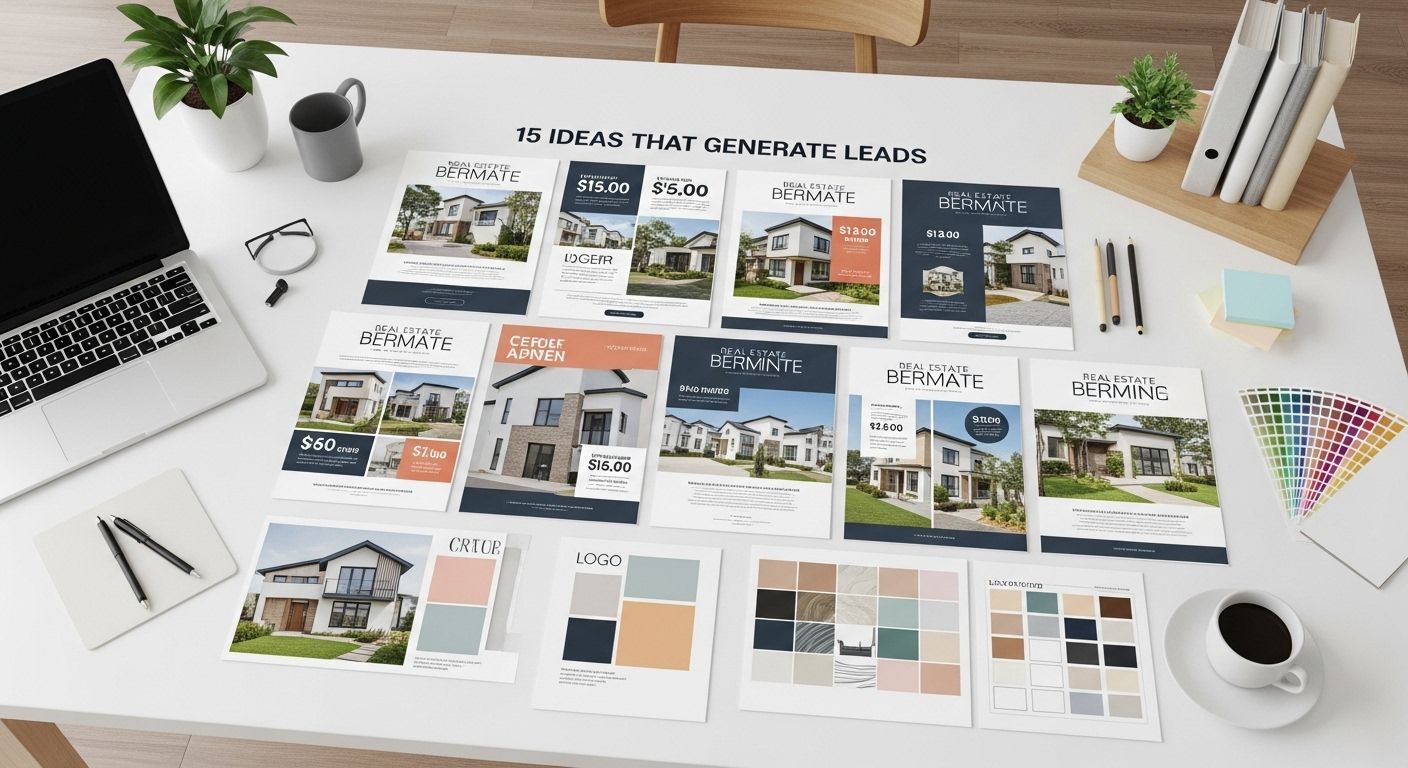
The most common problem I encounter is not any single weak asset. It is the absence of a coherent visual system that holds everything together. A developer will commission excellent photography, a decent video, some renders at varying quality levels, and a website that was built to a different brief than any of the above. None of these assets are bad individually, but they do not speak with one voice.
Luxury buyers - who have been exposed to a very high standard of brand consistency through the products and environments they interact with daily - register incoherence immediately, even if they cannot articulate it. A rendering that looks like it was produced for a planning application sitting next to photography that belongs in an architectural magazine creates a cognitive friction that undermines confidence in the project.
Visual coherence requires establishing a small number of clear decisions before any individual asset is produced: the tonal range and lighting character you want, the styling direction for interiors, the typographic system and colour palette for graphic elements, and the framing conventions that will be applied consistently across photography, video, and CGI. These decisions need to be documented and communicated to everyone producing assets - photographers, videographers, CGI artists, web designers - so that they are working from the same visual grammar.
A strong property developer brand identity is not the same as a logo. It is the sum of all visual decisions applied consistently, and for a luxury development, that consistency is one of the primary signals to buyers that the developer operates at a high standard.

The Website as Visual Experience
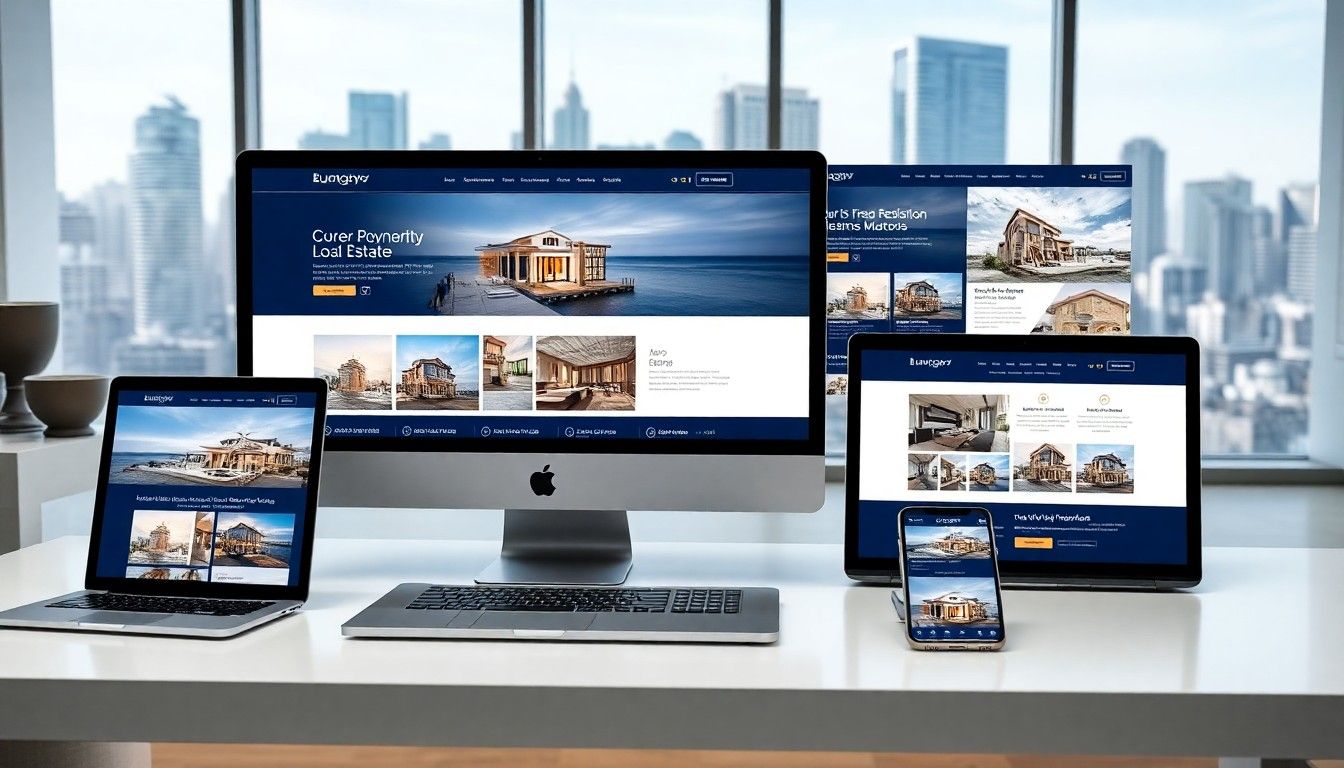
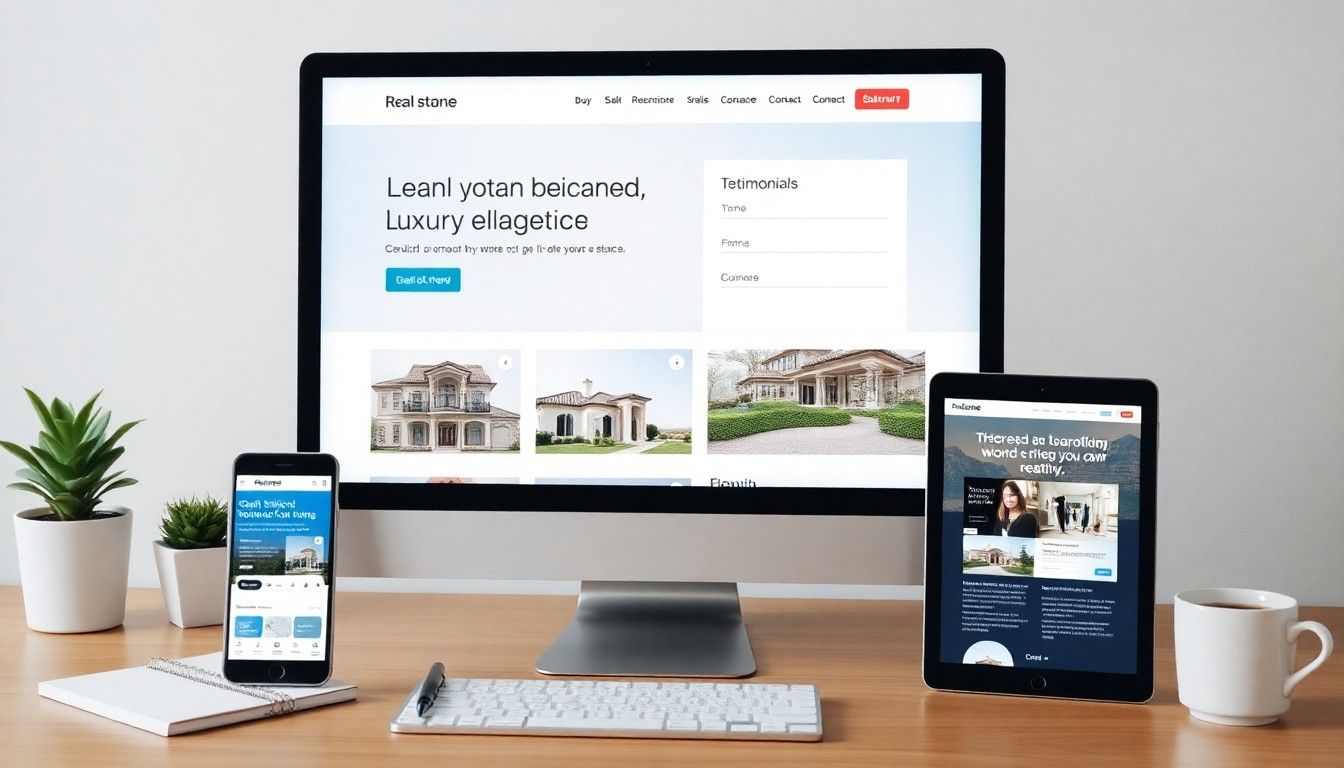
All of the assets above need to live somewhere, and for luxury property, the website is not primarily an information container - it is the primary brand experience. The way visual assets are displayed affects how they are perceived. Full-bleed photography, carefully controlled white space, and fast load times are not aesthetic preferences; they are functional requirements for communicating quality.
A luxury real estate website that loads slowly, presents photographs at reduced quality to save bandwidth, or displays interactive tours in a small embedded player is actively undermining the assets it contains. The presentation architecture has to match the quality of what is being presented.
Mobile optimisation is non-negotiable - a significant proportion of initial property research happens on mobile devices, and a website that presents beautifully on desktop but degrades on mobile creates a different experience for the same property depending on which device a buyer happens to use first. For luxury buyers, that first experience forms the impression. There is a useful guide to the specific design patterns that drive enquiries from qualified buyers in our real estate web page design conversion guide.
FAQ: Luxury Real Estate Visual Marketing
What is the difference between professional photography and luxury real estate photography?
Professional photography meets a competence threshold - sharp focus, correct exposure, appropriate framing. Luxury real estate photography requires all of that plus compositional intelligence specific to high-end residential spaces, equipment capable of handling difficult interior-exterior lighting conditions, and the experience to identify and prioritise the visual elements that communicate why the property is exceptional. Hiring a capable commercial photographer who has not worked on luxury residential projects frequently produces results that are technically correct but tonally wrong for the market.
How much of a luxury property's marketing budget should go to visual assets?
There is no universal ratio, but a useful framing is to work backwards from the property's value and the cost of holding it on the market longer than necessary. For a property at two million or above, a comprehensive visual marketing package - photography, drone, CGI if relevant, a property video, interactive tour - typically represents a fraction of a percent of the asking price. The more useful question is what the cost of underperforming visual marketing is in holding costs and price reductions, versus the upfront investment in getting the visual presentation right from the start.
Do virtual tours actually help sell luxury properties?
Research published by the NBER in 2024 found that virtual tours increase sale prices by an average of 1%, but the effect varies considerably based on how distinctive the property is and how competitive the market is. For highly differentiated, exceptional properties, the visual content itself already communicates quality and the incremental value of a virtual tour is modest. For properties in competitive urban or coastal markets where many comparable listings exist, an interactive tour meaningfully improves engagement quality and lead conversion. The decision should be based on the property's context, not on whether virtual tours are generically "worth it."
When is 3D rendering the right choice over photography for a luxury listing?
CGI rendering is the appropriate choice whenever the property does not yet exist in its finished form - off-plan developments, properties under construction, or significant renovation projects. For completed properties, high-quality photography remains the more credible and compelling format. The two approaches can coexist - CGI for development stage marketing, transitioning to photography as completion approaches - but they should be produced to the same visual standard so the transition feels continuous rather than jarring.
Should luxury property videos include the agent or developer on camera?
For agent-led luxury real estate, a personal introduction video - brief, direct, filmed professionally - can meaningfully differentiate one agent from another in a crowded market and builds the kind of personal trust that is important at this price point. For developer-led project marketing, the property film should foreground the spaces and lifestyle rather than any individual. Developer commentary works better in a separate format - an investor briefing or project overview - than embedded in a lifestyle property film.
How does visual marketing for a luxury new development differ from a secondary market listing?
New development visual marketing begins before completion and must do more work with less - renders, CGI interiors, drone shots of the site in context. The visual assets need to sustain buyer confidence throughout a sales cycle that may span eighteen months or more. Secondary market listings have the advantage of showing completed, real spaces, but often carry the visual fingerprint of the current owner's taste. For luxury listings, professional staging or at minimum professional decluttering and preparation is necessary before photography begins. The story a resale listing tells is different: less about the project's vision, more about the specific quality and character of this particular home.
If you are working on the visual marketing strategy for a luxury development or high-end residential project, the property visualisation work we do at Faraday3D and the interactive tools we build through AmplyViewer are both built around the principles discussed here.